San Francisco Opera 100th Anniversary Celebration

Curtain call. All photos by Drew Altizer Photography except where otherwise noted.

San Francisco Opera celebrated its centenary at War Memorial Opera House with a grand concert of 21 operatic pieces, performed by 15 principals and the company’s orchestra and chorus.  Artistic Director Eun Sun Kim, past Artistic Director Donald Runnicles, and past Principal Guest Conductor Patrick Summers shared the baton.  Matthew Shilvock, only the seventh General Director of the company, hosted the glorious event.
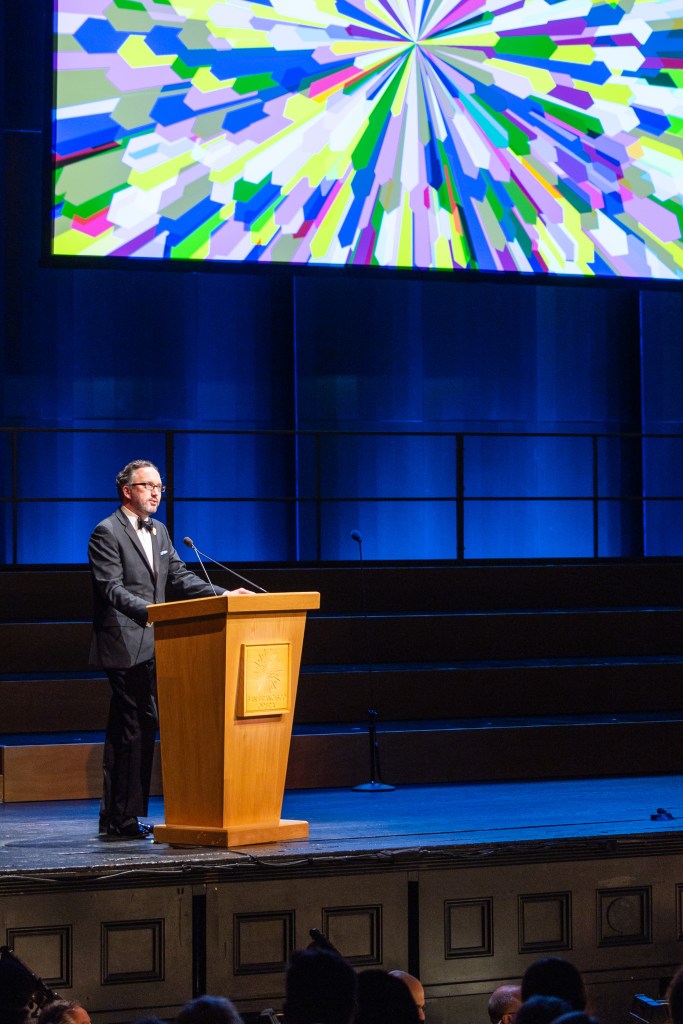
General Manager Matthew Shilvock presiding.

The company was founded by Gaetano Merola, an immigrant from Naples, Italy, who would lead San Francisco Opera during his vital 30-year stewardship.  He would cobble initial financial support from Italian businessmen in the community to create the company, and his expected audience included working class immigrants from Genoa, Lucca, Sicily, and elsewhere in Italy.  Merola would also lead the charge to build War Memorial Opera House, one of the several largest opera houses in the world.

Brian Mulligan singing ‘Batter my heart’ from John Adams’s “Doctor Atomic.” Projections ran throughout the program. The one above is from the company’s 2005 world premiere of the opera.

Readers would be forgiven for thinking that it was the company that Giacomo Puccini built.  Not only had he been the dominant force in opera, especially Italian, for decades before, but his works have held sway at San Francisco Opera from its outset.  The composer’s “La Bohème” was its first production in 1923. Further, it was “Tosca” that premiered its new home, War Memorial Opera House, in 1932, as well as the venue’s relaunch after the Loma Prieta Earthquake seismic retrofitting in 1993, and its relaunch after the pandemic pause in 2021.  What’s more the three most frequently produced operas by the company have been “La Bohème,” “Tosca,” and “Madame Butterfly,” while “Turandot” ranks 19th.
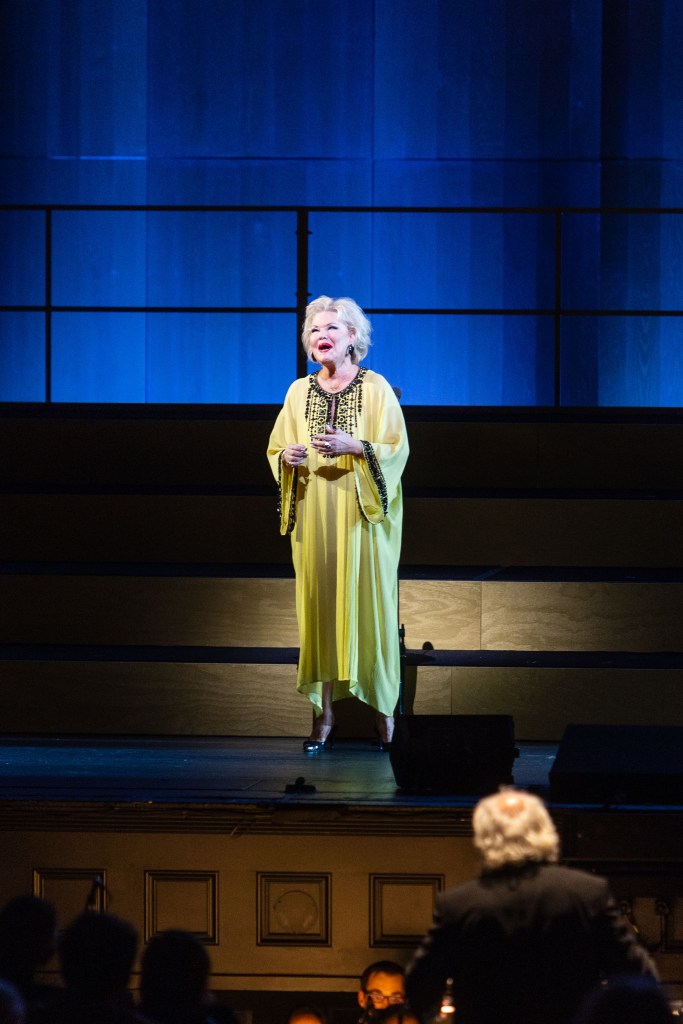
Karita Mattila sang ‘Co chvila’ from Leoš Janáček’s “Jenufa” with Donald Runnicles in the pit.

Needless to say, this international powerhouse company has embraced the full spectrum of opera, as evidenced by the celebration program.  Excerpts came from early Baroque through Classical and Romantic to modern idiom operas; from the popular and obscure; and in six different languages.

San Francisco Opera has always attracted the world’s finest artists from the likes of Gigli and Flagstad in the earliest years and Pavarotti and Sutherland later in the 20th century, to the stars of today and tomorrow.  At the same time, it has always encouraged and developed American opera singers.  The artists in the celebration were predominantly American, and six were graduates of the company’s vaunted Merola and Adler programs for promising singers.
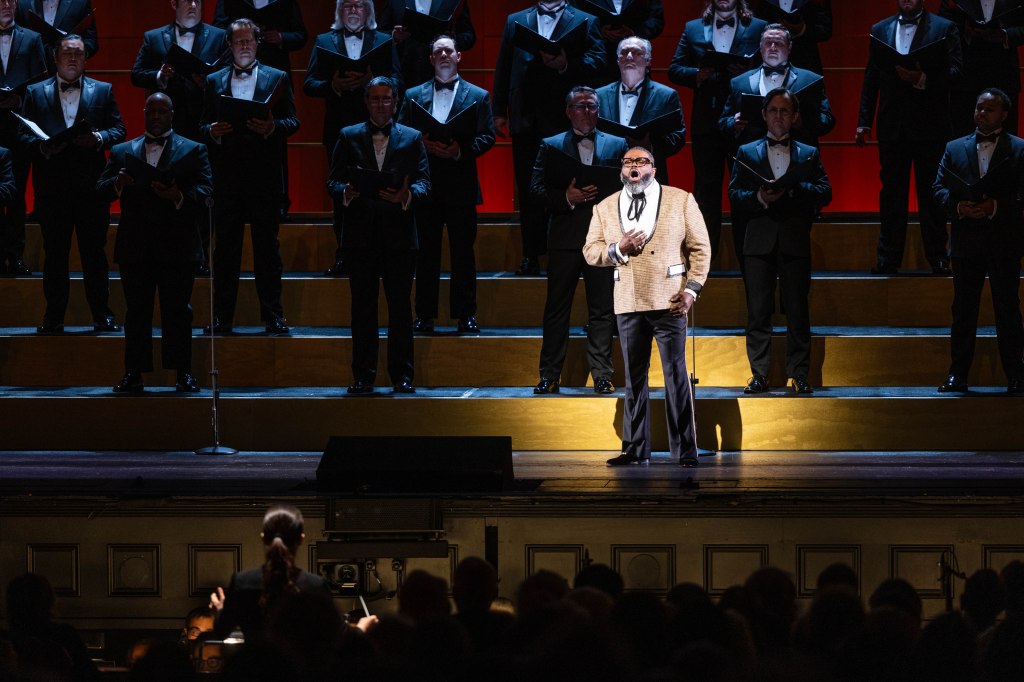
Russell Thomas as the title character in ‘Odi al voto’ from Giuseppe Verdi’s “Ernani.” The aria is usually excluded from productions, and this was the first time it has been sung on the War Memorial Opera House stage. Eun Sun Kim is at the baton.

As expected, all of the performances were exquisite, and selecting highlights from the program or excerpts to comment on is highly subjective.  The opening number is one of the finest orchestral pieces in opera’s repertory, Wagner’s Prelude from “Die Meistersinger von Nürnberg” with its rich and mellow sound.  Another remarkable performance was ‘Liebestod’ from “Tristan und Isolde,” the first Wagner opera performed by the company in 1936.  Nina Stemme, who currently performs magnificently in the company’s production of “Die Frau ohne Schatten” soared with intensity as this love-death anthem rose to its climax.
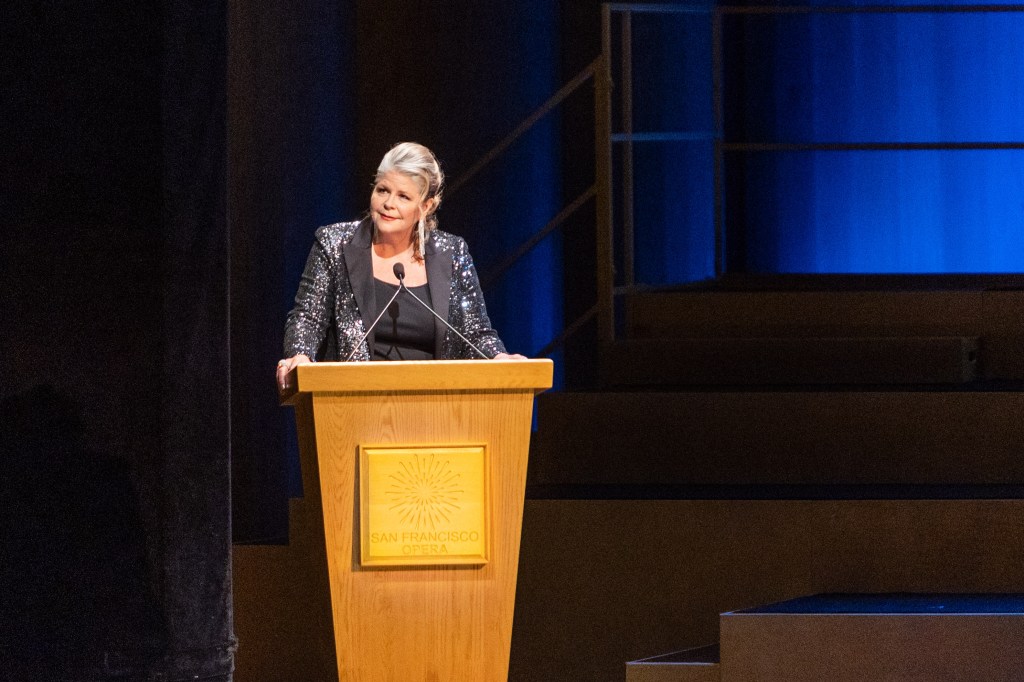
Mezzo Susan Graham shared emcee duties and also sang George Frideric Handel’s memorable ‘Ombra ma fu’ from “Xerxes.”

Puccini is represented twice in the program.  Christian Van Horn powered through the vile Scarpia’s signature ‘Va, Tosca…Te Deum’ with its contradictory themes of carnal lust and religious fervor.  The aria was supported by potent and halting religious-themed music and a chorus that Van Horn ably sang through.  The other offering was from one of the composer’s less performed but interesting works, ‘Ch’ella mi creda’ from “La Fanciulla del West.”  Since San Francisco was the staging point for the Gold Rush, the setting of the opera is a natural for the company.  Brandon Jovanovich nailed Puccini’s dark and very challenging tenor aria, as he did ‘Prosti nebesnoye sozdanya’ from Tchaikovsky’s “Pikovaya Dama.”
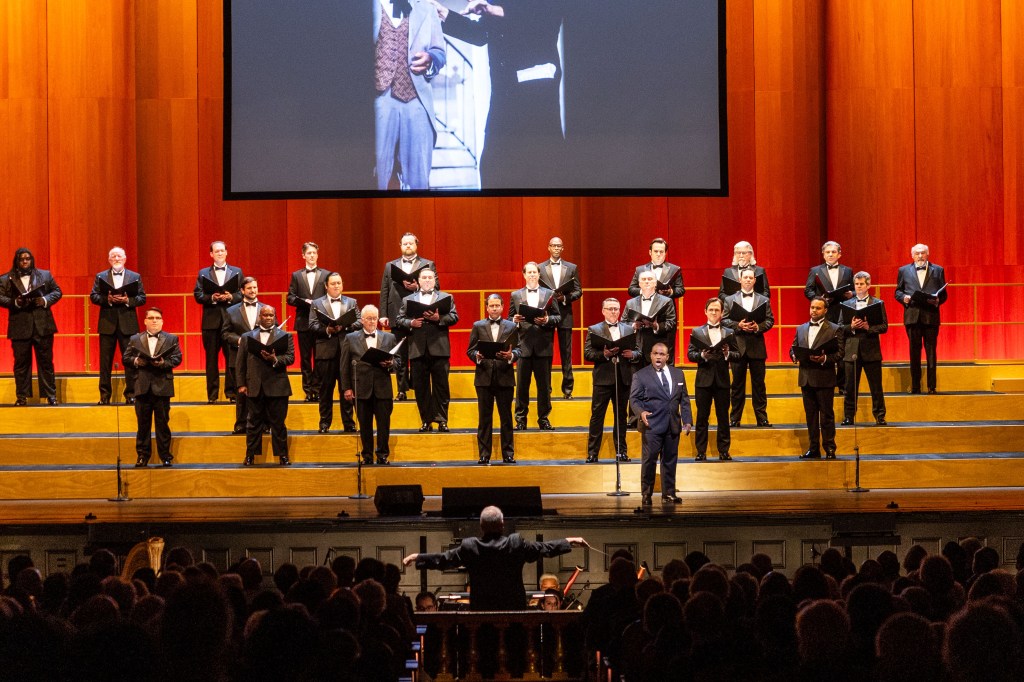
Lawrence Brownlee sang the bel canto aria ‘Cessa di più resistere’ from Gioachino Rossini’s “Il Barbiere de Siviglia” with Patrick Summers conducting.

The importance of Gluck’s “Orphée et Eurydice” derives from its representing the transition from Baroque to Classical music styles.  Daniela Mack, who currently stars in the company’s “El Último Sueño de Frida y Diego” sang ‘Amour viens rendre à mon âme.’  It flourishes from beginning to end, and Mack’s stunningly strong vibrato stayed the course throughout.

The chorus had several opportunities to shine on its own and to support principals.  Its most masterful offering was one of the rare opera pieces that entered common currency.  In Verdi’s “Nabucco,” Israelites lament the loss of their homeland in the mournful ‘Va, pensiero.’  But the choral number was adopted in Italy as an anthem during the country’s unification in the mid-19th century and has been frequently revived as an expression of patriotism.

Adela Zaharia sang the sparkling coloratura aria ‘Je veux vivre’ from Charles Gounod’s “Roméo et Juliet.”

In a nod to Broadway musicals, which are occasionally represented on the War Memorial stage, stalwart Patricia Racette sang the lovely ‘Losing my mind’ from Stephen Sondheim’s “Follies.”  Full of reflection and with intelligently recurring lyrics, the soprano sang with a hand mic, to simulate the amplified singing used in musical theater.  The result was a clear and relaxed embrace of a beautiful melody sung by a beautiful voice.

Although the program did not include any ensembles, it did have two duets.  Power tenor Michael Fabiano and honey-toned lyric soprano Ailyn Pérez sang an assertive ‘Vicino a te’ from Giordano’s “Andrea Chénier,” which played in the company’s very first season.  The versatile Van Horn and a radiant Heidi Stober gave a delightfully humorous and conflicted rendition of ‘La ci darem la mano’ from Mozart’s “Don Giovanni.”

Lucas Meachem sang Pierrot’s tanzlied (dance song) from Erich Wolfgang Korngold’s “Die Tote Stadt.” Photo by Nate Ryan.

Many people would not have expected the San Francisco Opera to achieve 100 years.  But the title of another Sondheim song from “Follies” says it all – ‘I’m still here.’ Opera has been criticized as being archaic, elitist, and incomparably expensive as a performing arts form.  But its creation represents the apotheosis of music, the integration of all of its elements, and the performing requires uncommon skill and dedication to produce voices that sing to the heavens.   As President Joe Biden said in his congratulatory letter to the company and its patrons, “Little can capture the drama of the human experience or convey the sounds that touch our soul like opera.”

Though the aforementioned criticisms are valid, San Francisco Opera has contributed greatly to bringing this beautiful art to the broad public through educational outreach to schools, free performances in parks, simulcasting to accessible outdoor venues, and more.  Just like the endurance of Shakespeare’s works, there’s every reason to believe opera will continue to survive, and that San Francisco Opera will be around for its bicentennial and beyond.
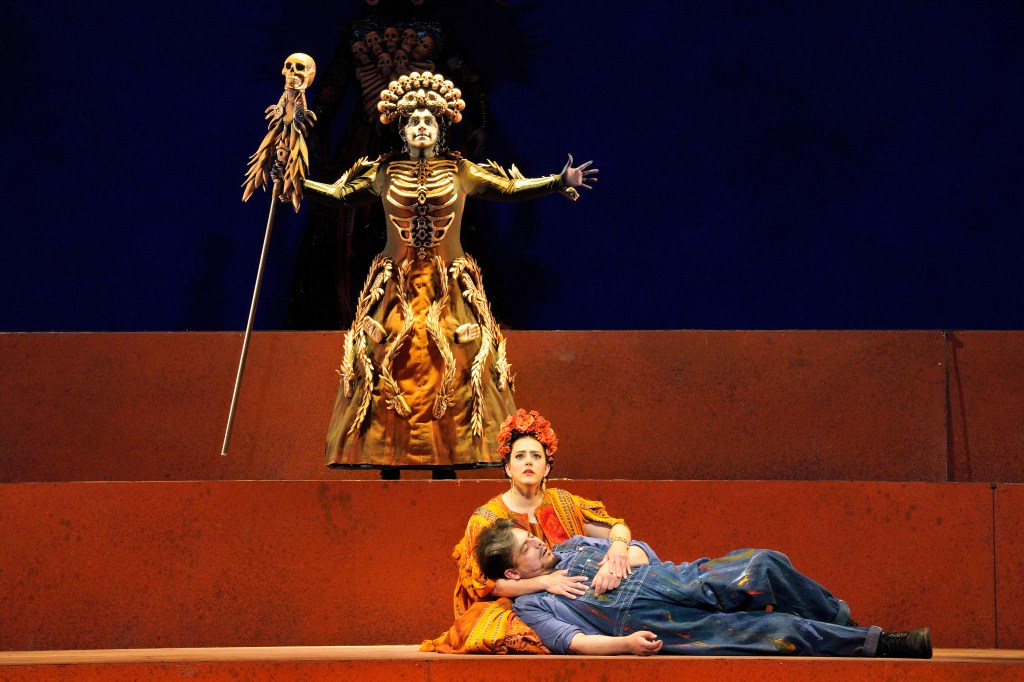
El Último Sueño de Frida y Diego

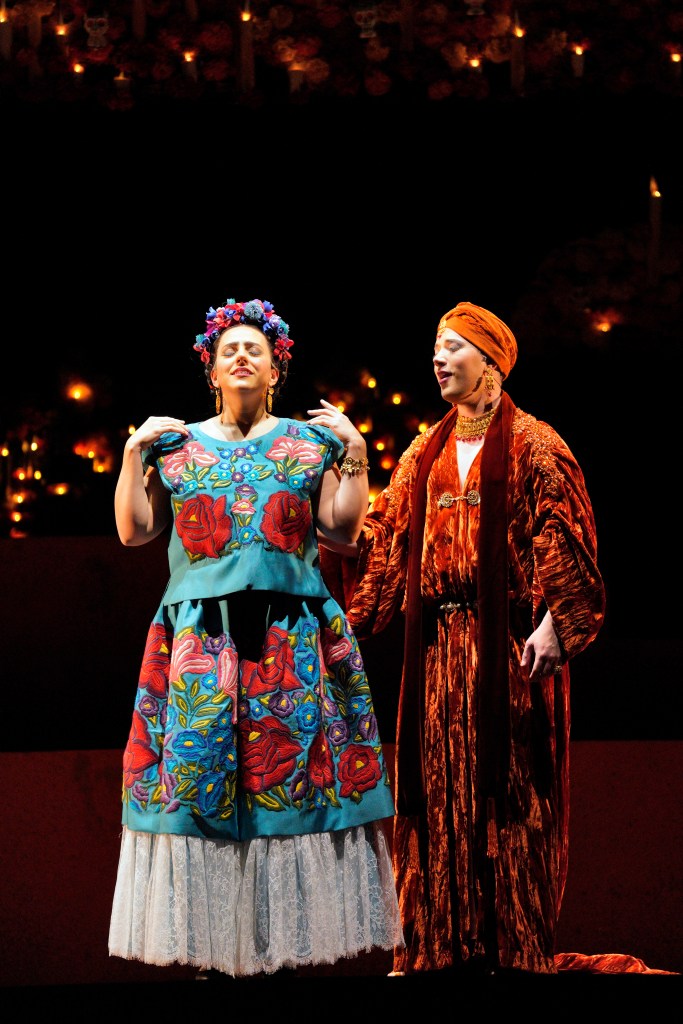
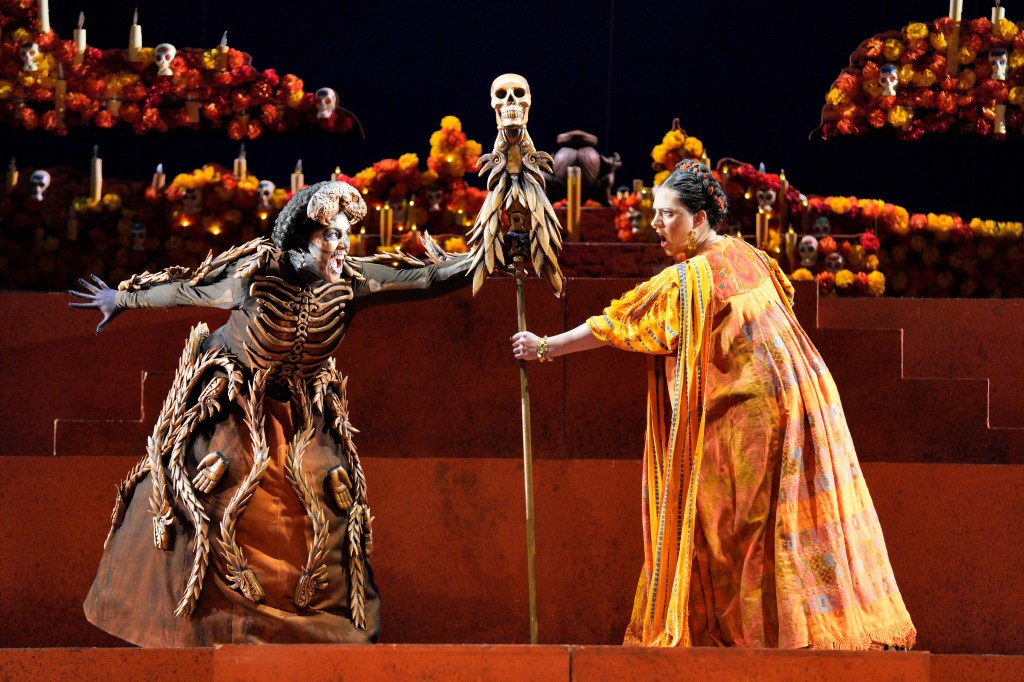
(from top) Yaritza Véliz as Catrina, Daniela Mack as Frida, Alfredo Daza as Diego. All photos by Cory Weaver.

In North America, no artistic couple has ever been as noted or as iconic as Mexican painters Diego Rivera and Frida Kahlo – he for his large-scale, socio-political murals and she especially for her self-portraits in a magical realism style.  San Francisco was significant for the couple.  Among other connections, they lived here briefly in the early ‘30s, and having divorced in 1939, were remarried in 1940 at City Hall, across the street from War Memorial Opera House.  So, it is fitting that San Francisco Opera would co-produce a work to honor the two.  This represents the first time in its 100 years that the company has commissioned a work by a female composer or performed one sung in Spanish.  The result is visually stunning and musically powerful.

Cast.

Composer Gabriela Lena Frank’s special compassion for Frida may derive from their shared experience.  Both are Latinas of mixed blood; both have suffered debilitating medical conditions; and though their specialties differ, they are both involved in the arts.   Argentine-born mezzo Daniela Mack performs Frida and what a fit.  In this fantasy, Frida is deceased, and Mack’s deep, dark, heavy vibrato suits the condition and the music wonderfully.  The role has an unusually low tessitura, constantly testing the bottom of Mack’s range, but she skillfully maneuvers through the score and appears as a totally convincing Frida.

Daniela Mack as Frida, Jake Ingbar as Leonardo.

Cuban-born, Pulitzer Prize winning (“Anna in the Tropics”) playwright Nilo Cruz provides the literate libretto.  Wishing to integrate aspects of Mexican culture into the libretto in a magical realism fashion, he builds the narrative around the culturally significant Día de los Muertos (Day of the Dead) and Aztec mythology.  He also introduces an element from literature, a twist on the Orpheus and Euridice story.  The dying Diego, sung effectively by baritone Alfredo Daza who also looks and acts well in an underdeveloped role, yearns for Frida.  She resists returning to the human world because of the mental anguish that Diego had caused her and the endless physical pain she suffered during her life.  Ultimately, she does agree to return to the living to accompany his passage into the underworld.  Frida is granted 24 hours on earth, but forbidden to touch a living being, at the price of reliving her physical pain.

Yaritza Véliz as Catrina, Daniela Mack as Frida.

The rule maker is Catrina, Keeper of the Dead, a harrowing skeletal figure played by Yaritza Véliz, a lyric soprano who adroitly attacks the dramatic singing demands of the role with zest.  Although Véliz totally commands the stage, credit Costume Designer Eloise Kazan for Catrina’s striking look as well as the full array of remarkable costumery that enhances the production.  The fourth main principal draws from outside the central relationship.  The character is Leonardo, a female impersonating actor with a Greta Garbo obsession, performed by outstanding countertenor, Jake Ingbar, who takes on an almost Queen of the Night coloratura aria with great agility and success.  There is a thematic connection to this character’s being written into the narrative, but explaining it here wouldn’t be very productive.

Cast,

The composer’s not uncommon modern approach combines lush musical brushstrokes as a foundation with tense, pointillistic finishing touches.  Staccato punctuation to the harmonious undertones comes from everywhere in the orchestra from timpani and gong to strings and horns.  Even the chorus contributes to the sometimes sharply unsettling strokes.  Some subtle Mexican folk music themes enter the score and even a brief phrase of percussive trumpets that seems like it may lead to a mariachi song.  The use of lyrical and dramatic singing yields an attractive balance of styles, but lacks memorable melody.

Cast.

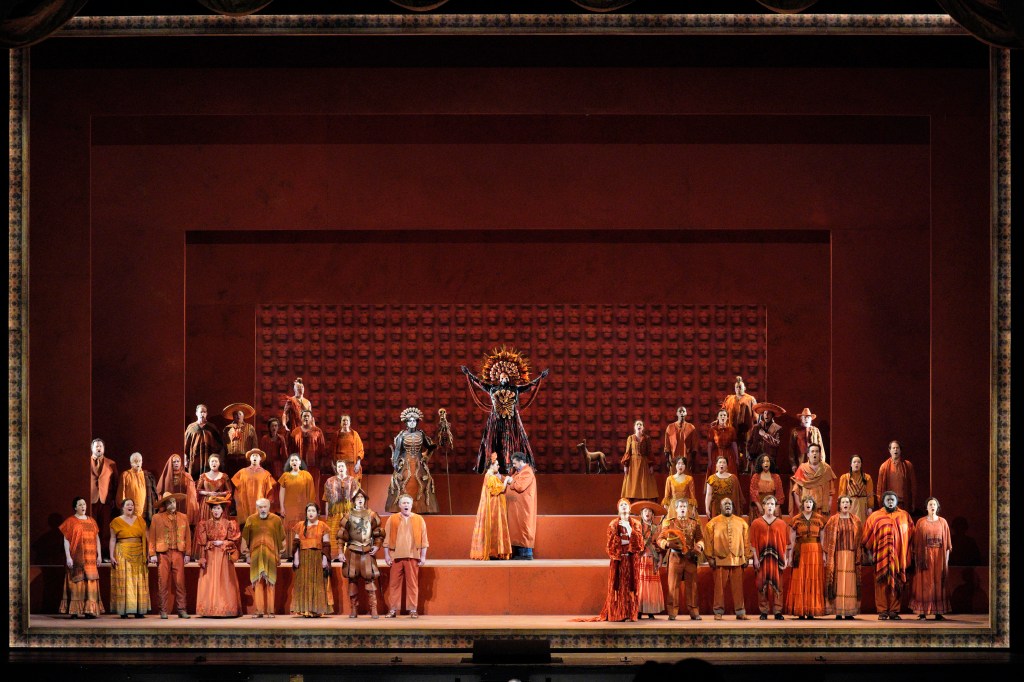
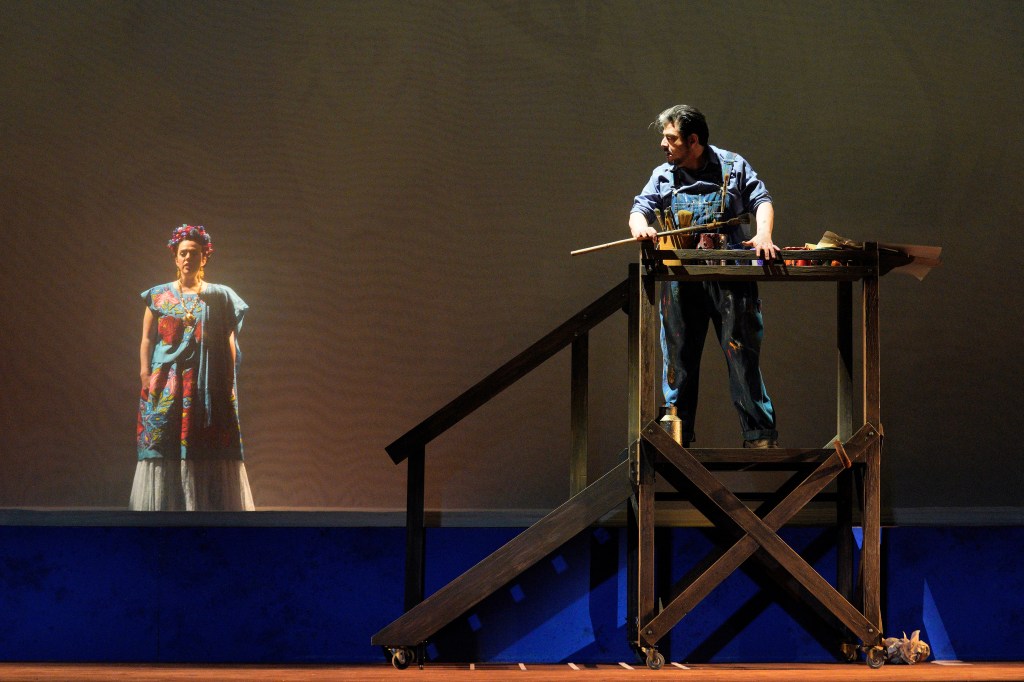
Día de los Muertos offers great scope for Jorge Ballina’s colorful and macabre scenery.  In Act 1, naranja, or orange, está el color del día.  Orange and yellow marigolds, along with an abundance of candles, skulls, and crosses bedeck the stage, arrayed and lit in a manner to create deep and layered visual perspective.  Orange dominant costumery abounds in the chorus, adding to the striking look of the holiday.  The contrast of detail and perspective in much of Act 2 could not be stronger, opening with park scenery depicted in muted colors and two-dimensions.  Later, Diego’s studio is bereft of decoration – a mural-sized blank canvas and walls of endless blue representing Frida’s Casa Azul.  Yet the costumes in group scenes in Act 2 display a flush palate of color.  The overall visual effect in both acts captivates.

Cast.

This production benefits from the continuity of having opened with the same design team at San Diego Opera, and Director Lorena Maza integrates their contributions seamlessly.  Conductor Roberto Kalb reprises his involvement as well, ensuring a knowledgeable and skilled hand at the baton.  Except for Daza, the four principals are new to their roles, but individually and collectively, their singing and acting is superb.

While its tone consistently buoys the opera, the weakest element lies in the storytelling.  The pace at times can be like watching paint dry (to put it in the frame of the opera – and picture frames are one of the many appealing stage props).  Somewhat related, the stakes do not seem considerable.  Frida is already dead, and Diego is dying, so what consequences of their actions can be that bad?  Happily, other aspects of the production far more than counterbalance these matters and make for a highly appealing opera.

Daniela Mack as Frida, Alfredo Daza as Diego.

“El Último Sueño de Frida y Diego,” composed by Gabriela Lena Frank with libretto by Nilo Cruz; is produced by San Francisco Opera; is commissioned by San Diego Opera, San Francisco Opera, Fort Worth Opera, DePauw University, and with support from University of Texas; and plays at War Memorial Opera House, 301 Van Ness Ave., San Francisco, CA through June 30, 2023.

Die Frau ohne Schatten

Linda Watson as Nurse, Nina Stemme as Dyer’s Wife, Camilla Nylund as Empress. All photos by Cory Weaver.

After a 34-year absence from its stage, San Francisco Opera triumphantly offers the opera that represents the culmination of Richard Strauss’s most productive period.  This demanding opera is imbued with lush music; tells a captivating fairy tale story; and in the current production, visually explodes in pop art scenery.  Following his masterpieces “Salome,” “Elektra,” “Der Rosenkavalier,” and “Ariadne auf Naxos,” it is “Die Frau ohne Schatten” – the woman without a shadow.  In this case, lacking a shadow symbolizes a woman being barren.

David Butt Philip as Emperor.

Hugo von Hofmannsthal’s complex libretto can confuse.  The Empress of a fictional empire is ordered by her father, the King of the Spirit Realm, to acquire a shadow within three days.  If she fails, she will be forced to return her father, and her husband, the Emperor, will be turned to stone.  Aided by her nurse, the Empress descends upon a yarn dyer’s wife in the human world who has chosen not to have children.  The Empress promises unimagined riches and luxury in return for the poor woman’s shadow.  Though the lyrics from the backstage chorus say that the narrative is about love, the action, particularly by the males, is not romantic but about producing heirs.  The Dyer’s Wife even scolds the Dyer by decreeing that he doesn’t “own” her.

Johan Reuter as Barak the Dyer, Nina Stemme as Dyer’s Wife.

In the end, the Empress faces Sophie’s choice.  Either decision – to accept or reject the shadow – could leave blood on her hands.  High drama occurs with perceived or real betrayals and threats of killing, but since nobody dies, some would characterize “Die Frau” as a comedy!

Not only does this opera build upon Strauss’s own oeuvre, but it reveals its foundations in Mozart and Wagner.  The fairy tale and its challenges draw on “The Magic Flute.”  However, in Mozart’s opera it is the men who face the trials of courage.  Almost uniquely, in Strauss’s, the women are tested.

Linda Watson as Nurse, Nina Stemme as Dyer’s Wife, Camilla Nylund as Empress.

Like Wagner, Strauss exacts exceptional beauty and strength from instrumental music, also magnified by an exceptionally large orchestra.  Conductor Donald Runnicles demonstrates total command over a pit of 96 musicians.  Also, like late-period Wagner, vocalization tends toward the highly dramatic with little in the way of hummable melodies.  Set pieces are rarely memorable, though the final scene’s duets and quartet do impress.  And in keeping with Strauss being the most suitable successor to Wagner, “Die Frau” is replete with leitmotifs.  Often leitmotifs are redundancies as the audience already sees the character associated with the musical phrase.  Here, the two most recognizable leitmotifs are of the Falcon and the Empress’s father, Keikobad, neither of which we ever see.  In a final similarity, at over three hours and forty minutes for a performance, this masterpiece is somewhat bloated, customary in late-period Wagner.

Strauss loved the female voice.  Just look at the titles of the operas mentioned in the first paragraph.  Like the earlier “Der Rosenkavalier,” three female voices dominate, two sopranos and one mezzo.  But while the earlier opera demanded mostly lyrical singing to ethereal music, “Die Frau” calls for dramatic vocalization to cut through large orchestration, and this cast possesses three outstanding practitioners.

Linda Watson as Nurse.

The key role is the Dyer’s Wife, who like four of the five leads is not given a name.  This part is portrayed by Nina Stemme, who on opening night received the San Francisco Opera Medal, the company’s highest honor.  She gives a memorable performance powering her way through both ends of her range with despair, rage, and rejoicing, as a woman confronted by many obstacles.  Her dilemma is whether to accept the consequences of selling her shadow, in the knowledge that she has resisted using it, but knowing that her husband wants children.

Camilla Nylund impresses as the Empress.  Like Stemme, she is a dramatic soprano, perhaps a little lighter vocally but in a role with a higher range, which she handles skillfully.  Unlike some mythical treatments from literature, “Die Frau” contains no sociological messages, but rather challenges of personal character.  It is the Empress who undergoes the greatest test of personal integrity, knowing the possible destruction of the Dyer’s Wife in one case or the Emperor in the other.

David Butt Philip as Emperor, Linda Watson as Nurse.

The third female principal is the versatile Linda Watson in a mezzo role, though she has succeeded in a large dramatic soprano repertory as well.  She plays an archetypical figure, the Nurse who acts as companion to the Empress.  She is older, dour, and often manipulative.  She also possesses magic which is used to accomplish her objectives.  Her darker, imperious voice holds up well alone and in vocal collaboration with the other women.  Bass-baritone Johan Reuter as Barak, the Dyer, and David Butt Philip as the Emperor have smaller roles but fill them admirably.

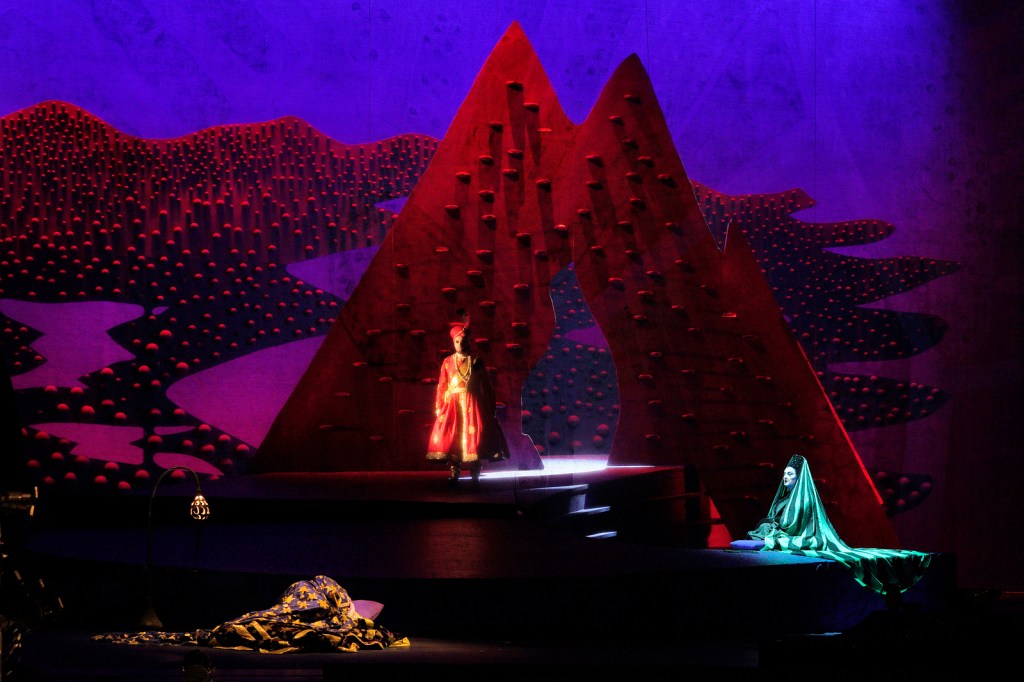
Another star in the production is the staging.  David Hockney’s well-traveled abstract designs have stood the test of time.  In the Spirit Realm, the masses of small hemispheres on the back wall change perspectives of size and depth with alterations in Justin A. Partier’s colored lighting to create a preternatural pop art look.  In the human world, the stage is a veritable kaleidoscope of brightly colored curtains with paint drips defining the Dyer’s work shop and abode.  Add Ian Falconer’s brilliant, predominantly Indian-themed costumery, and the stage bursts with energy throughout.

Camilla Nylund as Empress, Nina Stemme as Dyer’s Wife, Johan Reuter as Barak the Dyer, David Butt Philip as Emperor.

Done properly, few opera companies can produce “Die Frau ohne Schatten” as it hogs resources.  It demands a huge orchestra, a large chorus, sets to accommodate several locales, and infrastructure to facilitate numerous scene changes quickly.  San Francisco Opera patrons are fortunate to have the opportunity to witness this grand opera.

“Die Frau ohne Schatten,” composed by Richard Strauss with libretto by Hugo von Hofmannsthal; is co-produced by San Francisco Opera, LA Opera, and Royal Opera House Covent Garden; and plays at War Memorial Opera House, 301 Van Ness Ave., San Francisco, CA through June 28, 2023.

The Wizard of Oz

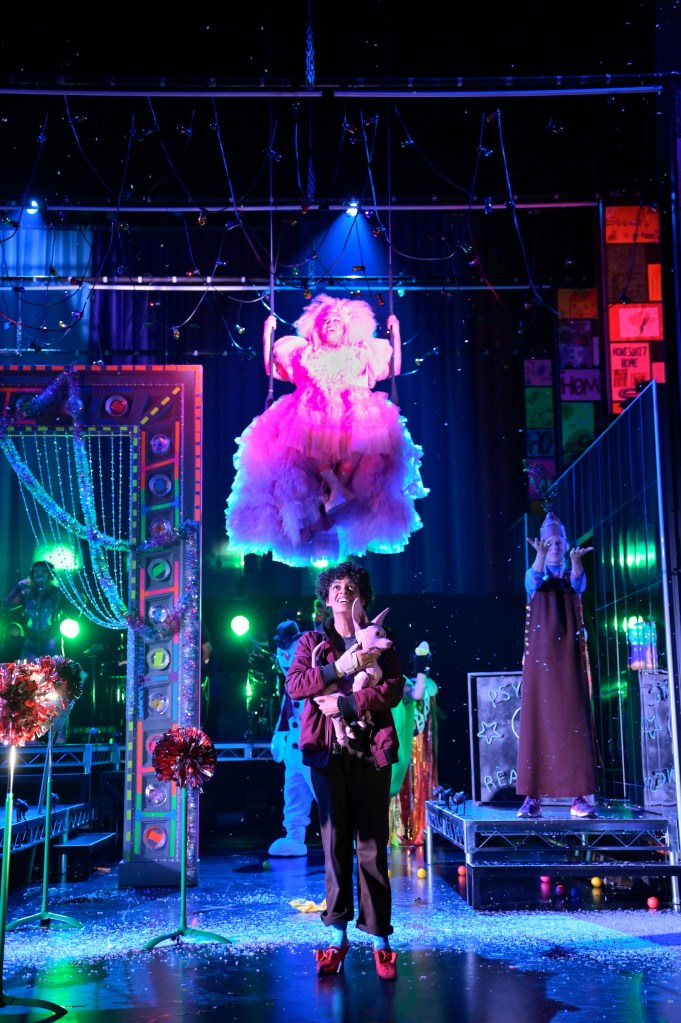
(below) Chanel Tilghman as Dorothy, (above) Katrina Lauren McGraw as Good Witch Glinda. All photos by Kevin Berne.

“Somewhere over the rainbow.”    “I’ve a feeling that we’re not in Kansas anymore.”  “Follow the yellow brick road.”  “We’re off to see the wizard.”  The glorious 1939 movie version of L. Frank Baum’s beloved “The Wizard of Oz” has become an American touchstone and introduced a bevy of memes and tropes that define our narrative.  Indeed, while it is easy to sit back and enjoy it as an entertaining pastime, in its richness, it is also a fable of the American spirit.  Dorothy, despite being young and female, represents the prototypical hero on an odyssey, a quest to find her way home after defeating the odds, aided by trusty sidekicks she has met along the way.  Together, using brains and hearts and courage, they conquer fears and earn their way to becoming what they had aspired to be.

Chanel Tilghman as Dorothy, Ada Westfall as Professor Marvel.

When people are conditioned to the expansive vision of a story that only a movie can provide, it begs the question how that grand scope can satisfactorily be reduced to the stage.  A.C.T. certainly has the answer with a brilliantly campy rendering of this classic.  It’s frothy.  It’s sassy.  It sizzles, keeping the audience locked in and laughing from start to finish, with a cast that hits all its marks and a production that never stops delivering everchanging visual pop art.

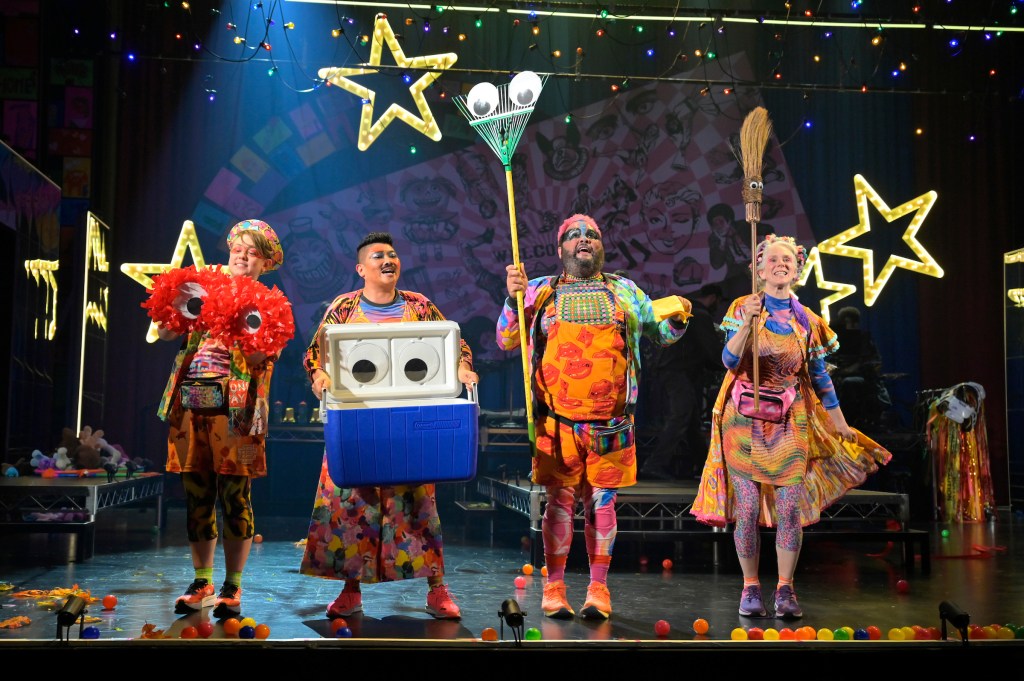
Ensemble – Ezra Reaves, El Beh, Travis Santell Rowland, Beth Wilmurt.

The production encourages audience interaction like booing and waving a sea of yellow napkins that are given to the audience to represent the yellow brick road (I could have used my yellow socks instead but chose not to).  And cast members often break the fourth wall, speaking directly to the audience.  In one instance, the attendees were asked to raise a hand if they had seen “The Wizard of Oz” and then if they hadn’t.  Only one first timer was observed in the orchestra seats, so it is safe to assume that the reader already knows the story and that spoiler concerns don’t apply.

(foreground) Katrina Lauren McGraw as Good Witch Glinda. (rear) Chanel Tilghman as Dorothy, Travis Santell Rowland as ensemble.

The play follows the movie closely and passes through the familiar places.  Dorothy is portrayed by a spritely Chanel Tilghman who is remorseful for the trouble she has caused Aunt Em.  Dorothy wends her way through Kansas, Munchkin Land, the Yellow Brick Road, the Poppy Fields, and of course, Emerald City.  Set changes are endless, with a cornucopia of eye-popping props.  Fanciful structures, brightly-colored signs (except for Kansas, whose name appears on a large panel of shabby cardboard box pieces!), and lights.  Of course, in Emerald City, the stage turns the expected color with green tinsel curtains and mirrors. And let’s not forget that “The Wizard of Oz” is a musical.  Starting with Tilghman’s heartfelt “Somewhere Over the Rainbow,” accompanied by a trio of plucked string instruments, we get delightful renditions of songs we all know and love.

Courtney Walsh as the Wicked Witch of the West.

Meanwhile, although the story is designed for children, Dorothy is somewhat the cause of two deaths; off color humor abounds; and the drowsiness from the poppies could be interpreted as self-inflicted drugging.  That said, German language fairy tales can be worse.  While the action generally moves along briskly, unnecessary stuffing, like the jitterbug scene, extend the run time which does get too close to three hours.  Instances of more organic song and dance add charm.

The cast is full of Bay Area favorites, and they do a remarkable job.  The witches both stand out.  Good Witch Glinda is Katrina Lauren McGraw of the big voice and big laugh and big personality, who delights, bedecked in pink, from her great frilly dress to her bouffy hair.  Her nemesis is the Wicked Witch of the West played in dastardly fashion by a sneering and threatening Courtney Walsh, who is clad in all white, including cowboy boots, despite the conflicting color symbolism.

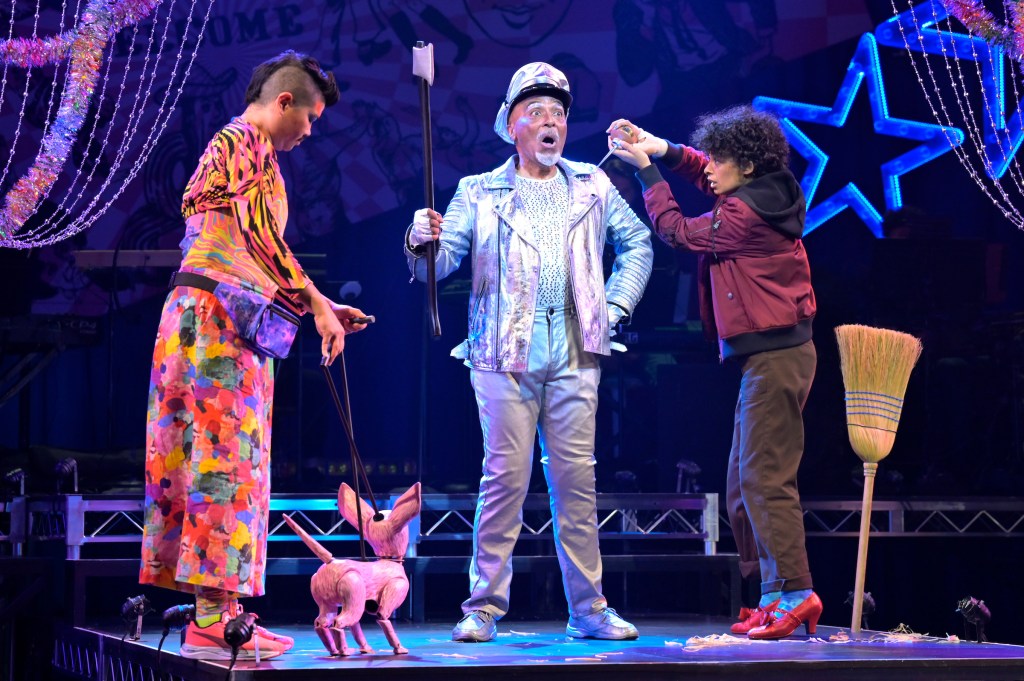
El Beh as Toto Puppeteer, Darryl V. Jones as Tin Man, Chanel Tilghman as Dorothy.

Dorothy is accompanied on her voyage by the traditional Tin Man, Lion, and in the largest role of the three, Scarecrow.  Danny Scheie, one of the area’s premier comedians, is Scarecrow, and he makes the most of his sardonic counterpunch humor.  All the other performers are great as well, and preferences for one or another would be subjective.  I particularly like the multitalented El Beh, who has no major name role but a great deal of stage time.  She excels at playing cello, acting the stoic Uncle Henry, and especially at being the frantic and flamboyant Oz guard who hinders and helps the travelers to reach the Wizard.

Beth Wilmurt as Ozian, Darryl V. Jones as Tin Man, Chanel Tilghman as Dorothy, El Beh as Oz Guard, Cathleen Riddley as Lion, Danny Scheie as Scarecrow.

The design team lead by Director Sam Pinkleton is really remarkable. David Zinn deserves at least double pay.  Not only did he create the scenic design, with its vast number of moving parts requiring a massive management effort, but he designed the equally vast number of highly varied and clever costumes as well.  Quite a contribution.  Other elements also contribute to the overall effect, especially Stacey Derosier’s lighting.  In all, this is a fun and nostalgic evening – a highly entertaining and deserving effort.

“The Wizard of Oz,” from the book by L. Frank Baum, adapted by John Kane, with music and lyrics by Harold Arlen and E. Y. Harburg is produced by American Conservatory Theater and plays at Toni Rembe Theater, 415 Geary Street, San Francisco, CA through June 25, 2023.

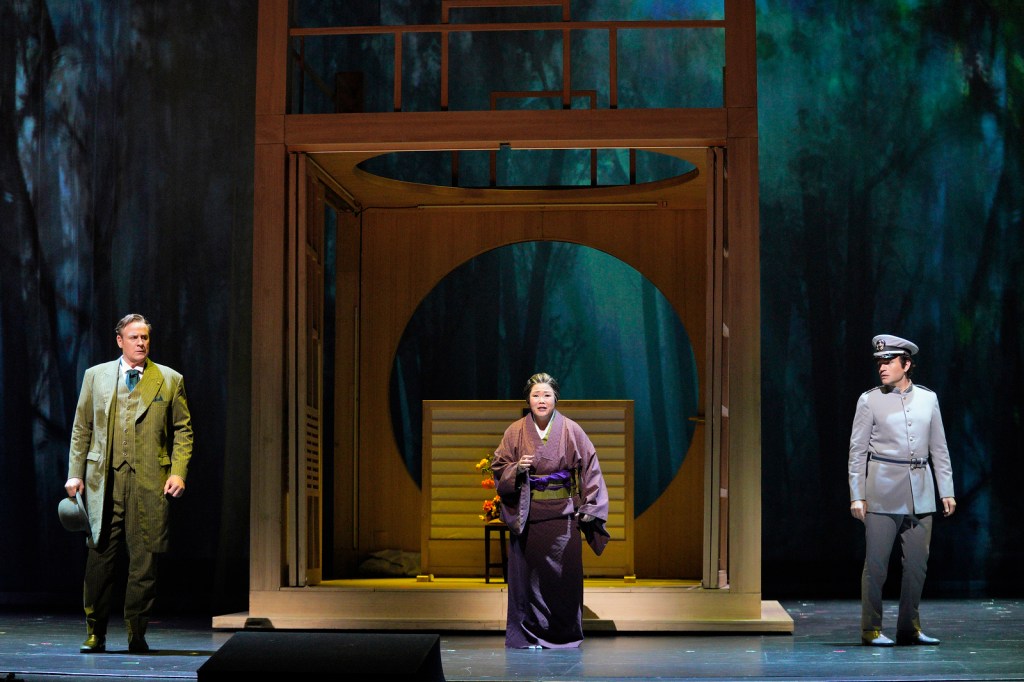
Madame Butterfly

Michael Fabiano as Lt. B. F. Pinkerton, Karah Son as Cio-Cio-San. All photos by Cory Weaver.

With the premiere of “Madame Butterfly” in 1904, Giacomo Puccini would not have realized the enviable hat-trick he had accomplished.  Each of three straight operas he had composed would become among the most performed in the world’s opera repertory to this day, over a century later.  Uniquely, both Giuseppe Giacosa and Luigi Illica contributed to each of the librettos, comprising a team along with Puccini of uncommon complementary skills.

Musically, “Madame Butterfly” marks a culmination.  The first of the three masterpieces, “La Bohème,” is sans pareil in its melodiousness and lyricism.  Then comes “Tosca,” perhaps the most noted full-length verismo opera.  But despite its harshness and the grim deaths of all four lead characters, it too is replete with memorable, if often dark, music.  Finally, “Madame Butterfly” integrates the best of the other two and overlays pentatonic scale Japanese folk melodies to add a whole new dimension to the score.  The popularity of this beautiful and exotic wonder should be no surprise.

Jongwon Han as The Bonze, Karah Son as Cio-Cio-San, John Charles Quimpo as adult Trouble.

Although the narrative is simple, the character evolution is profound.  Lieutenant B. F. Pinkerton of the U.S. Navy takes the 15-year-old Cio-Cio-San as a port bride, which modern society would consider particularly despicable.  He later departs, saying that he would return before the robins nest again, knowing that to be a lie.  He does return three years later with his American wife to find that he has a son.  In the end, but too late, he shows remorse and responsibility.  Despite her delusions about her husband, Cio-Cio-San has grown and realizes the fate she faces with the dishonor of Pinkerton’s behavior.
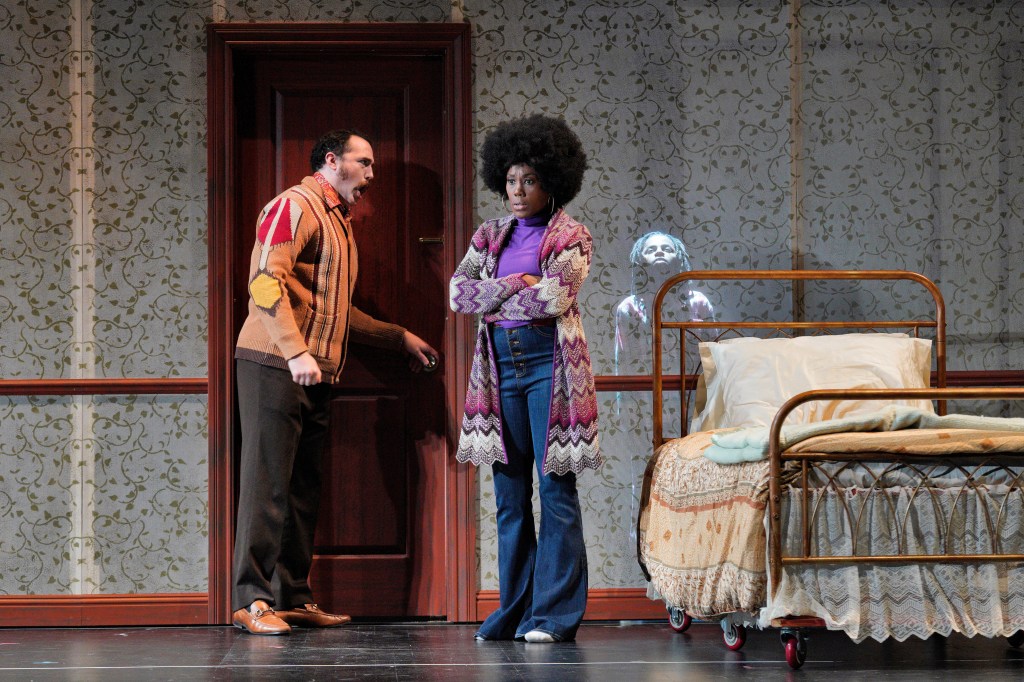
Cast – wedding ceremony.

The key to San Francisco Opera’s wonderous production is a cast headed by four powerful singers.  Of course, the opera belongs to Cio-Cio-San, the Butterfly.  And while a butterfly may be fragile, singing this part is not for a delicate soprano.  Except for the very beginning, she is on stage and the dominant singer throughout, and sometimes singing at full tilt.  The fact that Karah Son’s bio lists 15 past and upcoming productions in this role indicates how well it suits her lyricism, power, and range.  She handled the signature aria, “Un bel di vedremo,” (“A good day will come”) with grace and elegance.  Another memorable moment (actually, 14 minutes) was her extended duets with Pinkerton, “Viena la sera” (“Evening comes”) and “Bimba dagli occhi pieni di malia” (“Girl with malicious eyes”).  She did seem to vocally stumble a bit early in the sequence, but it was of little consequence, as she gloriously soared in mellifluous harmony with her loved one to high “c” at the end of the beautiful sequence.

Lucas Meachem as Sharpless, Hyona Kim as Suzuki, Michael Fabiano as Pinkerton.

Because of Pinkerton’s lack of empathy for the consequences of his actions toward the impoverished and naïve Cio-Cio-San, his character is loathsome, which makes it hard to cheer for the artist who portrays him.  But Michael Fabiano is one of the distinguished tenors of his generation with an agile and penetrating voice.  His vocals are commanding from the reckless “Dovunque al mundo” (“Wherever in the world”) to the wistful “Addio fiorito azil” (“Farewell, flowered home”).  On occasion, his attention to dynamics does result in a loss of audibility, not that he is incapable of being heard.

Cio-Cio-San’s maid and mother figure is Suzuki, who is played flawlessly by Hyona Kim.  She particularly shines in the flower duet with Butterfly and in a brief solo in a Japanese folk idiom.  Lucas Meachem is vocally powerful and nicely portrays the internal conflict that Sharpless, the American Consul faces, trying to balance his responsibility to his countryman and his concern for the welfare of a vulnerable young woman.
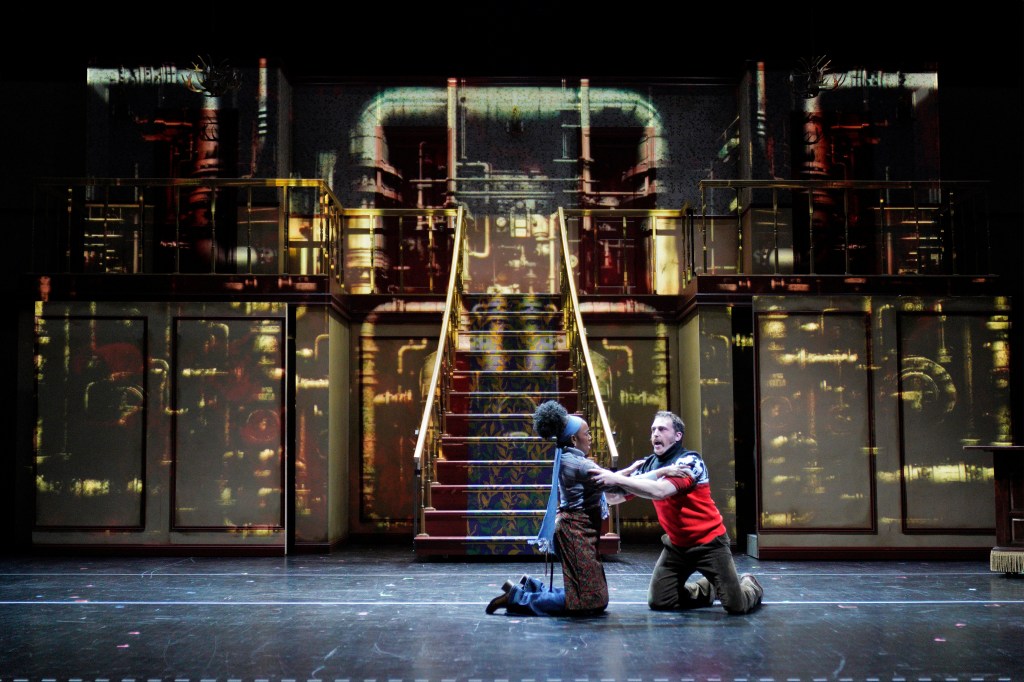
Kidon Choi as Prince Yamadori, Julius Ahn as Goro, Karah Son as Cio-Cio-San.

Puccini would be shocked at the staging of this joint production.  It is an adventuresome and thoughtful conceit by Director Amon Miyamoto, which many patrons will love, while some will find distracting and inappropriate.  Generally, directors can take the latitude to color a production as they wish as long as they don’t change music or lyrics.  This rendition plays as a flashback, seen through the eyes of the young adult son, Trouble, who was raised by Pinkerton and his American wife.  In mute scenes as his father lays dying, Trouble reads letters which tell him about his biological mother.  He appears as a silent observer throughout the opera, sometimes lurking in the shadows, and other times flailing about like an impotent ghost trying to change the arc of history. Although I was dubious about this device to begin with, I accepted its dramatic validity and impact in the end.

Karah Son as Cio-Cio-San.

Debate will also extend to the overall production design of the opera.  Those who crave grand sets will find this one spare (Boris Kudlička designer).   For most of the opera, the only set piece is symbolic of Cio-Cio-San’s house, represented as a light wood colored, cube-shape with different cutouts on each side.  Yet, this minimalism in conjunction with striking projections (Bartek Macias designer), sheer curtains, and sharp costumery (Kenzō Takada designer) reveals visually appealing angularity and a remarkable overall effect.

For those attendees seeing their first “Madame Butterfly” there will be no comparison possible.  For those who have seen several, this vision offers something fresh and diverting that will add to the opera goers experience.

Hyona Kim as Suzuki, John Charles Quimpo as adult Trouble, Evan Miles O’Hare as elder Pinkerton.

“Madame Butterfly,” composed by Giacomo Puccini with libretto by Giuseppe Giacosa and Luigi Illica, and based on the play of the same name by David Belasco, is produced by San Francisco Opera, Tokyo Nikikai Opera Foundation, Semperoper Dresden, and Royal Danish Opera and plays at War Memorial Opera House, 301 Van Ness Ave., San Francisco, CA through July 1, 2023.

A Soldier’s Play

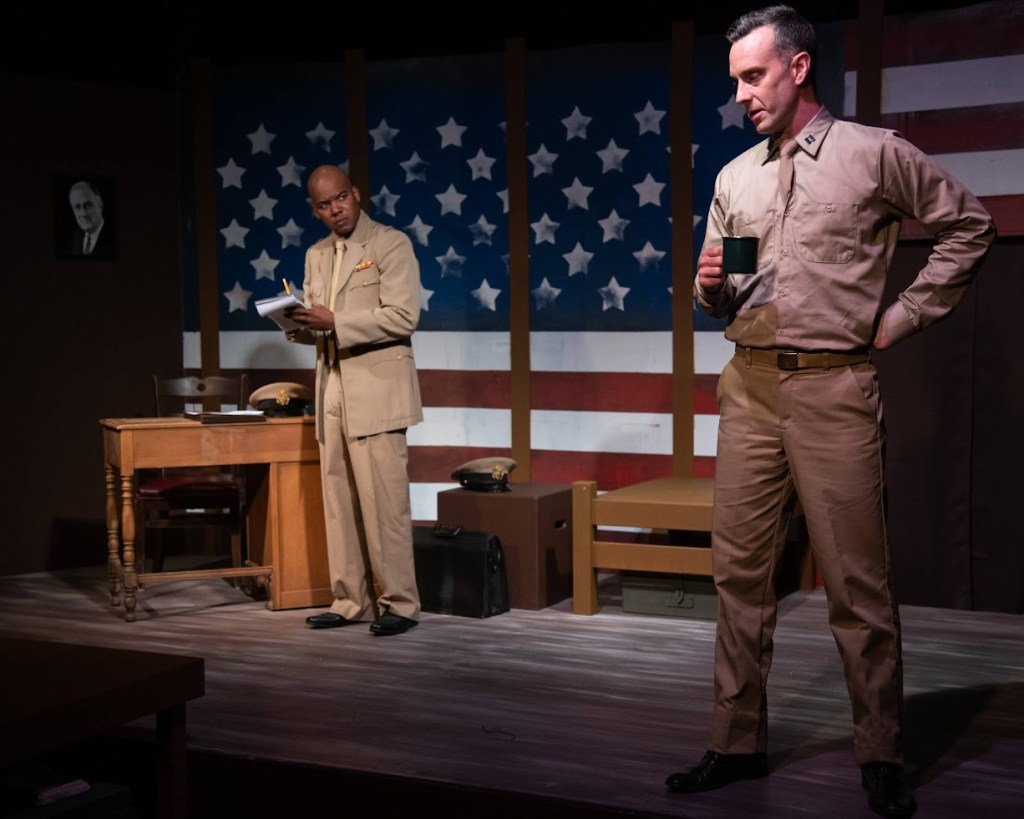
Dedrick Weathersby as Captain Richard Davenport, Drew Paton as Captain Charles Taylor. All photos by Grizzly De Haro.

One of the great breakthrough films of 1984 was “A Soldier’s Story,” a mystery centered on the murder of an African-American sergeant in a segregated unit at an Army base in Louisiana during World War II.  Less known to the general public is its source material, Charles Fuller’s “A Soldier’s Play,” winner of the 1982 Pulitzer Prize for Drama.  Not as expansive as the movie, the taut play exudes racial conflict throughout.  Altarena Playhouse captures the gripping tension with a laudable production.

Fred Pitts as Sergeant Vernon Waters, Tory Williams as C. J. Memphis.

In 1944, African-American military units were always commanded by white officers, with black non-coms, and enlisted men, reflecting the plantation structure that preceded it by a century and more.  This organization represents the natural order to Captain Charles Taylor, a West Point grad, who happily manages and cajoles a platoon comprised of talented black baseball players who will get to play the Yankees if they continue to win all of their games.  To this day, a common condition persists, that racists like Taylor often carve out exceptions to allow minority peoples to reflect glory on their white overlords.

(left to right) Mark Anthony as Bernard Cobb, Gary Moore as Melvin Peterson, Terrence Smith as Louis Henson, Hosea Morgan as James Wilkie, Jake Fong as Tony Smalls, Fred Pitts as Vernon Waters, Tory Williams as C. J. Memphis.

An investigation is ordered to find the killer of the black Sergeant Vernon Waters. His commanding officer, Taylor, is shocked that one of the rare black officers in the military, Captain Richard Davenport, is brought in from another base and tasked.  In another racial behavioral cliché, Taylor retains civility when Davenport arrives, yet dismisses his legitimacy and the very notion of a black officer.  He insists that not only will Davenport fail, but that he’s being set up to fail.  Between the legal and social impediments that the black officer faces, he won’t be able to charge a white man for the murder, just what the senior officers on the base hope for.  Indeed, the natural suspects would be off-base locals, especially the Ku Klux Klan, or white Army officers.

Tory Williams as C. J. Memphis, Hosea Morgan as James Wilkie.

The action shifts easily from present to past in numerous flashbacks, and we meet the platoon’s men as they interact and are individually interrogated by Davenport.  The distinctive element of the play is that it plumbs intra-racial prejudice as well, and that the antagonist is a black man.  The bunkhouse friction derives from Sergeant Waters, a by-the-book authoritarian who derisively refers to all southern blacks, of which there are several in the platoon, as Geechees.  He largely defends the bigotry of white people, as he blames the southern blacks for being lazy and shiftless and setting poor examples for the black race.  Meanwhile, the men try to maintain cohesion and hope to get deployed to enter the war as a fighting unit.

“A Soldier’s Play” is designed for actors, with a large ensemble of speaking parts.  Overall, the cast rises to the occasion with several sharp performances.  The black captain, played by Dedrick Weathersby, and the white captain, played by Drew Paton, aptly convey their ramrod appearances and behaviors and their uneasy ceasefire throughout.  Though they are peers in rank, Weathersby uses his character’s authority granted to lead the investigation as a bludgeon to fend off the white officer’s intrusions and insults.  Meanwhile, Paton’s character persists at interfering, obliging only when necessary.  They stand as two opposing sentinels, a pace apart physically, but light years apart on every social and emotional dimension.

Drew Paton as Captain Charles Taylor, Dedrick Weathersby as Captain Richard Davenport, Aaron Seymour as Captain Wilcox, Sean Purcell as Lieutenant Byrd.

The pivotal and most divisive character, Sergeant Waters, denigrates and punishes blacks who don’t submit to his demands.  Although Fred Pitts is talented and acts admirably, his performance doesn’t exploit Water’s vengeful imperiousness to make him sufficiently despicable. Among other deeds, he had unnecessarily reported James Wilkie, a “lifer” like himself but also a “Geechee,” for drinking while on guard duty and had him busted from sergeant to private.  Wilkie, who must first satisfy Waters in hopes of getting his stripes back, is well acted by Hosea Morgan in an excitable and obsequious manner. Another “Geechee” to suffer Waters’s abuse is C. J. Memphis. Tory Williams is the incarnation of Memphis with his slow talking, easy going, big teddy bear way. One hitch is that Memphis is supposed to be a competent guitar player, and Williams strums a single chord when he sings.

With many shifts in time and characters from one scene to another, the narrative and ShawnJ West’s direction maintain a brisk pace and keep the audience well engaged. In many ways, “A Soldier’s Play” is like a police procedural but with added elements of historical and social significance.  Unfortunately, the racial battles rage on, so the story’s poignancy has not diminished.

“A Soldier’s Play,” written by Charles Fuller, is produced by Altarena Playhouse and plays on its stage at 1409 High Street, Alameda, CA through June 25, 2023.

The Shining

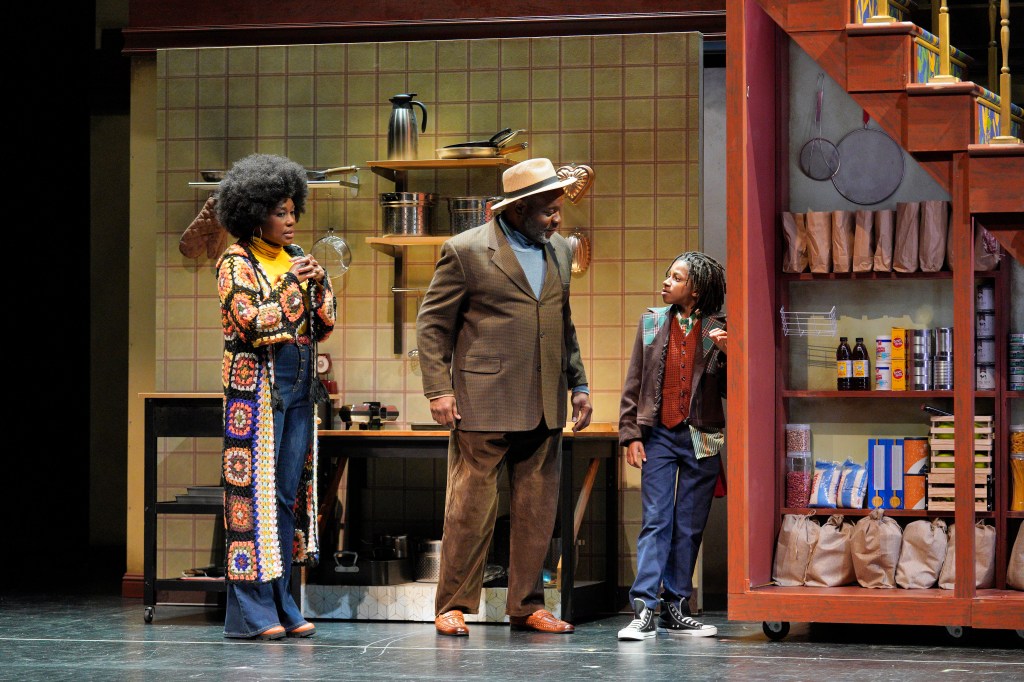
Robert Wesley Mason (Jack), Kearstin Piper Brown (Wendy) and Michael Thompson (Danny). All photos by Cory Weaver.

Three threads have dominated the history of opera – love, conflict, and death.  A less frequent theme is horror, yet sometimes that genre seems ripe for operatic exploitation, especially when it includes the other elements mentioned.  Such is the case with Stephen King’s “The Shining,” a gripping novel of isolation and anxiety leading to fear and horror.  Composer Paul Moravec and librettist Mark Campbell have created musical and dramatic tension that follows the novel.  Since its commissioning by Minnesota Opera in 2016, two other companies have presented the original production.

Opera Parallèle has built its following based on three pillars – its deft selection of interesting underperformed or new material; the precise musical direction and conducting of Maestra Nicole Paiement; and the clever and original staging of Creative Director Brian Staufenbiel.  The innovative OP has developed the first new production of “The Shining” with two partners, and it’s a treasure to see and hear – a visual phantasmagoria to fit the portentous score.

Kearstin Piper Brown (Wendy), Kevin Deas (Dick Hallorann), Michael Thompson (Danny).

Jack Torrance, an unstable recovering alcoholic and unsuccessful writer, hires on as caretaker of the Overlook Hotel in the Colorado Rockies during its off-season.  He hopes that the seclusion will not only give him undistracted time for writing but also allow him to rebuild his relationships with his wife, Wendy, and son, Danny.  What the parents don’t realize is that Danny possesses “the shining,” which is the psychic ability of clairvoyance.  This attribute will allow the boy to see the hotel’s sordid past and set the stage for the horrors to come.  We will also learn of the damage done by generations of Torrance men that has led to familial horror.

Robert Wesley Mason (Jack), Kearstin Piper Brown (Wendy).

Energetic baritone Robert Wesley Mason portrays Jack, and in addition to his passionate singing, he is tasked with acting a dramatic role that at first is a smiling, loving family man but that descends into rage.  He accomplishes the task.  Wife, Wendy, is played by soprano Kearstin Piper Brown, who excels in two small arias, importantly, an early one in which she reaffirms that despite their problems, she has always loved Jack.

In addition to the part of Danny, played by Tenzin Forder on opening night, the other key player is the cook, Dick Hallorann, who familiarizes the family with the kitchen facilities at the beginning and reappears in the final scenes.  The cook also possesses “the shining” and provides sympathetic support for Danny.  Hallorann is performed by wonderful bass-baritone Kevin Deas, who displays great range and sonorousness with a warm lower reach and a clear and buoyant upper, having an appealing vibrato.

Cast.

The composer’s score is set in the modern mostly dissonant idiom, with the only hint of memorable melody coming during group or party scenes.  However, the eerie and rumbling orchestral sounds create the desired sense of anxiety.  Moravec alternates all sections of the orchestra to create disequilibrium – strings, winds, brass, and percussion.  They shriek and whine and grind and thunder and bellow as appropriate.  Paiement’s meticulous conducting is in evidence, whether in jabbing the air through staccato passages or sweeping through the lush ones.

However, the distinguishing feature of the production is the imaginative staging.  You can picture Staufenbiel’s enthusiasm in dealing with such creative wealth and diversity.  The canvas for the multimedia extravaganza is Jacquelyn Scott’s clever two-story interior set which symbolically hides secrets.  The hotel is represented by a large staircase, doors, and several panels that open up to become pieces of other venues, from boiler room to kitchen.  Jim French’s low lighting offers a notably understated quality, almost as if it’s hiding something.  But the pièce de résistance is David Murakami’s brilliant projections, which are largely cast upon scrims that overlay the set.  Variously, the scrimming brightly colors and shrouds and camouflages and distorts to add to the spooky effect.  The culmination of Act 1 is especially effective, with a mass of characters on the catwalk singing in a cacophony of voices.

Kearstin Piper Brown (Wendy), Robert Wesley Mason (Jack).

Lacking the vast toolbox of a movie production or the unfettered imagination of a reader, staging horror can suffer limitations, and having to overlay the conventions of opera make it even more difficult.  In the case of the novel, the reader can slowly grasp the withering sense of desperate isolation that can drive a person over the edge, which is key to the narrative.  But that element is not well developed in the libretto.  While Danny, and then Jack’s, visions of past tragedies could have been presented as voices only to preserve the visual sense of isolation, the deceased are shown as phantoms.  This does give the staging sparkle – a tawdry embellishment just short of campy that becomes the signature of the opera.  A final visual element is Alina Bokovikova’s costumes, especially those of the deceased, largely in garish red and black like in a New Orleans cat house.

Robert Wesley Mason (Jack).

One shock scene does occur, but even that is telegraphed.  However, while the horror element does not come across as strongly as it could, the revelations of incidents involving past caretakers unfold like a disturbing mystery. Jack’s increasing violence and irrationality lead inexorably to a culminating conflict.  The well-performed unsettling music and darkly kaleidoscopic visuals make for a highly interesting operatic experience.

“The Shining,” composed by Paul Moravec, libretto by Mark Campbell, based on the novel of the same name by Stephen King, and produced by Opera Parallèle in collaboration with Hawaii Opera Theatre and Portland Opera, plays at Yerba Buena Center for the Arts, 700 Howard Street, San Francisco, CA through June 4, 2023.