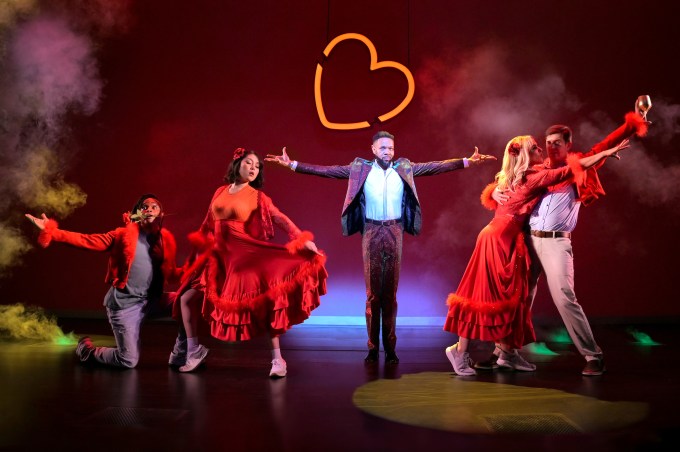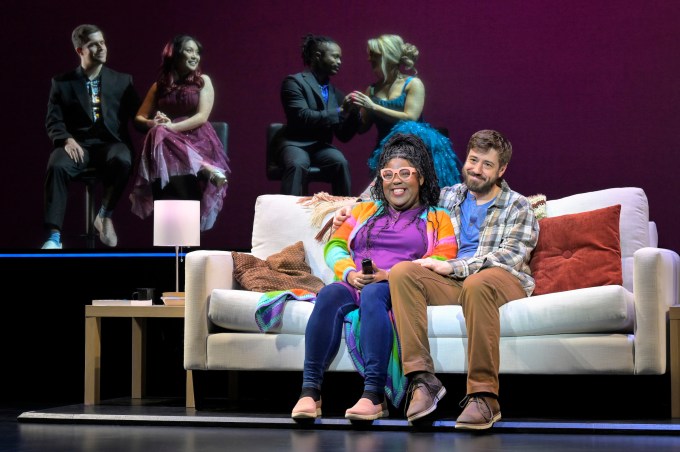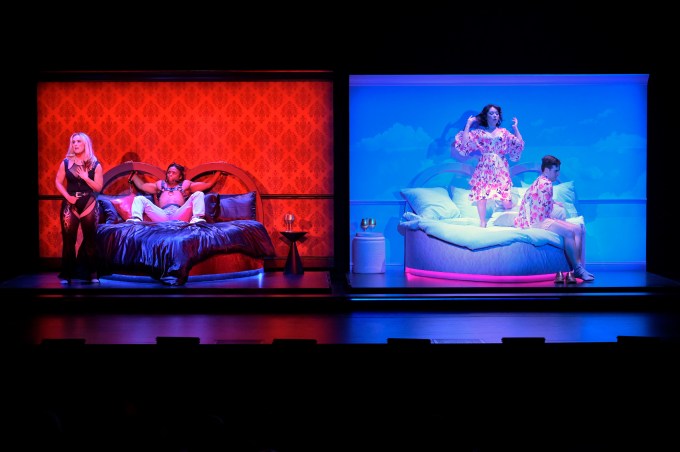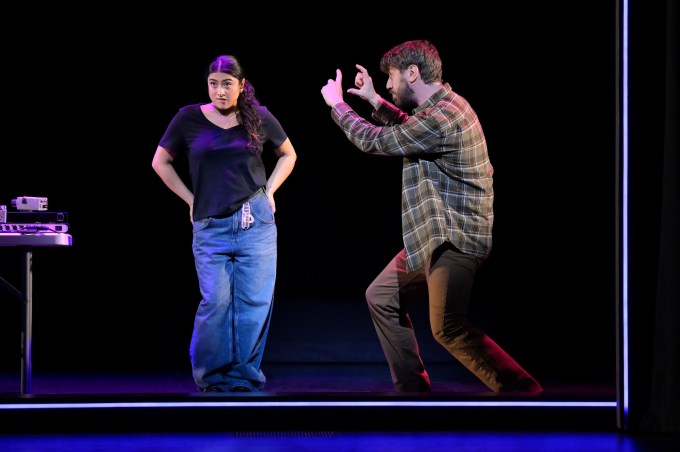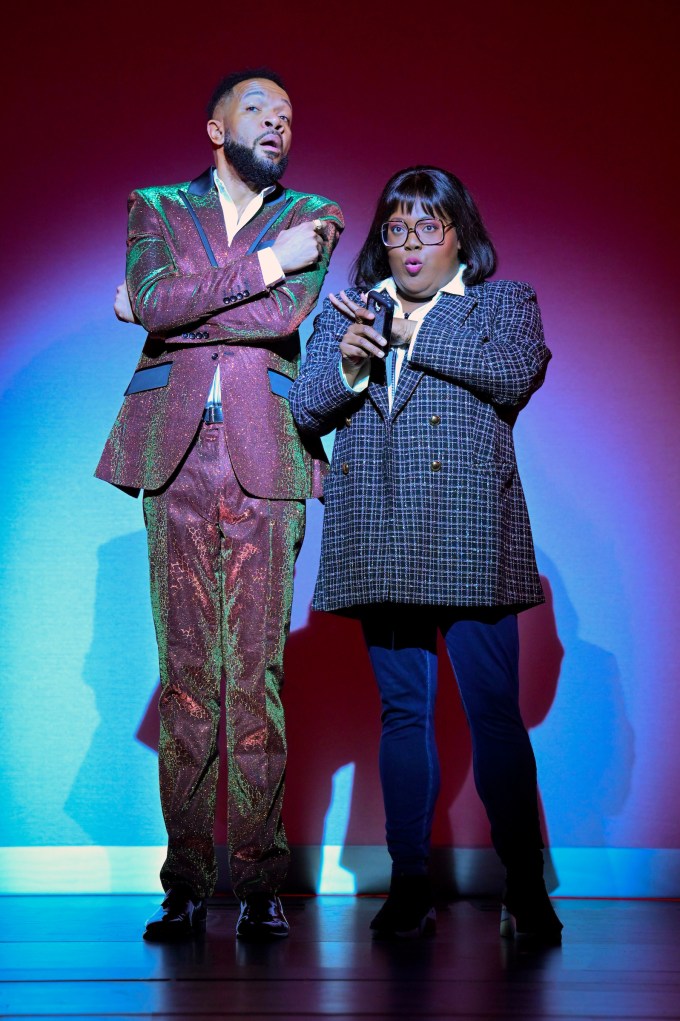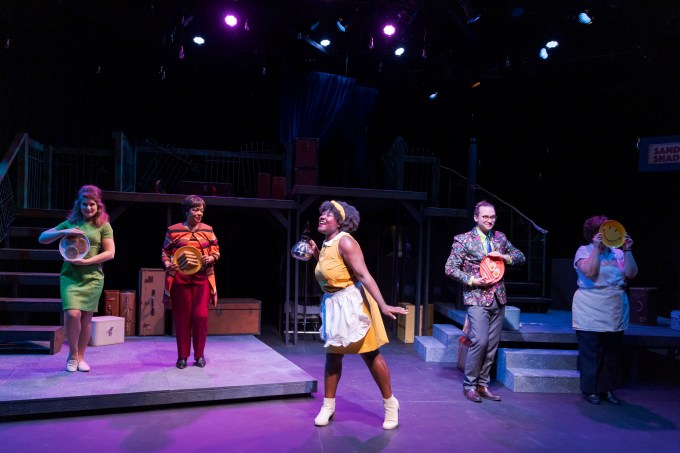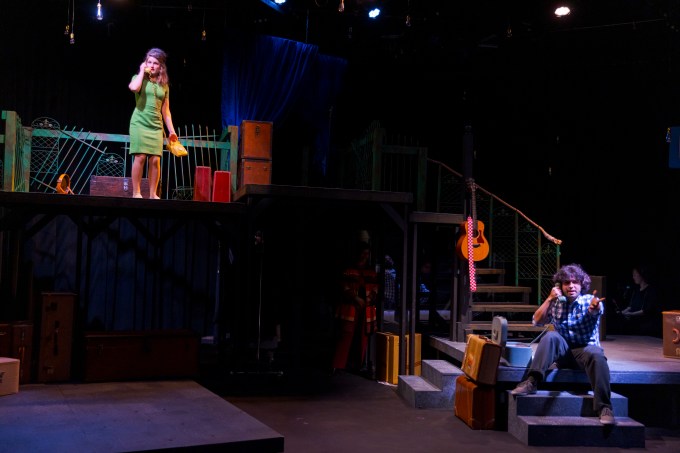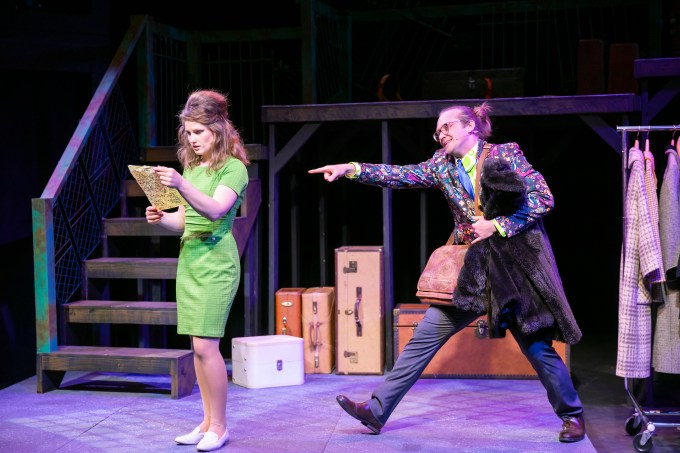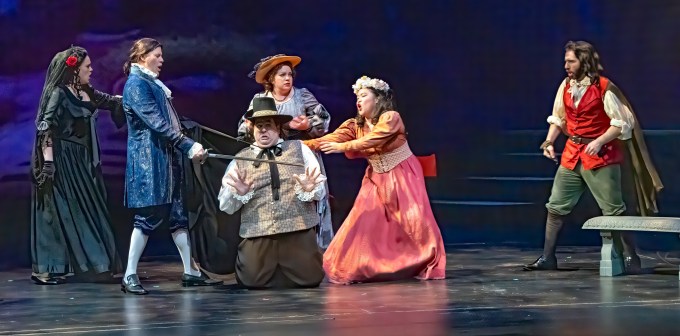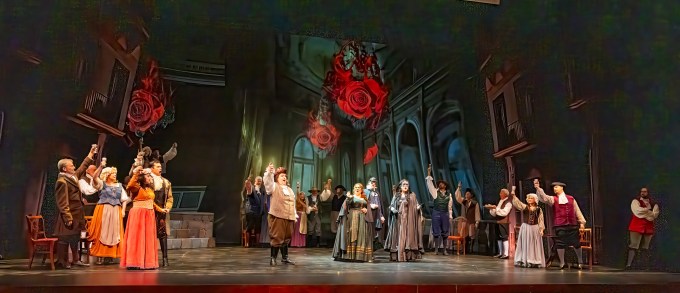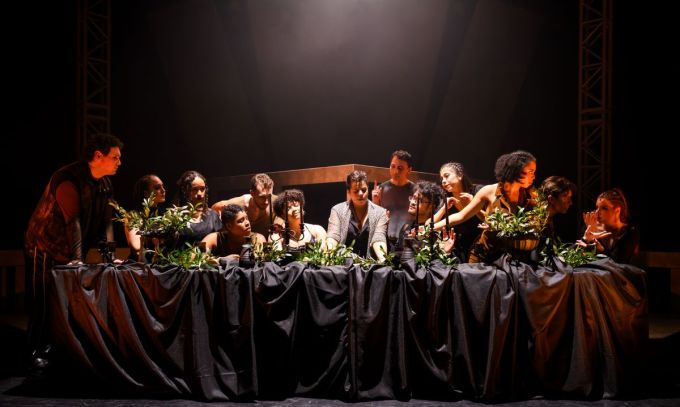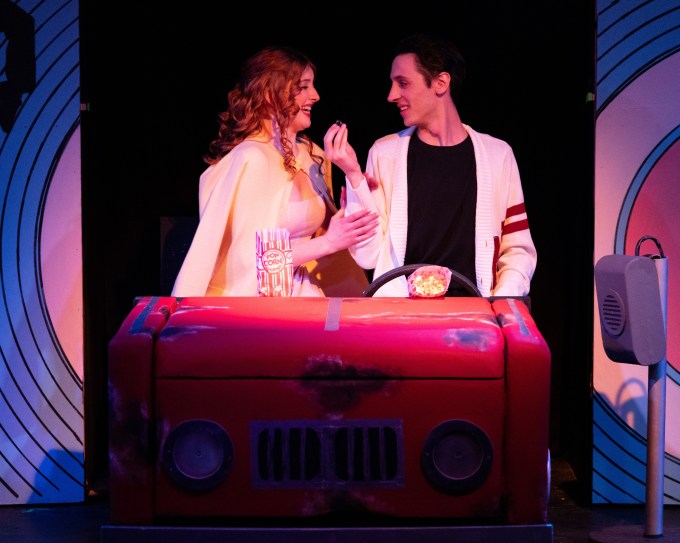
The Thing About Jellyfish

Matilda Lawler as Suzy (below), Kayla Teruel as Franny (above). All photos by Julieta Cervantes.

The greatest mystery of life is death.  Many religions fundamentally exist by trying to make sense out of what happens when mortals pass from this earth, which then informs how we live our lives.  Is there a heaven and hell?  Do we reincarnate?  Will we see our loved ones again?  Against this backdrop are the two extreme manners of dying – protracted illness that allows the deceased to put affairs in order, and sudden death, that prevents closure with loved ones, which can haunt survivors endlessly.

Playwright Keith Bunin has adapted Ali Benjamin’s bestselling novel The Thing About Jellyfish for the stage.  Berkeley Rep’s world premiere bursts at the seams with a compelling story about the search for meaning in a production whose powerful visual dynamics engulf the senses.

Christiana Clark as Dr. Legler, Matilda Lawler as Suzy.

Sixth-grader, motormouth, and know-it-all Suzy doesn’t realize she pushes peers away by her dominance. She has only one friend, Franny, who dies on vacation from drowning off the coast of Maryland.  Knowing that Franny was an accomplished swimmer, the distraught Suzy is certain that there must be a more specific cause.

A voracious learner, she reads of and attributes the drowning to an exotic but deadly jellyfish, even though the species is known to inhabit only as far north as Florida.  But its sting is rarely detected in an autopsy, usually resulting in the conclusion that the deceased has drowned without other known cause.  From the distress of her loss, Suzy also turns mute, which challenges her parents and teacher alike.

Stephanie Janssen as Suzy’s mother Meg, Matilda Lawler as Suzy.

Much of the narrative is told in flashback.  We see a family in transition and archetypes of young teens from the snooty girl to the gross-out boy whose actions are as gross as his language.  And we get to know more about Suzy, and particularly of her fractured relationship with Franny at the time of her death.

In present time, Suzy must choose a zoology project, and her copious research on the significance and sustainability of jellyfish is shared in the narrative.  In dream sequences, she solicits jellyfish experts to help her in her quest to prove the cause of Franny’s death.  But one of the many messages in the subtext is that people often misdirect their energy, fretting over questions that even if answered will change nothing.  A loss is still a loss.

Schoolmates Jasper Bermudez as Dillon, Kayla Teruel as Franny, Lexi Perkel as Aubrey (all above), Matilda Lawler as Suzy (below).

But the play is largely about relationships and how especially vulnerable they can be in the early teens.  Change is signaled as children begin to feel maturity coming on and with it a sense of independence that creates friction with parents.  Attraction to the opposite sex divides friends as do changes in life styles and other evolving preferences.  Even though the content of the narrative concerns early teens, an adult audience will find it involving from beginning to end.

An additional dollop of meaning concerns the importance of search and discovery which drive Suzy’s curiosity.  Finding through her research that jellyfish are able to deal with global warming and plastics pollution in the ocean in ways that most fish can’t, thereby suppressing marine biodiversity, carries an ominous warning.

Robert Stanton as Australian researcher Jamie, Matilda Lawler as Suzy.

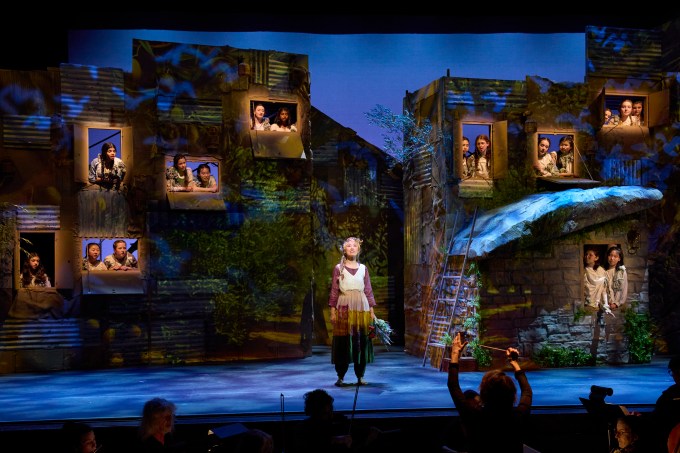
In addition to the engaging script, superb acting anchors the play, led by a fantastic teen actor, Matilda Lawler as Suzy.  Everpresent on stage and always part of the conversation (even when not speaking), the role places demands in its breadth of emotion and the sheer amount of dialog and stage presence to be mastered.  But the most conspicuous star of the show is the stunning projection-driven visual staging, conceived by Director Tyne Rafaeli and designed by Derek McLane and Lucy Mackinnon, which is easy to see but hard to describe.  A number of scenic designs are used, but the dominant format is like a cubic black canyon full of graphic, sometimes scrolling, displays on all walls that give a stunning high-tech appearance and tend to dwarf the actors into lesser significance.

Other production values are superior, including mammoth sound design.  That said, at times, sound effects are surprisingly allowed to overpower dialog.  At other times, speakers’ dialog is simply garbled or underprojected.  These flaws are easily correctible, and in any case, do not materially limit the overall appreciation of an inventive and highly interesting experience.

Matilda Lawler as Suzy, Antonio Watson as classmate Justin.

The Thing About Jellyfish, a world premiere stage adaptation by Keith Bunin of Ali Benjamin’s novel of the same name, is produced by Berkeley Repertory Company and plays on its stage at 2025 Addison Street, Berkeley, CA through March 9, 2025.
Exotic Deadly: or The MSG Play

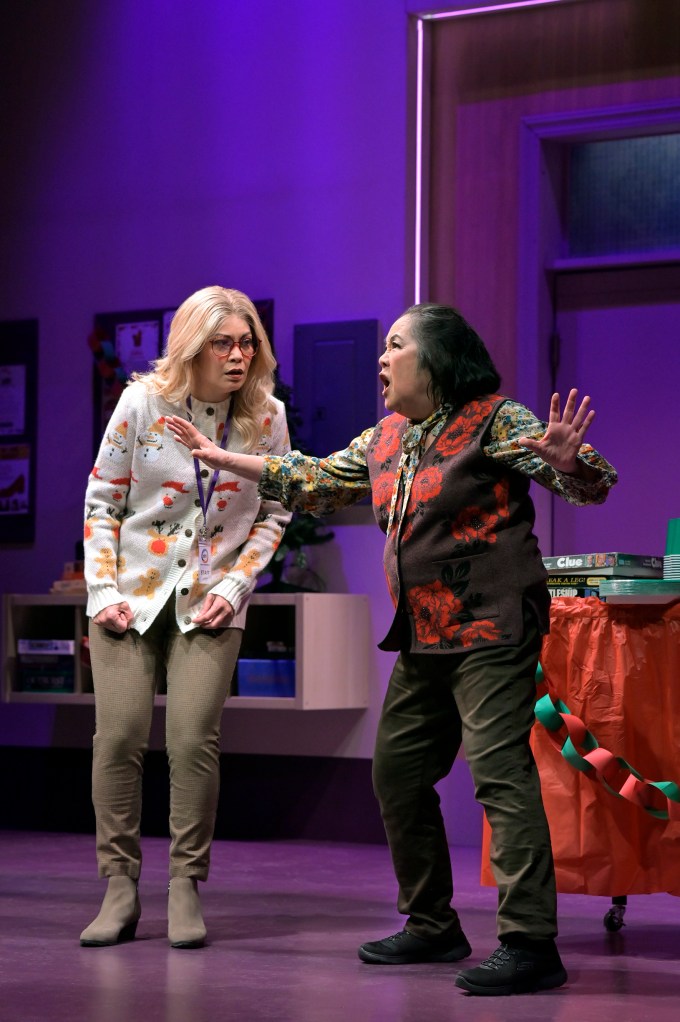
Ami (Ana Ming Bostwick-Singer), Ami’s mother (Nicole Tung). All photos by Jessica Palopoli.

Primacy effect refers to the cognitive bias that suggests individuals remember vivid, first-presented information better than subsequent findings.  For this reason, Donald Trump pumps out volumes of misinformation, knowing that even if corrected, many observers will better remember and accept what they first heard.  In a more scientific context, primacy effect is behind anti-vax beliefs, as news of vaccines’ causing of autism preceded refutations.  The same is true of the bad rap that monosodium glutamate (MSG) has suffered.  Even though proven that MSG doesn’t cause headaches and nausea, the erroneous belief by many consumers continues.

Ami (Ana Ming Bostwick-Singer), Exotic Deadly (Francesca Fernandez).

Exotic Deadly: or The MSG Play draws on playwright Keiko Green’s life experience with a Japanese anime, American ‘90s pop culture, and sci-fi driven play full of over-the-top hilarity and fanciful fantasy from beginning to end.  Director Jesca Prudencio and a stellar cast of six keep the laughs coming, yet there are some serious social underpinnings to the proceedings.

The half ethnic Japanese playwright learned as a teen that her grandfather was a scientist at Ajinomoto where MSG was isolated for commercial manufacturing.  It was not created, as it naturally occurs in tomatoes and mushrooms, while it also results from the transformation of milk to cheese.  Most consumers don’t realize how ubiquitous it is in processed foods from Campbell’s soup to Doritos.

Ben (Edric Young), Ami’s teacher (Nicole Tung).

The central action of the play occurs in 1999, and 14-year-old Ami as the proxy for Green, wants to fit in, to be average.  She is already embarrassed by the bento boxes that her mother prepares for her lunches at school, which classmates have described as stinky like farts.  But then comes the vilification of MSG and Ami’s guilt by association.  An anecdotal letter published in the New England Journal of Medicine in 1968 had posed the possible poisonous effects of MSG in what came to be known as the Chinese Restaurant Syndrome.  Never mind that MSG was scientifically exonerated.  The damage was done, and the falsehood lives on.

The play cascades with ease among time frames within the whole of the 20th century and diverse locations from Japan to the bottom of the ocean.  Realistic situations are punctuated with herky-jerky anime action, dreamy musical interludes, and faux martial arts sequences, and it all works.

Dr. Steele (Phil Wong), Bill the Neurologist (James Aaron Oh).

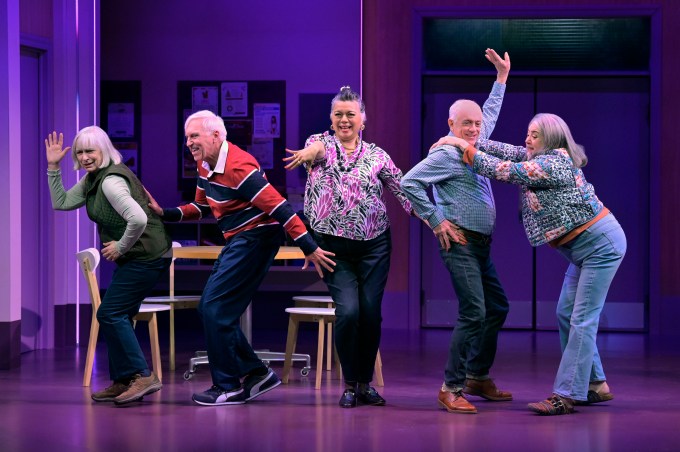
Ana Ming Bostwick-Singer impressively delights as the highly animated youth Ami with flailing arms and unlimited mugging expressions as she muddles through her challenges.  The other big star is Nicole Tung who impresses immensely playing two different key roles.  As Ami’s mother, she is purposeful, dour, and wry, focused on providing Ami good nutrition and encouraging her to be more like her brother who excels academically.  As Ami’s teacher, Tung brings a whole new set of verbal and facial expressions that reflect how good she is at her craft.

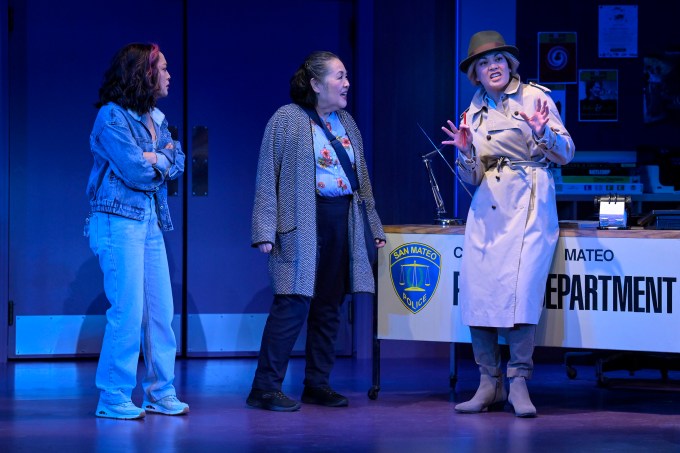
Also important to the narrative are the title character, Ami’s rebellious new schoolmate Exotic Deadly, and the anthropomorphised MSG, both played with wacky allure and enthusiasm by Francesca Fernandez.  Phil Wong, Edric Young, and James Aaron Oh round out the fantastic ensemble, each playing multiple parts with unrestrained verve and zany comic zeal.

Mr. Ajinomoto (Phil Wong), MSG (Francesca Fernandez), Ami (Ana Ming Bostwick-Singer).

While the comedy zips along, the story is replete with messages.  Ami reveals the angst of being a lonely and conflicted teenager, having challenging relationships with her mother, brother, and teacher.   Racism is reflected in the attitudes toward MSG and Ami’s bento boxes.  And even the scientific method is brought into question.  The runaway victimization of MSG in the scientific and broader communities was based on false-correlation anecdotes and reports on confirming research that was exceedingly sloppy, along with failure to publish well-executed disconfirming studies.  (Note that Chinese consume almost four times the amount of MSG as Americans, but someone forgot to tell them to have headaches and nausea.)

Keiko Green’s script hits the spot on virtually all counts, though funny bits about Ben and Matt, based on Affleck and Damon, seem contrived.  Everything about the production is first rate, starting with Prudencio’s masterful pacing and facilitating outstanding performances from every actor.  Heather Kenyon’s simplified staging fits the anime motif perfectly while Michael Oesch’s brilliant lighting, James Ard’s outstanding sound design, and Kathleen Qiu’s diverse costumery round out the sparkling look and feel.  This lively romp will have great appeal to a wide array of theater goers

Ami (Ana Ming Bostwick-Singer), Ami’s mother (Nicole Tung).

Exotic Deadly: or the MSG Play is written by Keiko Green, produced by San Francisco Playhouse, and plays on its stage at 450 Post Street, San Francisco, CA through March 8, 2025.

Daisy

Tony Schwartz (Michael Champlin), Louise Brown (Roneet Aliza Rahamim).
 Photos by Tracy Martin except where noted.

The power of moving-image media is evidenced by the massive electoral success at the apex of American politics by movie and TV celebrities inexperienced in government, such as Ronald Regan, Donald Trump, and Arnold Schwarzenegger.  At the next level down, add the likes of former U.S. Senator George Murphy (’40s actor/dancer), U.S. Congressman Fred Grundy (from The Love Boat), and mayors Clint Eastwood and Sonny Bono.

Demonstrable, but harder to directly measure, is the effect of advertising on product sales.  At the outset of the play Daisy, advertising firm Doyle Dane Bernbach (DDB) is crafting an advertising campaign for American Airlines based solely on the notion of the attractiveness of stewardesses to the then dominant niche of travelers, businessmen.

Not mentioned in the play, but at the same time, Braniff Airlines launched a TV campaign promoting their appealing stewardesses being festooned in Emilio Pucci uniforms.  The ads were so successful and business increased so rapidly (which, lest we forget, was people movement, not fashion) that Braniff nearly went bankrupt, as they were unprepared to manage the growth and suffered huge overbooking and operational errors.

In the 1964 presidential campaign, DDB was enlisted by the White House to deliver advertising for Democratic President Lyndon Johnson.  The consequential result was a 60-second spot that ran on national television exactly once.  Identified as Daisy it shows a closeup of a young girl counting to ten as she picks pedals from a flower, followed by a male voice counting down from ten, and culminating with the picture and sound of a nuclear explosion.  It does not name the Republican opponent, but during the Cold War era with the fear of nuclear holocaust, the candidate’s reckless comments allowed the viewer to connect the dots.  For all its indirection, this piece represents the birth of the attack ad.

Sid Myers (George Psarras).

While depicting modern history, playwright Sean Devine has created a provocative and revealing rendering of the events.  Most playgoers will know little of the facts other than the main outcomes, so the narrative will be perceived as a suspenseful drama.  Even for those of us old enough to have been there, factual details are refreshed or totally new, especially the insider information.  Critically, who among us could identify Tony Schwartz?  So who was he?  He was an esteemed freelance sound theorist and designer who scripted the body of the Daisy ad and who insisted on not mentioning Barry Goldwater’s name, as the audience already knew who he was and already feared him.  He also rejected using LBJ’s voice (unsuccessfully) or image, as they were not attractive.  But despite his creativity, DDB did not give public recognition to Schwartz.

The story is told largely from the perspective of three ad people at DDB who are designated to run the ad campaign, highlighting their interactions with Schwartz, their CEO Bill Bernbach, and White House lawyer and liaison with the team, Clifford Lewis.  Though the somewhat flippant style and New Yorkiness of the team may have been accurate, it doesn’t work so well for me, as I feel that straight up dramatic style maintains tension better.  The exception is the character of Tony Schwartz, played with great skill and credibility by Michael Champlin.  Schwartz suffered from agoraphobia and was full of eccentricities that make the off-kilter portrayal highly appropriate and effective.

What makes Daisy especially stimulating is that situations from its era compare and contrast chillingly with today’s political environment.  Notably, Barry Goldwater only became the Republican candidate because Nelson Rockefeller dropped out of the primary as he was poised to win California and the nomination.  Why?  His new wife gave birth to a child eight months after their marriage, and that scandal was enough to scuttle his candidacy.  Our recently elected president is on his third marriage; a convicted felon; a chronic and documented liar of the highest order; adjudged and multiply accused sexual abuser; founder and leader of several companies that went bankrupt; and the list goes on.  Within 60 years, the moral character of voters in this country and their standards for national leadership has so seriously declined that there appears to be no bottom, though anything lower is hard to imagine.

Clifford Lewis (Terrance Austin Smith), Louise Brown (Roneet Aliza Rahamim), Aaron Ehrlich (Keenan Murphy Flagg), Sid Myers (George Psarras). Photo by Mark Kitaoka.

Also, Goldwater and Trump are cut from the same cloth, considered extremists within their own party and with little urge control.  The difference is that Trump has used his uncommon and ununderstandable appeal to Republican voters to bludgeon friend and foe alike into submission with immense intimidation and threat.  Goldwater never had a chance to show if he would embrace fascism in practice.

The history also relates to disingenuous strategies employed in political crusades.   For instance, though LBJ’s Great Society and the Civil Rights Act of 1964 were the hallmarks of his tenure as the replacement president for the assassinated John F. Kennedy, there was to be no mention of civil rights in the campaign for fear of losing Southern support.

At another level, the play is about everyday morality.  One of the team members pleas ethics in condemning the use of negative ads, yet takes credit for the creation of the Daisy ad that clearly belonged to Schwartz.  Another notes that doing the job keeps the paychecks coming, dismissing ethical considerations.  It is interesting how common it is in real life that people carve out ethical, religious, or political exceptions to advance their own cause.  As Bernbach notes to one of the team, “Your name is on that card because your ambition exceeds your ideals,” which could be said of many sycophants in the Trump orbit. An example of the situational disconnect: many farmers are against government programs that tax in order to spread the wealth, except when it comes to farm subsidies, which they consider vital and untouchable.  Where you sit is where you stand.

Clifford Lewis (Terrance Smith), Tony Schwartz (Michael Champlin). Louise Brown (Roneet Aliza Rahamim).

Hillbarn Theatre’s regional premiere offers fine production values with direction by Jeffrey Bracco.  It plays with three separate locations on a period-looking set, supported by the thoughtful projection images, all designed by Steve Muterspaugh.  As is only appropriate, Jeff Mockus’s sound design captures the vital aspects associated with Tony Schwartz’s work with consummate skill.  It is surprising that this play took nine years to arrive in the Bay Area.  Given the current presidential administration, Daisy is likely to sprout legs.

Daisy, written by Sean Devine, is produced by Hillbarn Theatre and plays on its stage at 1285 East Hillsdale Blvd, Foster City, CA through February 9, 2025.
Former Ladies of The Supremes

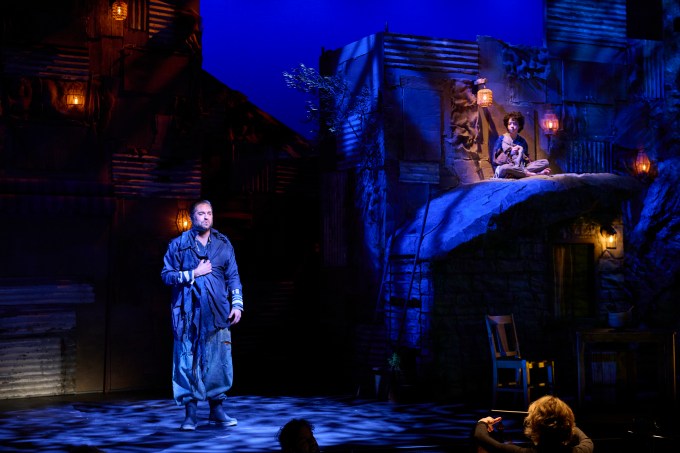
Lynda Laurence, Scherrie Payne, Joyce Vincent. All photos by Eric Iversen.

The three ladies appeared on stage to audience glee with brown long coats (my wife and editor says black – who do you trust?) of layered shag.  Removing them revealed salmon-colored (my wife says pink – she may be right on this one) gowns, inhabited by attractive, fit-looking, mature women crowned by the traditional big wigs of The Supremes.  From the opening strains of “You Keep Me Hangin’ On,” nostalgia was on, with perhaps a little extra interpretation of the song title for the occasion.  Capping the first season of Marin Jazz was a night of sweet sounds and remembrance from the Former Ladies of The Supremes.

For those like me old enough to remember, 1964 was a pivotal year in popular music.  The Beetles’ first American visit marked rock and roll’s British Invasion; Bob Dylan stormed on the scene with a new brand of folk music; and The Supremes emerged from Motown in record-breaking (pun intended) fashion with five straight number one hits from the pens of the prolific composing team of Holland, Dozier, and Holland.

After intermission – definitely salmon! Lynda Laurence, Joyce Vincent, Scherrie Payne.

While a couple of young, female singing groups had single hits in the late ‘50s, the Shirelles established the girl group category as a musical force starting in 1959.  The Supremes would inherit that mantle and take it to new heights.  The number one songs that quickly established The Supremes as the queens of pop music were all on the Marin Jazz program – “Where Did Our Love Go,” “Baby Love,” “Come See About Me,” “Stop! In the Name of Love,” and “Back in My Arms Again.”

Apart from well-crafted songs with a consistent style, another factor stamped the special sound of The Supremes.  Before their national fame, the three original members shared the leads.  Florence Ballard possessed the most powerful voice, followed by Mary Wilson.  But Motown founder Barry Gordy sensed something special in Diana Ross’s high, airy, and fragile voice, and that would become the signature that would propel the group forward.

During their reign, The Supremes, always a trio, would have eight members, two of whom are on the Former Ladies of the Supremes.  Chronologically, Lynda Laurence was Supreme number six, and Scherrie Payne was number seven.  The third member of the Former Ladies, Joyce Vincent, is the Supreme who never was.  Identified as the ninth in the succession, Motown decided that since there were no remaining original members in the lineup, that they would retire the name instead.  Vincent did however have her own career in a formidable trio that had only three members throughout its existence – Tony Orlando and Dawn.

The Former Ladies regaled with over a dozen songs from The Supremes catalogue offering familiar sounding if not identical renditions of the recordings we know, backed by a five-piece band.  At ages of 80 (Payne), 78 (Vincent), and 75 (Laurence), none could be expected to retain the vocal brightness and high range of a Diana Ross in her prime or the strength and control of younger singers, so the arrangements were pitched accordingly.

But they engaged with the audience and Lynda Laurence in particular can still wail with energy and control, as she did in “Reflections” and elsewhere – perhaps because she’s still so young.  In my book, the most impressive numbers were “My World is Empty Without You” and “I Hear a Symphony,” both of which had typical Supremes treatments in which two backups sing repeat lyrics in countermelody in response to the main line carried by the lead.  In addition, the ladies sang attractive versions of Tony Orlando and Dawn hits “Tie a Yellow Ribbon” and “Knock Three Times.”  Unfortunately, the sound system didn’t do the ladies any favors, and particularly before intermission, the mix with the band was off and vocals sounded weak in places.

Lynda Laurence, Scherrie Payne, Joyce Vincent.

Another distinction of The Supremes that the Former Ladies carried out with grace was movement.  Barry Gordy insisted that The Supremes avoid being sexually provocative.  The Former Ladies replicated that notion with extremely elegant arm and hand motion, minimizing hip movement while adding flair to the performances.  Occasional anecdotes about songs and relationships punctuated the evening, but even more would have been welcomed.

The final number was in honor of deceased original member of The Supremes, Mary Wilson.  Fittingly, it was the recording that marked the dissolution of The Supremes, “Someday We’ll Be Together.” The full house showed its appreciation for the evening with a standing ovation.

Former Ladies of the Supremes, produced by Marin Jazz, appeared at Marin Center Showcase Theater, 10 Avenue of the Flags, San Rafael, CA on December 20, 2024.

A Thousand Ships

Halili Knox as Adeline, Dawn L. Troupe as Laney. All photos by Ben Krantz Studio.

Oakland, California has a much smaller population with a lower percentage of Blacks than older cities like Detroit, St. Louis, Washington, DC, among others.  Yet its vibrant community has spawned an uncommon measure of African-American attainment.

To begin with, MC Hammer, the Pointer Sisters, Tower of Power, John Lee Hooker, Sly Stone, and more represent music.  Basketball provides Bill Russell and enough All-Star guards for a starting five, including Jason Kidd and Damion Lillard, while baseball Hall of Famers include Ricky Henderson, Frank Robinson, Curt Flood, and Joe Morgan.  There are contemporary film artists like Zendaya, Ryan Coogler, and Mahershala Ali and nationally recognized chefs like Tanya Holland and Matt Horn.  Politically, you have Kamala Harris plus the wildly misunderstood Black Panthers with Huey Newton and Bobby Seale.  Finally, add to that list award winning playwright, screenwriter (The Color Purple, 2023), and poet Marcus Gardley, who makes another valuable contribution to the nation’s theatrical wealth.  And let it be noted that an abundance of white folk from Oakland have made their mark on the world also.

Adrian Roberts as Father of the Water.

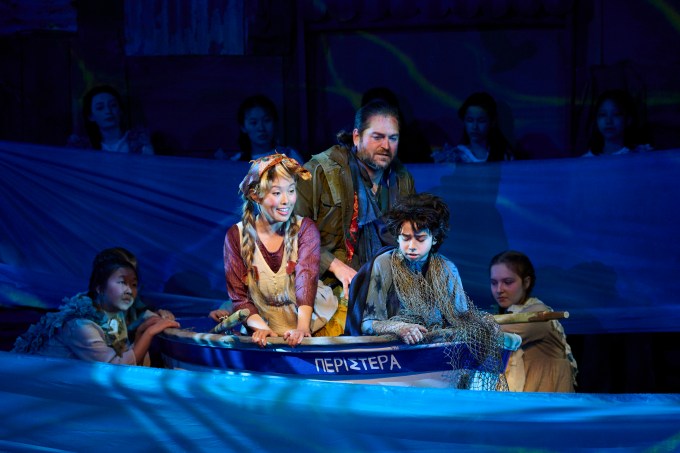
Playwright Gardley has granted the world premiere of his most recent play A Thousand Ships to the innovative and enterprising Oakland Theater Project and California Shakespeare Theater.  Largely about the family that we choose, it is a touching, well-developed, and well-acted (by a truly distinguished cast) homage to the black community of Oakland from which he comes.   Even every part of every character name is a place name in Oakland.  Surprisingly, the story centers on women and a beauty salon, and Gardley unveils an uncommon understanding of their societies from the ways they interact to the vast array of hair products they use.

Two young women meet on a train as they abandon the South with hopes for a better life in the Bay Area away from oppressive discrimination.  They open a beauty parlor in the Pill Hill (formerly Academy Hill) district and become friends and business partners for life but would face economic and personal challenges at the end.

William Hartfield as MacArthur, Dawn L. Troupe as Laney.

Halili Knox endows bachelorette Adeline with verve and bluster, storming the stage with purpose.  Eighty years old at the end of the story and unashamed to glow in her lasting attractiveness, she views the world as dirty and attributes her beauty to not allowing people to touch her.  She draws a curious distinction with her touching others, which comes with her profession!

Dawn L. Troupe inhabits Laney with a somewhat more stolid and grounded manner.  Abandoned by her husband who insisted on leaving the United States for a country that would be more receptive to Black people, Laney raised two children with the help of “Aunt” Adeline.  Having started a non-profit to keep Black boys off the streets, son MacArthur (William Hartfield) is her pride and joy but would cause her consternation.  Though Laurel (Sam Jackson) is devoted to her mother and her job as a policewoman, Laney has never fully accepted her as she has “Mac.”

Rolanda D. Bell as First Lady, Jasmine Milan Williams as Dimond.

The action pivots on the day of President Obama’s election in 2008.  It plays out on Randy Wong West’s minimalist set with the “healing waters…of Black womens’ history” surrounded by the sands of shores and time.  Into this setting, Adrian Roberts is the mystical Father of the Water who declaims the origin story and philosophizes about Black life.

The salon’s clients and the greater community are represented by only two characters.  Rolanda D. Bell is “First Lady,” an imperious minister’s wife who lives in tony Rockridge but returns to the hood for coiffing. Her proclivities reflect diversity within the Black population and reveal unexpected complexity when the tides shift for the main characters.  Jasmine Milan Williams is Dimond, First Lady’s yappy and very pregnant assistant, who brings comic relief to the proceedings each time she opens her mouth, and sometimes when she doesn’t.

Sam Jackson as Laurel.

Interestingly, the narrative refers to both declines and gentrification of the neighborhood.  Significant are references to a prospective Starbucks.  A largely unknown, undiscussed aspect of the rise of franchise chains in our economy is the devastating effect that chain businesses had on entrepreneurialism, economic independence, and community in Black populations.

In a support portion of a peer-reviewed research paper by this author in 1997, I cite the documented massive decline of Black-owned store-front businesses in the latter part of the 20th century, replaced by the likes of McDonalds, Supercuts, and Jiffy Lube.¹  Granted, these franchises are more efficient than the businesses they replace, but lost is the vital social environment and rich diversity that these institutions provided to clients, effectively a less formal place to fraternize than church.  Further, buy-in costs and conditions of the franchisors eliminated ownership opportunities for virtually all Black small-business owners, depriving them of a continuing stake in the economy.

Halili Knox as Adeline, Adrian Roberts as Cypress Lake.

The thousand ships of the title refer specifically to slave transports which brought the ancestors of most Black Americans to this country.  But it is also an important global metaphor for change, opportunity, losing out to the White man, and in the case of Laney, abandonment.

The plot line of the play, which includes several flashbacks, is compelling and important.  In addition to the inherent drama, composer Molly Holm’s appealing incidental music adds emotional depth to the story.  Plays are often revised after their premieres.  Areas of possible improvement might be grounding the mystical elements so that their meaning is more transparent, and modifying the ending, which is genuine, but many will find it overly maudlin.  The production excels, with performances delivered by a wonderfully magnetic and charismatic cast.  There were a number of muffed lines at opening, but that will likely resolve in time.

A Thousand Ships, written by Marcus Gardley, is produced by Oakland Theater Project in association with California Shakespeare Theater, and plays on OTP’s stage at 1501 Martin Luther King Jr Way, Oakland, CA through January 5, 2025.

¹ Cordell, Victor V., “Implications for Small Business Export Promotion of Differences between Immigrant and Involuntary Minorities,” International Trade Journal, Vol. 11, No.3, 1997.

Shrek the Musical

Nicholas Hambruch as Shrek, Kelly Prendergast as Princess Fiona. Photo by Jason Anderson – Pendleton Photography.

[For the remainder of the year, my San Jose and Peninsula theater reviews will be posted on Talkin’ Broadway with only introductions to those reviews on this site].

Playwright/lyricist David Lindsay-Abaire and composer Jeanine Tesori have conquered Broadway individually and as a team.  Their second collaboration was the highly decorated Kimberly Akimbo, 2023 Tony Award winner for Best Musical and four other Tonys.  Their first was Shrek the Musical, an adaptation of the film which had received glowing reviews and huge box office returns.

The moderately successful Broadway showing was reworked for the highly popular West End production and again for touring.  The final result offered by Broadway San Jose is a charming and whimsical journey with all of the production values expected from a touring show.  While its fairy tale atmosphere and roots in animation suggest an appeal to pre-teens, the themes and references are very adult, and the theater audience tilts toward young adults who may have seen the movie as children.

Shrek is a ponderous, green-faced, self-loathing ogre whose swamp has been overrun by fairy tale characters.  The devious Lord Farquaad owns the swamp, and Shrek arranges to deliver Princess Fiona for Farquaad to marry in turn for Shrek’s regaining control of the swamp.  Accompanied by the loquacious Donkey, Shrek triumphs over obstacles on the route, except that he falls in love with Fiona who shows contempt for her captor.

Please continue to https://www.talkinbroadway.com/page/regional/sanjose/sj265.html for full review.

Naphtali Yaakov Curry as Donkey. Photo by cyorkphotography.

Anastasia

Dmitry (Brad Satterwhite), Vlad Popov (Alex Hsu), Anya (Jillian Smith). Photos by Tracy Martin.

[For the remainder of the year, my San Jose and Peninsula theater reviews will be posted on Talkin’ Broadway with only introductions to those reviews on this site].

Of the world’s monarchies that have been overthrown, none competes with the violence and thoroughness of the Russian Bolshevik’s 1918 decimation of the Romanov dynasty – Czar Nicholas II, Czarina Alexandra, and their five children.  Of direct family members, only the czar’s mother, the Dowager Empress, who was living in Paris was known to survive.  So how does this have the makings of a stage musical?

Rumors swirled that one Romanov daughter, Anastasia, had escaped.  Many pretenders made claim to be the surviving heir to the Russian throne and were dismissed by the Dowager Empress.  But ten years later, a young woman Anya, would make a most convincing case that she could be Anastasia.  The musical tells Anya’s story.

In addition to a dramatic true history, Anastasia, which had a moderately successful Broadway run, was developed by a top creative team with music by Stephen Flaherty, lyrics by Lynn Ahrens, and book by Terrence McNally.  Hillbarn Theatre’s generally entertaining rendition offers two excellent performances, good singing voices throughout, and a fine overall production, but it lacks the consistent energy expected of a top musical.

Please continue to https://www.talkinbroadway.com/page/regional/sanjose/sj264.html for full review.

Dowager Empress (Judith Miller), Little Anastasia (Araceli Grace).

Fiddler on the Roof

Hodel (Madelyn Davis-Haddad), Tzeitel (Gabrielle Goodman), Tevye (Joey McDaniel), Teagan Murphy (Chava), and Golde (Brittney Mignano). Photo by Scott Lasky.

[For the remainder of the year, my San Jose and Peninsula theater reviews will be posted on Talkin’ Broadway with only introductions to those reviews on this site].

Please continue to for full https://talkinbroadway.com/page/regional/sanjose/sj263.html review.

Rarely has a musical garnered the success of Jerry Bock and Sheldon Harnick’s Fiddler on the Roof, setting the mark for the most performances on Broadway, which it held for ten years.  Not to mention that it has been revived a gazillion times by theaters in every corner of the world.  Now, Palo Alto Players offers a heartwarming and well-mounted rendition – nicely performed, effectively staged, and with fine choreography and costumery.

What particularly surprises about its success is that the play deals with the customs and sad chronicle of Jews, a people who represent a very small minority in this country and who have been unfairly victimized by the dominant religion here and throughout the Christian realm.  Also, it takes place prior to World War I in what to many is an obscure region, Imperial Russia’s Pale of Settlement (largely present-day Ukraine), a poor area where all but a few select Jews were forced to live.

But what the musical has going for it is a luminous score with brilliant songs that in part traces the stages of love with great sensitivity; a central character that is one of the great charismatic figures in theater; and dramatic clashes of culture – gentle, traumatic, and existential.  This story of Tevya the milkman is written by Joseph Stein, based on the works of the great Yiddish author Sholem Aleichem. Though many particulars of the story may not be relatable, its universality draws from these powerful themes of tradition, love, family, and struggle.

******

Fiddler on the Roof runs through November 24, 2024 at Lucie Stern Theater, 1305 Middlefield Road, Palo Alto, CA.  For tickets and information, please visit https://paplayers.org/.

Ghost Quartet

Monica Rose Slater. All photos by Ben Krantz Studio.

On the heels of Halloween and Día de los Muertos, ’tis the season of the witch.  And what better way to spend a ghoulish evening than experiencing Ghost Quartet composer Dave Malloy’s musical homage to apparitions and to that thin line between this world and the beyond.  It is a dark night brightened by song.  Oakland Theater Project (OTP) and New Performance Traditions present an intimate, scintillating, and entertaining rendition of this unique work.

An accomplished composer, Malloy’s pop opera Natasha, Pierre, & the Great Comet of 1812 draws from Tolstoy’s eminent novel War and Peace.  For Ghost Quartet, he replicates the sung-through musical format but builds the songs around a theme, the afterlife, rather than a source.  The resulting song cycle is an amorphous pastiche rather than a linear accretion.  However, there are repeat focal points that bind the text.  Sisters Rose and Roxy, the House of Usher, photography, astronomy, and whiskey recur among others.

A small space is the preferred venue for Ghost Quartet, and OTP’s home at Flax Art & Design suits perfectly with the audience on three sides and artists spread around the edges of the performing space, creating the effect that “they” are among us. The piece is designed for four instrumentalist/singers, but this production includes a fifth (performer, that is, not bottle of whiskey!).

Monica Rose Slater, Veronica Renner.

The structural conceit reflects a two-record album, with each song a numbered track on a side of a record. Song titles are announced, which helps when they are audible.  One weakness in this format is that a clear narrative is hard to follow with the provocative and sometime confusing song sketches, ever-shifting in time and place which vary from 14th century Persia to contemporary New York City.  In addition, characters like Rose have various manifestations, making it more difficult to grasp a through-line to the narrative.

The sources of musical idiom are almost as numerous as the number of songs, but in the aggregate, the music is melodious and highly compelling with an overall feel of folk pop. The lyrics are thoughtful.  An early example, “Soldier and Rose” exhibits both Middle Eastern and country music elements, while the jazzier “Monk” pays tribute to jazz great Thelonious Monk, one of Malloy’s influences.  Blues, American folk, electropop, and others also make a showing.  The only non-original song is the Scots-English murder ballad that closes the show, “The Wind and Rain,” which no doubt was an inspiration to Ghost Quartet, as its chronicle parallels the lead plot line in the song cycle.

Monica Rose Slater takes on most of the lead singing.  With an expressive manner and opera-trained soprano voice, she demonstrates great vocal power and control where necessary.  Her female singing partner is luminous Veronica Renner, who also pleases in her solos and harmonies.  The male lead, who usually sings harmonies and acts as the primary keyboard player, is highly decorated musician Rinde Eckert.

Ami Nashimoto.

But the sound that best characterizes and drives the musical score is Ami Nashimoto’s exquisite cello play.  The instrument works perfectly, primarily when producing deep, mournful sounds reminiscent of the darker songs of The Beatles like “Eleanor Rigby.”   In addition, sharp, trenchant bursts akin to Bernard Herman’s violin shrieking in the shower scene from Psycho add disquiet. 

Eckert’s keyboards provide a constant underpinning to the music, but the other element that provides distinctive sound is the many featured instruments that add spice.  Among those that have cameo roles are a Greek three-string lyra, a home-made Latin American 10-string guitar, Buddhist temple bells, and an autoharp, not to mention strumming and plucking piano strings as well as a theremin, the electronic device that produces differing musical tones without touch.

Monica Rose Slater, Michael Perez, Veronica Renner.

The creative team led by Director William Thomas Hodgson creates a seamless experience.  Given the overall concept of the work, lighting is especially important.  Dr. Stephanie Anne Johnson’s lighting design is, perhaps intentionally, tame in the early goings with only faded darkening between songs.  But it picks up energy and uses a number of schemes to add to the atmospherics.  Stars are projected on the wall; the whole theater is darkened except for a small, glowing blob representing an assemblage of candles in the middle of the stage; a flashlit face provides illumination; lamps are employed.   Sound is also an essential aspect of spookiness, and Sound Engineer Trevaj “True” Siller adjusts the amplification occasionally so that the singer’s voice sounds disembodied.

This is perhaps a good time to mention the performing fifth-wheel, Michael Perez.  Also the company’s Operations Manager, his primary role in the play is to introduce the songs and play various handheld percussion instruments as needed.  It is also appropriate to note that the production misses the opportunity to festoon the theater with signs of the other-worldly holidays, as with skeleton and ghost decorations, or to emit ominous whirring sounds.

Rinde Eckert.

So, is there a message to this delightfully engaging musical?   The revelation occurs in the seventh of 23 songs in the program.  And the answer is – “Any kind of dead person” would prefer to be a ghost!  Not a poltergeist or a zombie or any of those other strange otherworldly creatures, but a ghost.  So, there you have it.

Ghost Quartet with music, lyrics, and text by Dave Malloy is produced by Oakland Theater Project and New Performance Traditions and plays at FLAX art & design, 1501 Martin Luther King Jr Way, Oakland, CA through November 24, 2024 and at ODC Theater, 3153 17th Street, San Francisco, CA December 5-8, 2024.

The Matchbox Magic Flute

Monica West, Lauren Molina, Tina Muñez Pandya as Three Ladies. All photos by Alessandra Mello.

Berkeley Rep presents the Goodman Theatre (Chicago) production of Wolfgang Amadeus Mozart’s last and highly popular opera, Die Zauberflöte (The Magic Flute). Mary Zimmerman has adapted the libretto and score into The Matchbox Magic Flute and directs as well.  The result is a crowd-pleasing gem – creative, visually captivating, unerringly funny, and replete with beautiful music.

This version is abbreviated from the original, but without (further) loss of plot continuity.  It uses vocal amplification, so that singers are able to perform several nights in a row, not possible with the demands of traditional opera.  Singing and speaking are loosely adapted into vernacular English.  The chorus is eliminated and along with it the significant number “O Isis und Osiris.”  It retains all of the humor of the original but drops most of the ritual solemnity of the story that may be inferred to suggest Masonic practices, both Mozart and the librettist Emanuel Schikaneder having been Masons. 

Stage. Reese Parish as Spirit (on stage facing away). Orchestra (foreground).

So, do good things come in threes?  ‘Tis the season of the flute, as the Bay Area has been blessed in the last six months with three variations – very different full-length opera productions of The Magic Flute at both San Francisco Opera and Opera San Jose, and now this abridged The Matchbox Magic Flute plays at Berkeley Rep.  Coincidentally, three is a significant number in Masonic lore, and for instance, this opera contains three ladies, three boys, three spirits, three doors, and three trials.  And the musical score is written mostly in the signature key of E-flat, whose scale has three flats.  Are we onto something here?

First impressions matter, and this production delivers.  The descriptor “matchbox” becomes evident as Todd Rosenthal’s stage width for the proscenium arch is reduced by perhaps 40%, leaving a charming, intimate, colorfully-framed space that gives the look of a puppet-show stage, particularly when the larger performers are in the scene.  Ana Kuzmanić’s fanciful costumery adds to the fairy tale look.

Shawn Pfautsch as Papageno, Marlene Fernandez as Pamina.

The story opens with three unnamed Ladies.  In most stage works, coveys like this trio would act as a somewhat inert Greek chorus.  Here, they are radically expressive; sing attractive harmonies; help drive the plotline; and even slay the dragon that was about to devour Tamino!  As an example of the sassiness of the modernistic script, while the Ladies lean over the unconscious body of Tamino, one observes longingly “He must spend a lot of time at the gym.”

The narrative concerns Prince Tamino who falls in love with Pamina, the missing daughter of the Queen of the Night, having only been shown Pamina’s portrait.  Accompanied by the Queen’s silly bird-catcher, Papageno, who also seeks a wife, Tamino strives to rescue the damsel from purported kidnapping by High Priest Sarastro, enemy of the Queen.  Tamino and Papageno must conquer three trials before being granted their wishes.

Billy Rudd as Tamino, Marlene Fernandez as Pamina.

Like many heroes, Tamino (Billy Rude) is stolid and self-controlled.  Though his part is well acted, the character is somewhat uninteresting.  Papageno (Shawn Pfautsch) gives the action its comic center with his frittering, blundering, and absence of courage; and the leitmotif often played on his woodwind recorder is one of the most memorable phrases from the opera.

The most famous music from the opera has found its way into popular culture – “Hell’s vengeance boils my heart,” known popularly as the Queen of the Night’s aria.  While Emily Rohm acts the role with daunting ferocity and sings with accuracy, the staccato, coloratura passages are more caressed than piercing which would bring forth the venomous intent.  The aria is a threat to daughter Pamina (Marlene Fernandez), who has one of the better trained voices in the cast as well as a substantial range that the role demands.  Her duet (“In men, who feel love”) and trio (“Just come in”) that include Papageno are very appealing, and like many ensembles, the combined voices produce a very nice sound, better than the individuals.

Emily Rohm as Queen of the Night.

The culmination brings the players together under the aegis of Sarastro.  This role is written for a basso profundo, as the range goes deep into the cellar of human vocal potential.  The player, Fernando Watts, is one of the few in the cast with opera cred, and he hits the low marks and projects with an assist from the amplification.

So, does this adaptation portend a new future for opera, an art that is radically expensive to produce but is largely tamed by this type of revision?  Notably, the orchestra is reduced from fiftyish musicians to a very effective five.  Also, only 11 singers are required, and rather than highly specialized and trained artists, most can be stage-musical singers.  If there is a weakness in this particular realization, it is that the singers should be uniformly strong throughout, yet there are significant weaker links.

Russell Mernagh as Monostatos, Shawn Pfautsch as Papageno, Marlene Fernandez as Pamina.

This adaptation proves more accessible to an audience comfortable with musicals – in style and length.  Most operas were written in eras with different preferences.  Mid-19th century French opera demanded five acts including a ballet scene.  Wagner wrote several operas that require four to five hour run times.  The breezy informality and two-hour run time of The Matchbox Magic Flute speak more to the preferences of today.

That said, this formula is not new.  For instance, Baz Luhrmann’s adaptation of La Boheme had moderate success on Broadway 20 years ago. Also, “Legend of the Ring” condenses Wagner’s 15-hour Ring Cycle into a manageable three hours.  But these updated versions didn’t start a trend.

Reese Parish as Spirit, Fernando Watts as Sarastro.

However, there are prospects for many more variations like The Matchbox Magic Flute that appeal to prospective new audiences for opera.  And this work highly entertains in serving that purpose.  Nonetheless, aficionados of the traditional form, who appreciate the unadulterated power and beauty of the natural trained voice, are less likely to be persuaded.

The Matchbox Magic Flute with music by Wolfgang Amadeus Mozart, libretto by Emanuel Schikaneder, adapted by Mary Zimmerman, and produced by Berkeley Repertory Theatre plays on its stage at 2025 Addison Street, Berkeley, CA through December 8, 2024.