One can be forgiven for not immediately thinking of England in 1735 as being a source for Italian opera seria, but Georg Frideric Handel composed one of his enduring baroque operas, Alcina, for Covent Garden in that year. It is important to note that despite the esteem in which they are now held, his operas were virtually unperformed for nearly two centuries before being revived.
Festival Opera offers a fantastic version of the last Handel opera whose libretto was based on magic. Having a cast of fine voices and some sharp acting, with a stunning lead performance, the production makes the most of Handel’s genius. But typical of baroque operas, it is full of al capos, and other repetition that stretch the material.
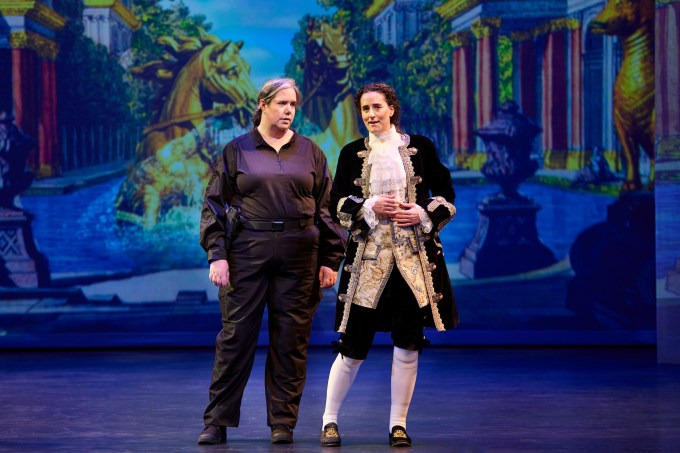
If one word describes the opera, the production, and the cast, it is confusion – especially of the sexual kind. But before getting to that, let’s lay out the premise. On her island, Queen Alcina possesses an endless hunger for lovers, whom she tires of. With her magical power, she then turns them into beasts, rocks, trees, whatever her fancy. Her current beau is Ruggiero. Meanwhile, Bradamante arrives on the island searching for her lover.
So, here’s content from Antonio Fanzaglia’s libretto to chew on with some identity confusion. Ruggiero is the lover that Bradamante seeks, but she has disguised herself as her twin brother Ricciardo, and Ruggiero is not clever enough to realize it even in close contact. Meanwhile, Alcina’s sister Morgana falls out of love with Oronte and into love with the faux man Ricciardo.
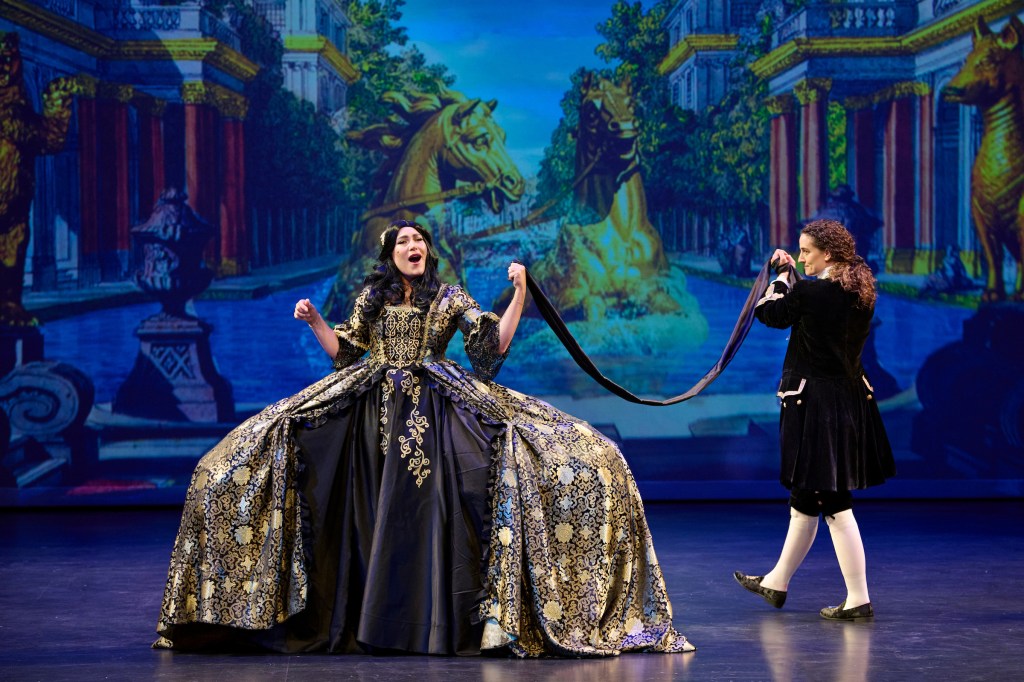
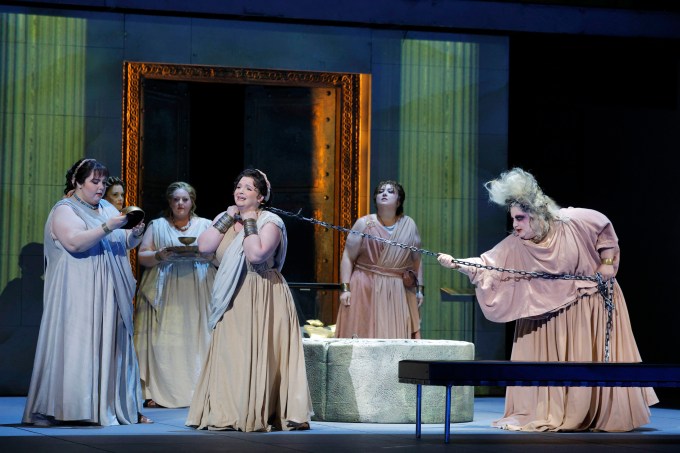
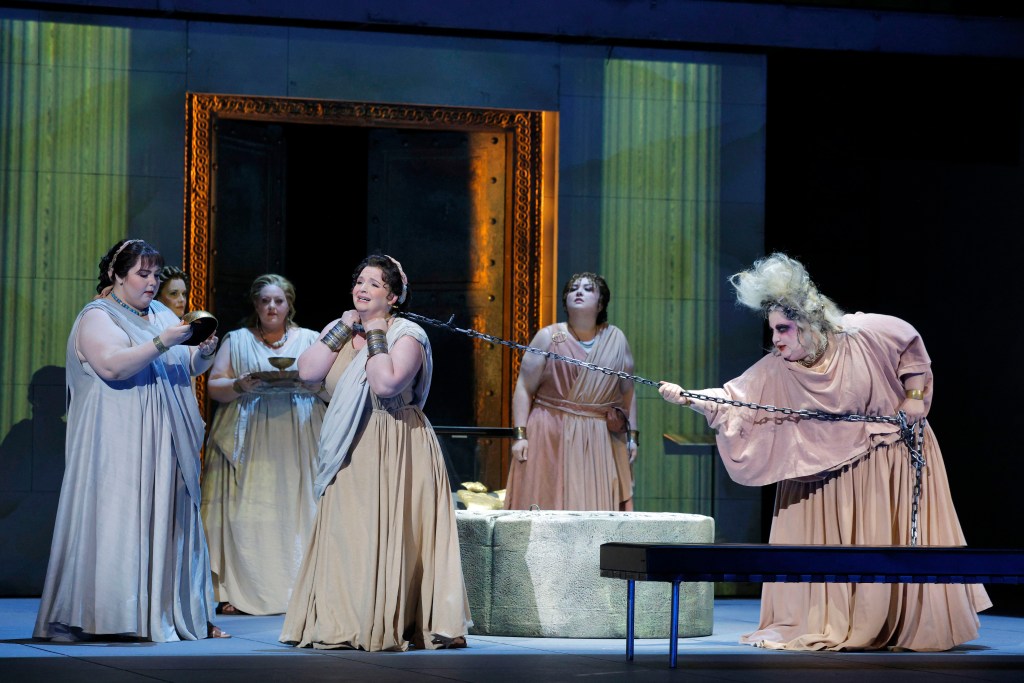
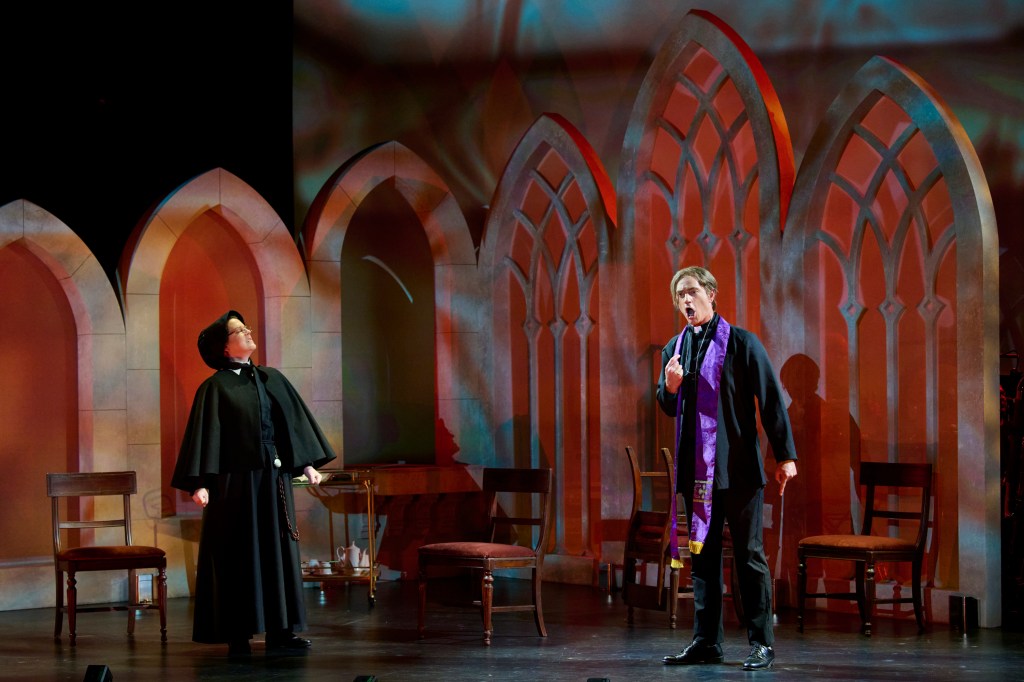
The great thing to come out of Morgana’s being deceived is her wonderful virtuoso aria “Tornami a vagheggiar” (“Turn me to fond desire”), in which Shawnette Sulker as Morgana absolutely sparkles with her bright soprano timbre and all of the aria’s range and coloratura ornamentation. Director Zachary Gordin has found considerable humor in the first half of the opera, and Sulker titters, tweets, and teases as the charismatic comic center. Yet she also shows her emotional range and anguish against slow, deep pizzicato strings in her delightful “Ah, mio cor.” (“Oh, my heart.”)
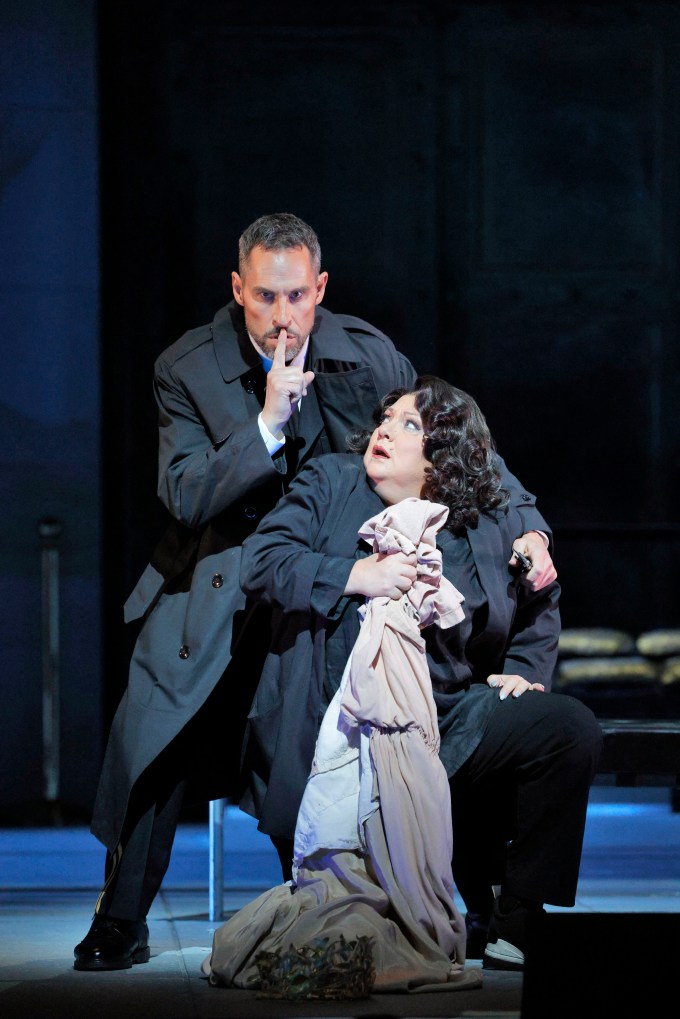
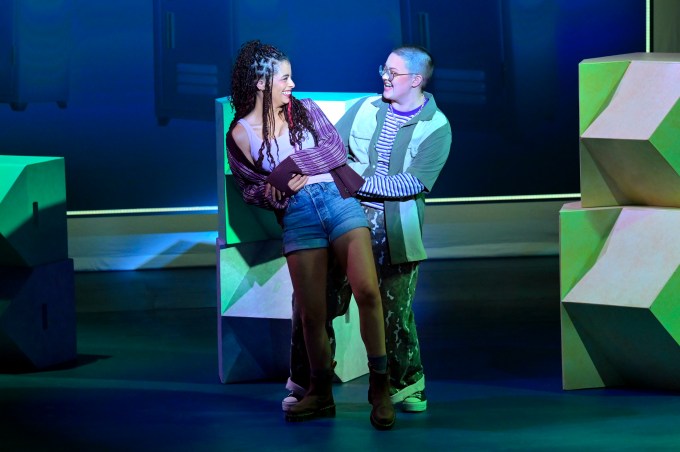
Handel’s casting specifications cause more confusing ambiguity. Bragamante calls for a contralto, and the distinguished Sara Couden with a big range, big sound, yet with coloratura agility fills the bill. But much of the time she portrays Ricciardo, a male role. Ruggiero is specified as a castrato, and of course we don’t have those any more, so it becomes a trousers role with Courtney Miller, a mezzo-soprano, portraying the male. Finally, Oberto, a boy looking for his lost father, should be a treble, a pre-pubescent boy or girl, but it becomes another trousers role with mezzo-soprano Nina Jones in the part.
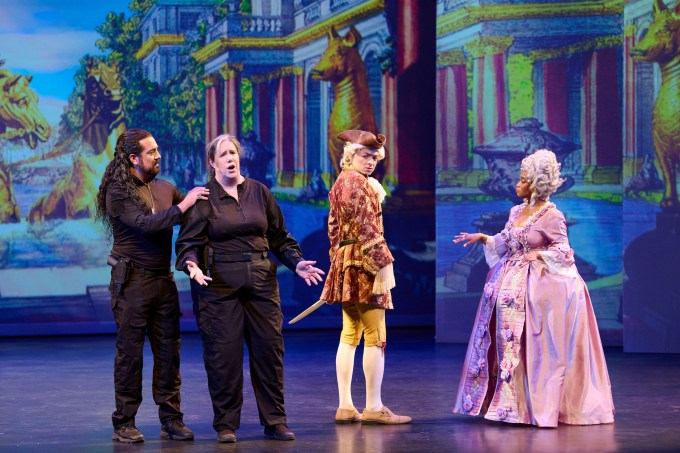
June is Pride month, and the public gender positions of some cast members are noteworthy and non-traditional. Both Nikola Printz as Alcina and Nina Jones present as non-binary and use gender neutral pronouns. And for now, Sara Couden, though using female pronouns, identifies as a “Boring Pansexual.”
Not a point of confusion, but another comment on the score. Male parts are underwritten. Bass Isaiah Musik-Ayala as Melisso and Tenor Spencer Greene as Oronte, like the rest of the cast, offer fine voices but are underutilized.
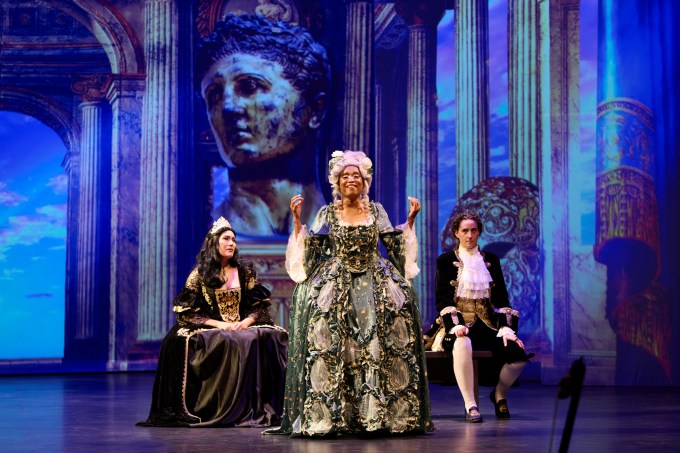
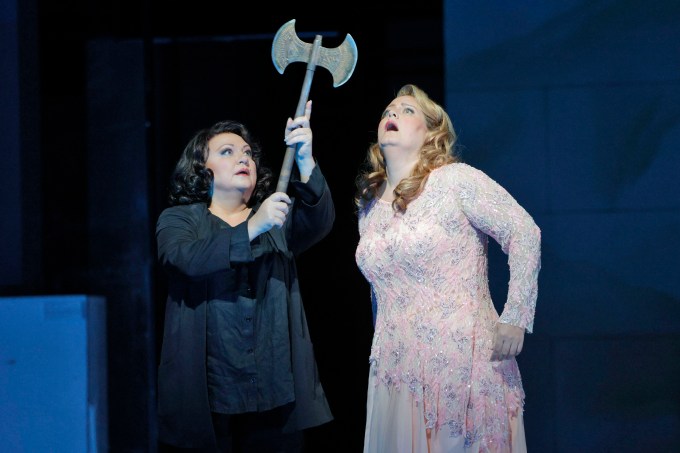
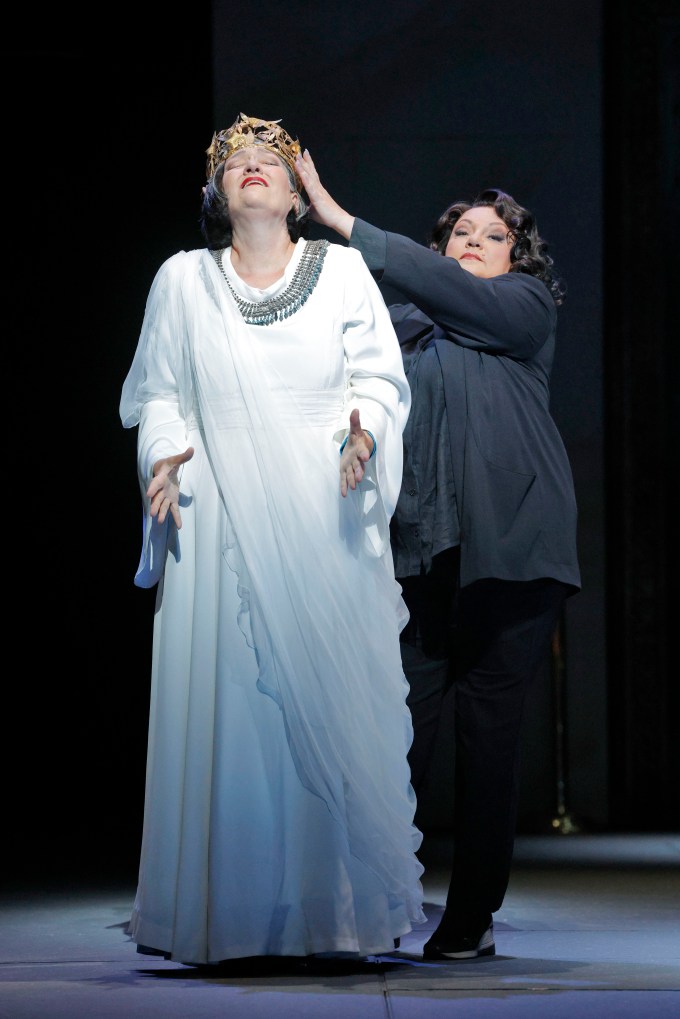
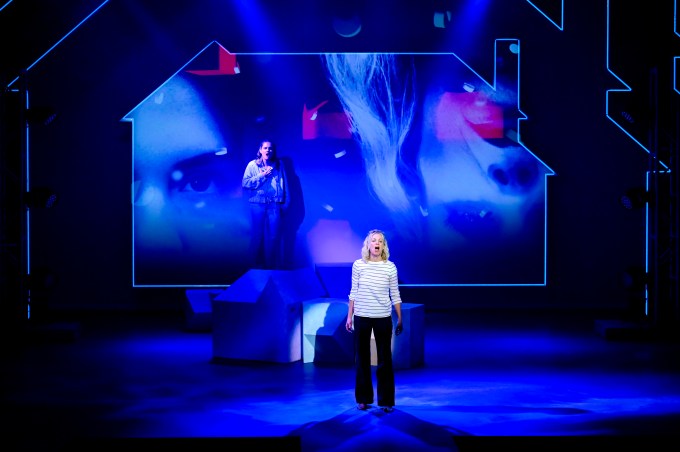
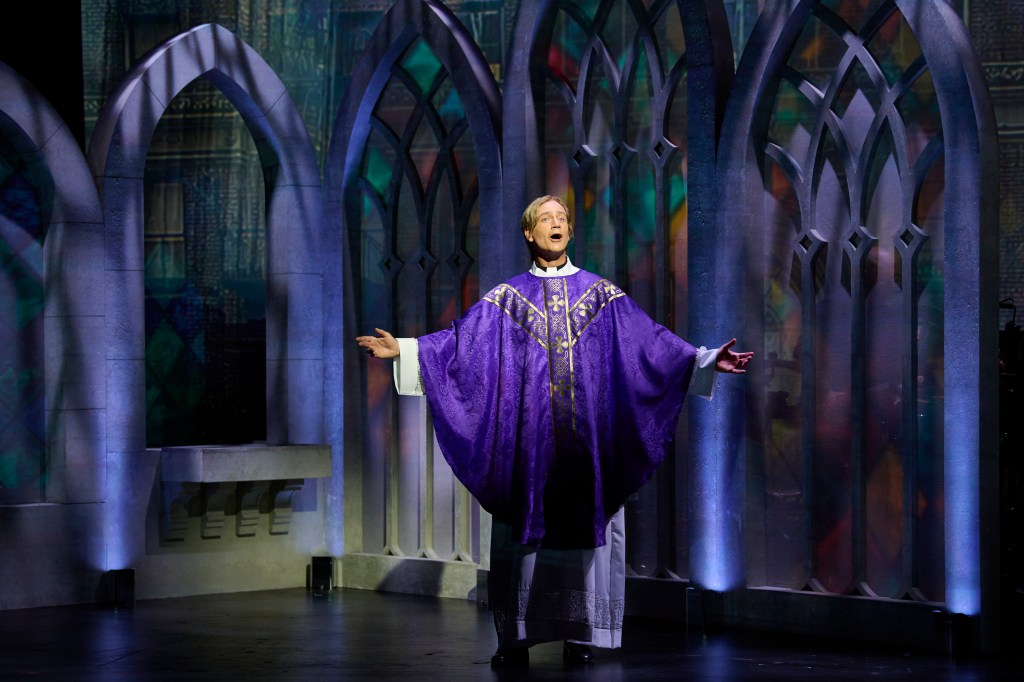
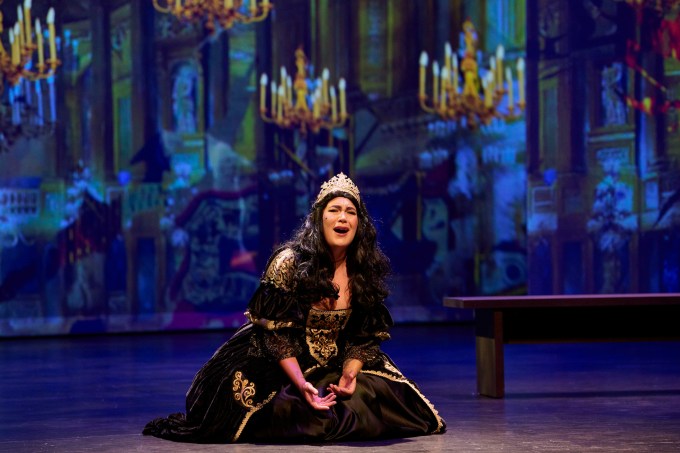
Now for the main event. Though Alcina disappears for long periods, this is her opera. Nikola Printz absolutely owns it and dominates the stage with every appearance. Printz’s voice could not be more suited to the role. Handel actually specifies Alcina as a soprano, and Printz is a mezzo. But particularly the long Act 2 soliloquy calls for sustained powerful mid-range vocalization, and Printz excels both there as well as with high-end wailing. During the feverish, impassioned portrayal, the audience at opening was dead silent and transfixed at the flawless virtuosity of the performance.
A bit of an irony is that as a non-binary, Printz portrays the most female of characters, a queen. Okay, I know you modern thinkers are snickering. But think of 18th century definitions, not 20th!
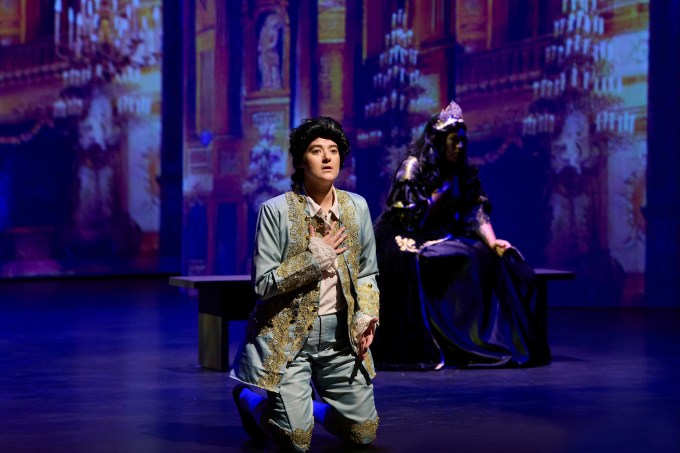
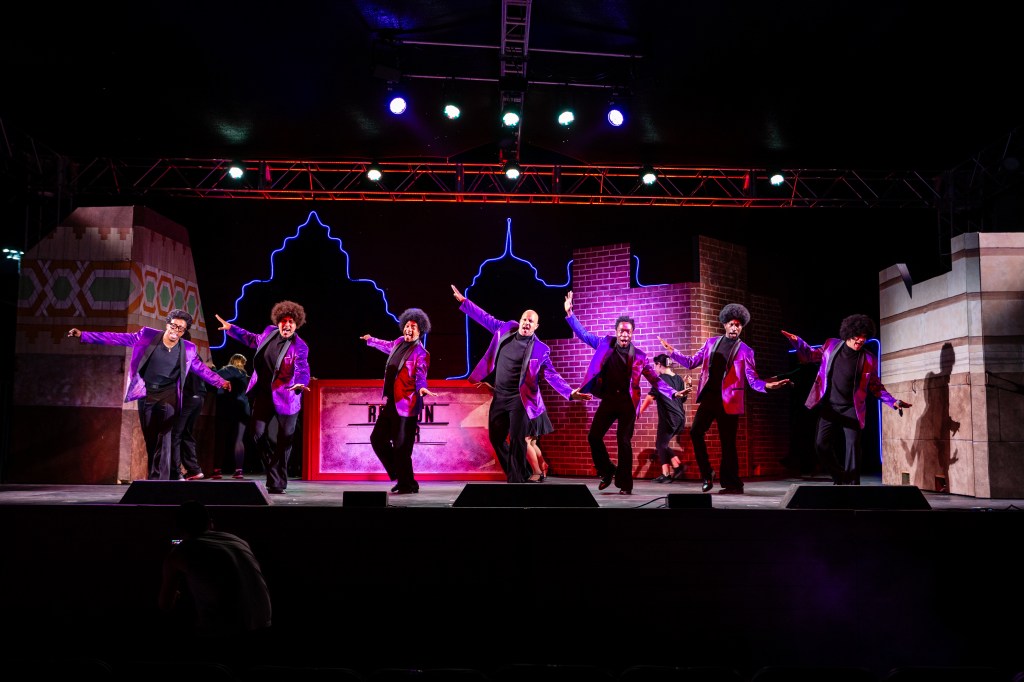
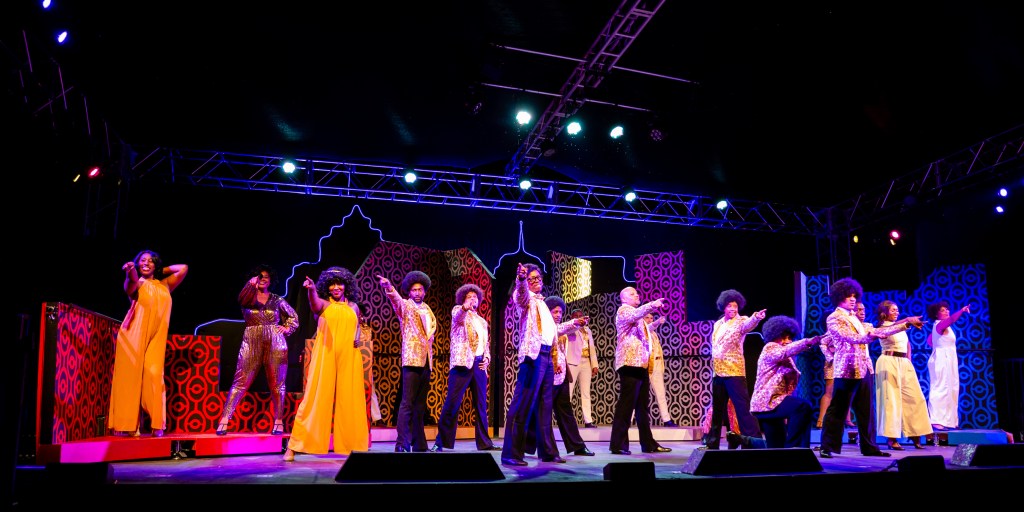
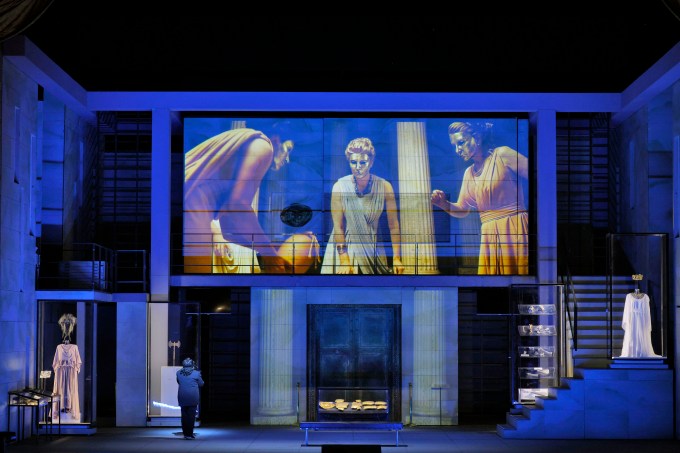
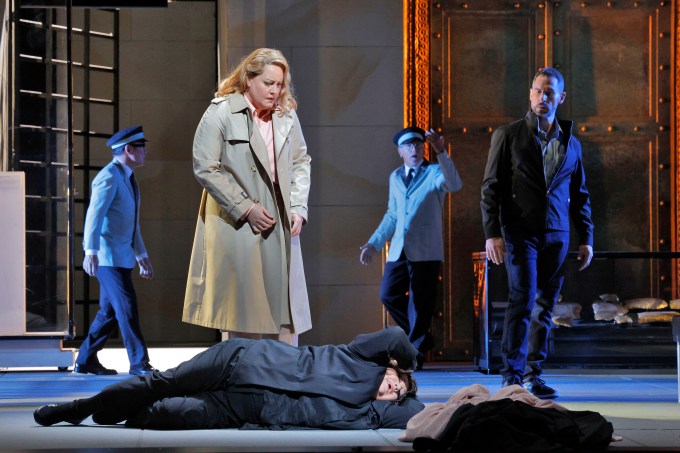
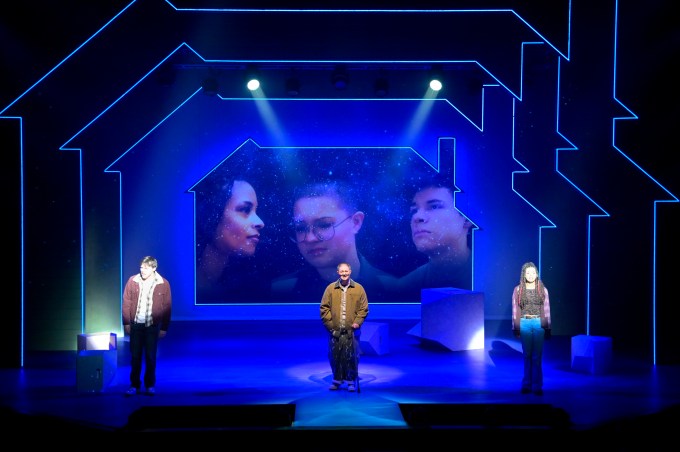
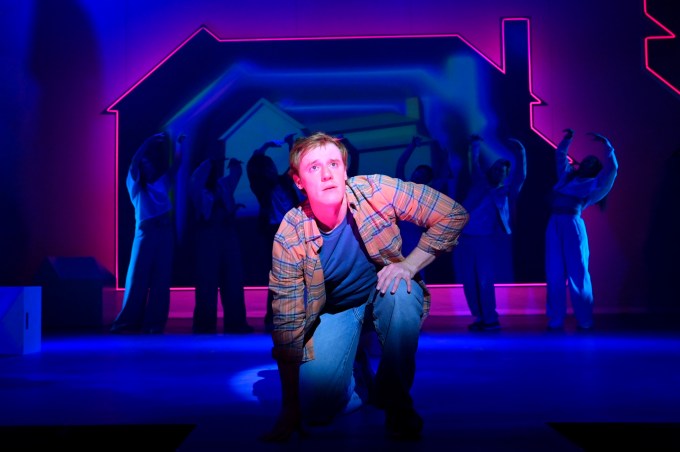
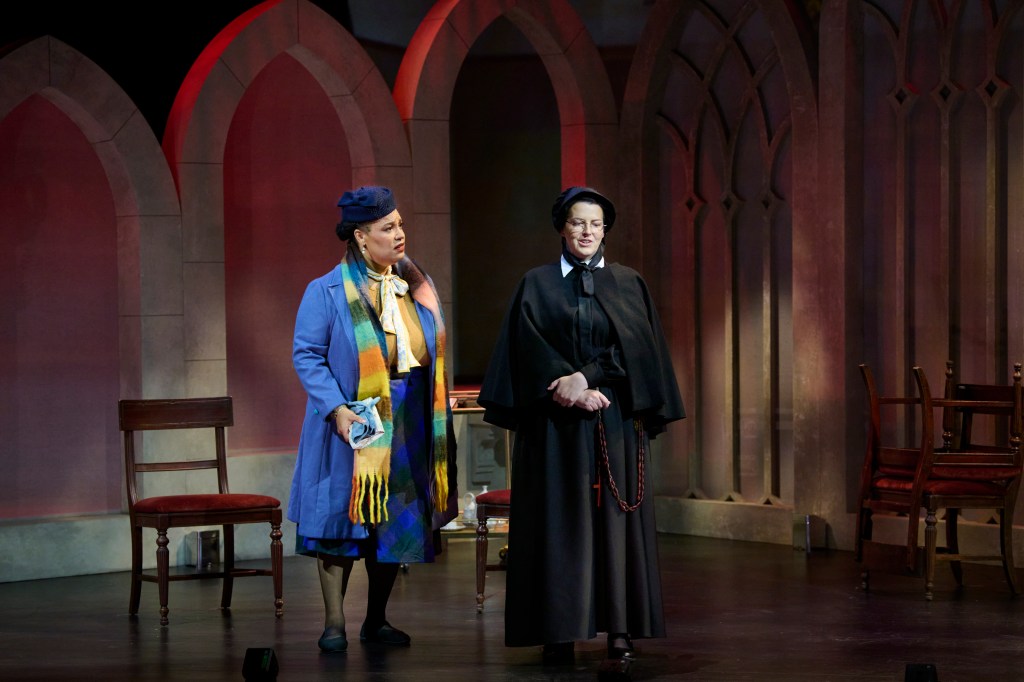
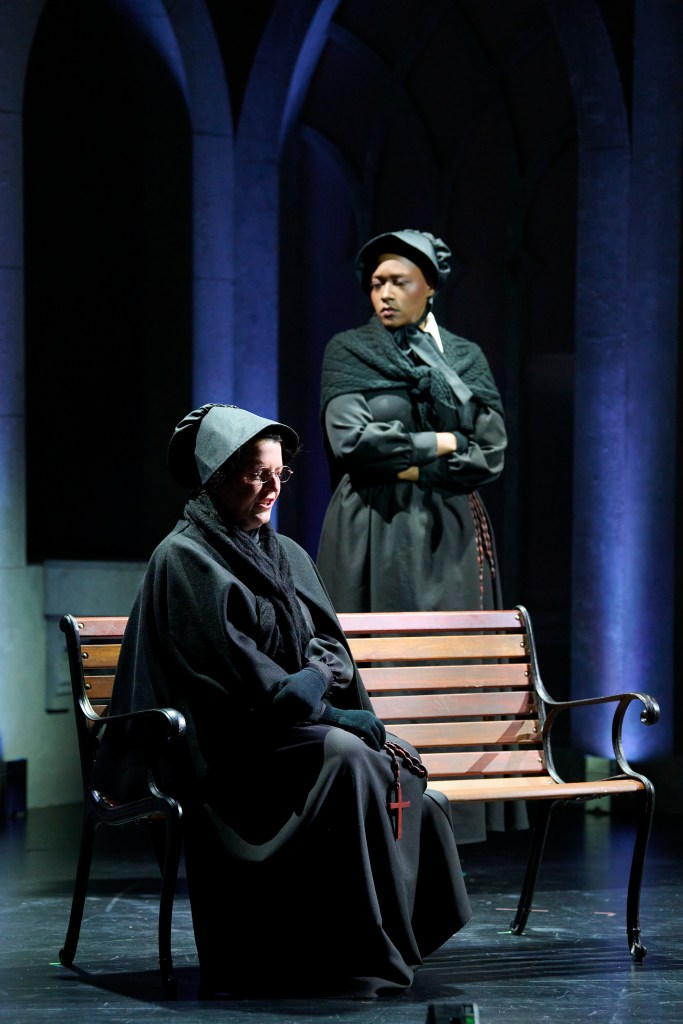
Derek Tam’s orchestra provides lush accompaniment, including period instruments – harpsichord, theorbo, continuo, and recorder. Special recognition among the creative designers goes to Marina Polakoff for her sterling costumery. And while Peter Crompton’s backwall projections compensate for the otherwise spare scenery, their busyness and intensity sometimes compete too much visually with the characters and their garb.
Comic relief and the intense vocal highlights in the first two acts keep the interest level high. By Act 3, and with the absence of comedic elements until closure, the action does drag a bit, but it’s still all worthwhile.
Alcina, with music by Georg Frideric Handel and libretto by Antonio Fanzaglia and based on the poem Orlando furioso by Lodovico Ariosto, is produced by Festival Opera in cooperation with The San Francisco Early Music Society and plays at Lesher Center for the Arts, 1601 Civic Avenue, Walnut Creek CA through June 21, 2026.