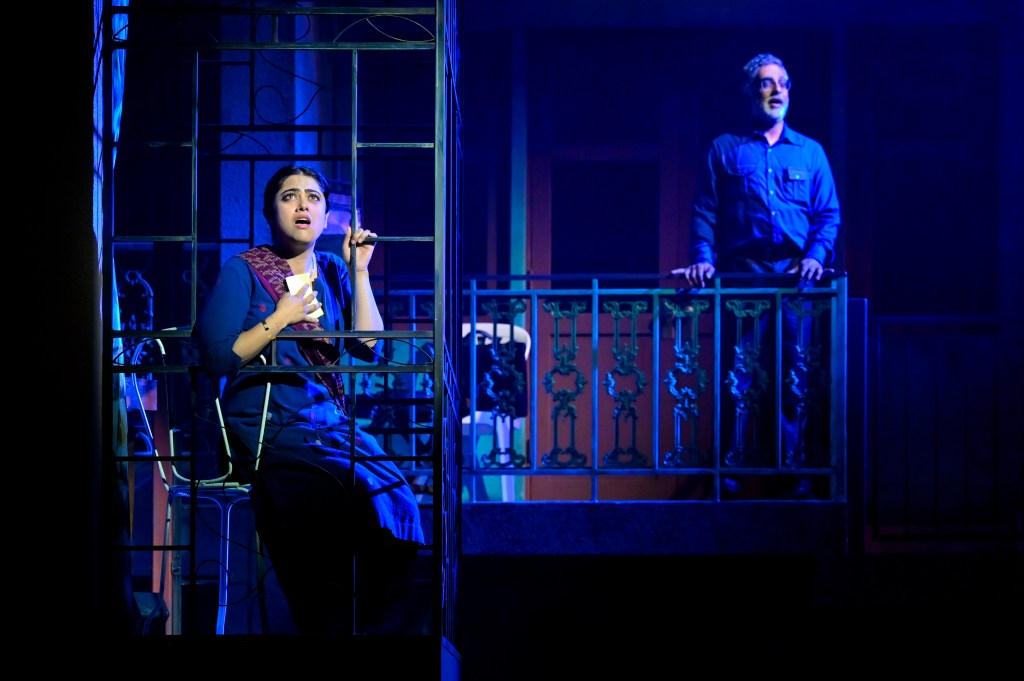
Indian civilization, including present-day Pakistan and Bangladesh, has spawned one of the very few seminal cultures in the world. Its contributions within its own boundaries and influence outside them has been profound.
No other culture has birthed two of the world’s major religions (Buddhism and Hinduism), much less nursed the world’s largest population of a third, Islam. Historically, “India” has been in the vanguard in music and dance; textiles and garments; literature and philosophy; meditation and exercise; painting, sculpture, and architecture. In modern times, Bollywood produces more movies than any other source anywhere and its contemporary music and dance are celebrated worldwide. Finally, India’s influential cuisine is one of the most diverse, setting the standard for the generous use of healthful and flavorful spices. Yet, for all of these accomplishments, the protagonists in The Lunchbox will fantasize about another society – Bhutan, with its government measure of Gross National Happiness.
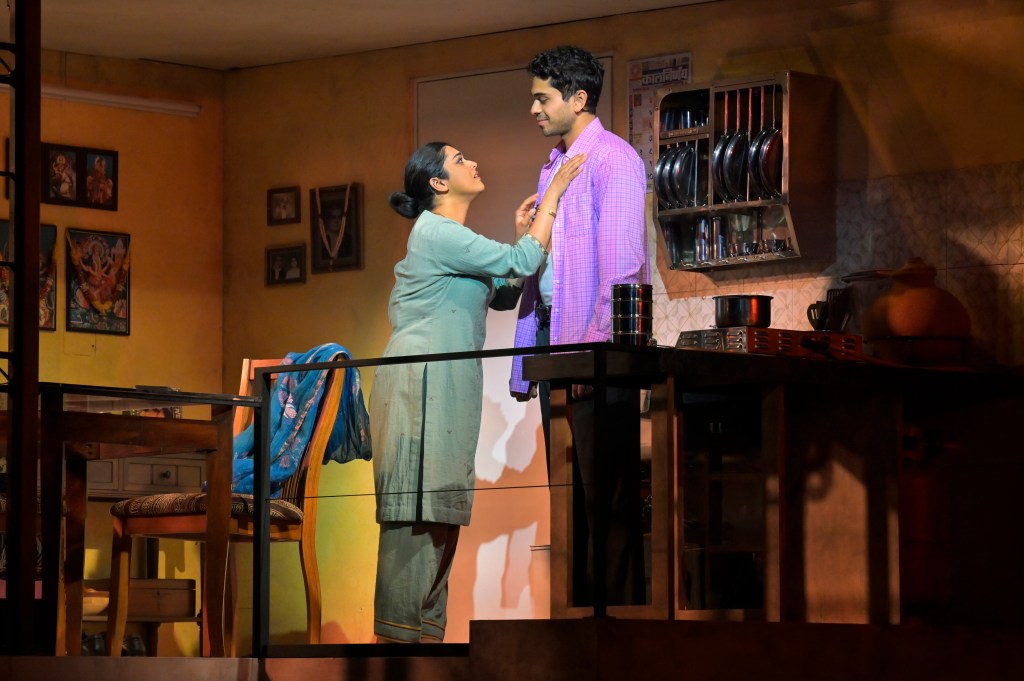
Many Americans probably think of DoorDash, Grubhub, and their ilk as innovative. Fact is that in Bombay (now Mumbai), hot lunches have been delivered since 1890. The differences are that the dabbawallahs, loosely meaning the ones with the lunch boxes, often deliver food to workers made at the workers’ own homes, and they return the reusable tiffins to the meal’s maker after it is eaten. Tiffins are usually comprised of a stack of cylindrical metal containers, each holding a separate meal course.
In Ritesh Batra’s The Lunchbox, a mix-up occurs, and two people receive the wrong lunches – though in real life, the dabbawalla system received a Six Sigma Designation for suffering fewer than 3.4 errors per one million deliveries! But this plotline is fiction! The highly acclaimed and decorated movie of the same name appeared in 2013, and now, Berkeley Rep offers a warm and affirming world premiere theatrical musical based on the same story. Like its predecessor, the musical offers a quiet charm, but with the punctuation of dance and of bouncy music from The Lazours, whose Lebanese-American background suits the fusion of many influences.
The odd couple of the wrong delivery are Ila (a luminous Kuhoo Verma), a young mother in an unhappy marriage, and Fernandes (a wistful Manu Narayan), a widower about to retire early from an office job. Once the delivery mistake is made, they allow misdeliveries to continue, nourished by notes that they write one another and leave in the tiffins. Some may find the slow burn of the first half of the play to drag a bit. However, a blind relationship built on short notes (“The chili was fiery, and it took two bananas to cool my mouth.”) takes time, and ultimately, a number of issues arise and resolve, even those of the main characters’ foils, who provide most of the comic relief.
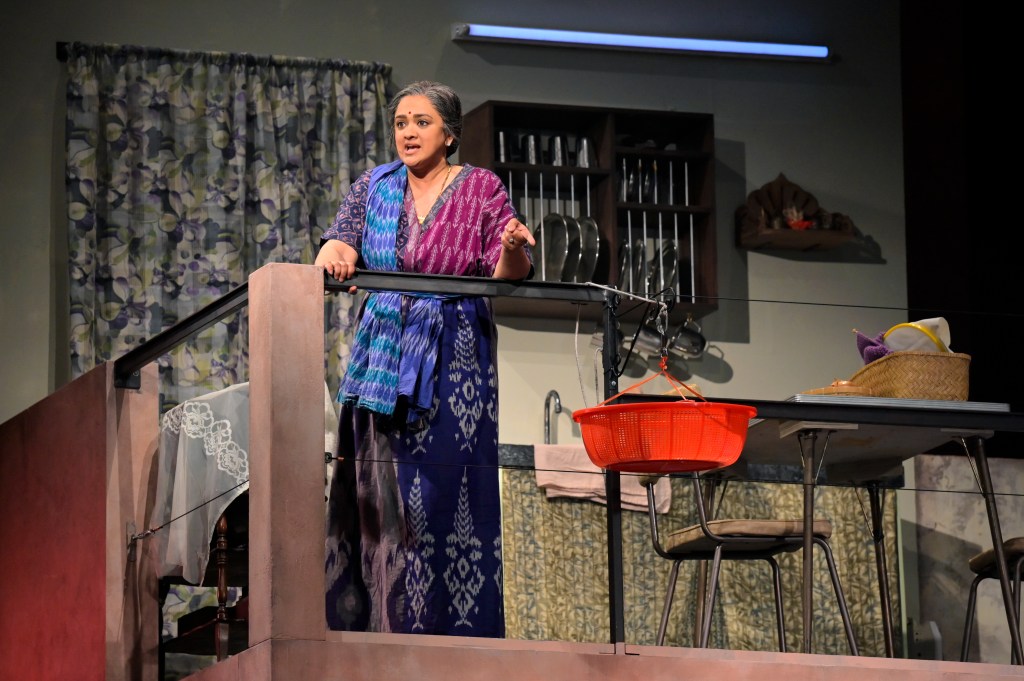
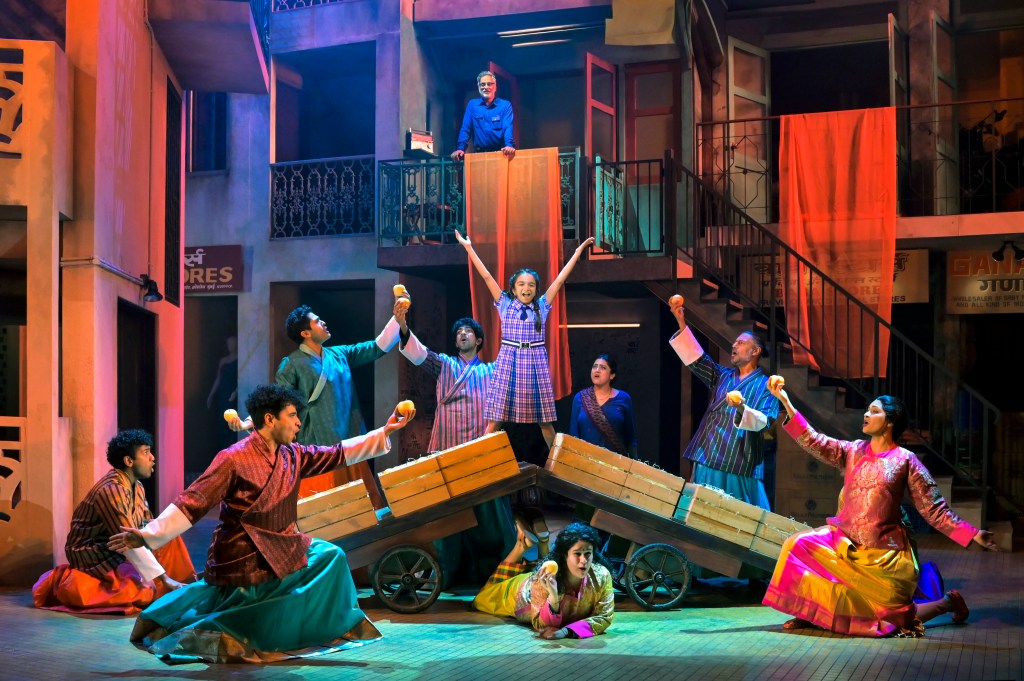
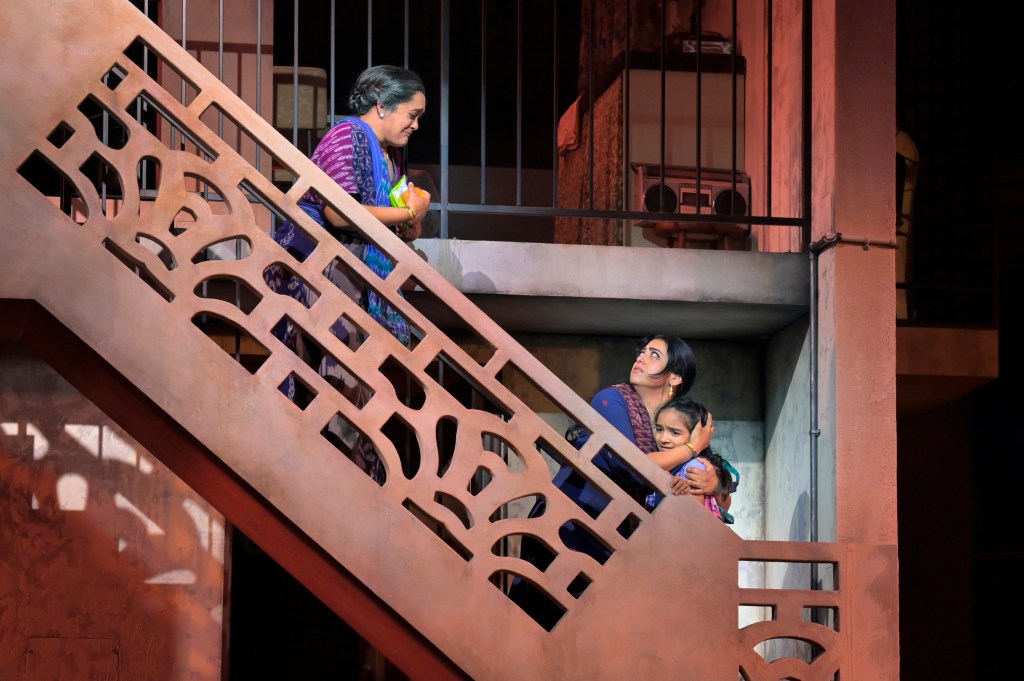
The charming Ila’s almost cloister-like isolation is depicted in Mimi Lien’s appealing multi-level set. Ila never leaves her second-floor apartment for the first hour of the play. Besides her daughter, Yashvi, her main contact with the outside world is her older upstairs neighbor Mrs. Deshpande (a mischievous Anisha Nagarajan), whom in Indian fashion Ila calls Auntie.
Their main form of communication is yelling to each other out the windows, and the cheerful busybody Auntie often offers addendums to Ila’s cooking by lowering ingredients from above in a plastic basin on a rope. They also share a funny duet with Auntie telling Ila what the younger woman needs in life (what else would it be?!).
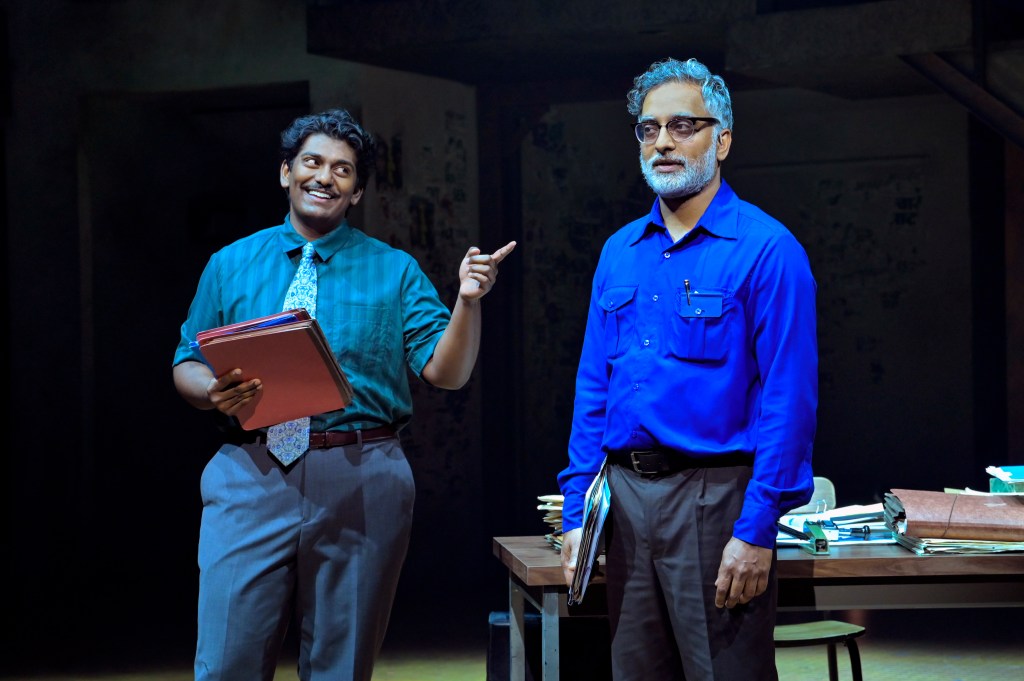
Fernandes is also a pleasant loner but in an office. Morose, and seemingly without enthusiasm for life, he is charged with training his replacement, the eager and unctuous Shaikh (a buoyant Aathaven Tharmarajah). Fernandes initially has little time for Shaikh but begins to sympathize as some of the latter’s secrets unfold.
Indian society is very much in evidence, with stock characterizations from stultifying office practices to social manners. Nods are made to India’s two enduring cultural problems, but without introducing conflict. Shaikh refers to his being dark, code for lower caste, and that it has been an issue in his life, especially with the family of the girl he hopes to marry. It is clear that Ila is Hindu, Fernandes is Christian, and Shaikh is Muslim, but religion is not addressed explicitly, and they never clash on the basis of faith.
Under Rachel Chavkin’s incisive direction, The Lunchbox has the look and feel of a Broadway-bound production. The story engages, and while the stakes are small to begin with, each of the four main characters confronts at least one life-changing decision by the end. One structural weakness is that except for an office confrontation among Fernandes, Shaikh, and their boss, all substantive interactions involve only two people, diminishing the dramatic dynamism. However, characters are empathy-inducing; acting is flawless; staging is compelling; and song and dance lift the spirits.
The Lunchbox, with book and co-lyrics by Ritesh Batra and music and co-lyrics by The Lazours, is a world premiere musical based on the movie of the same name, produced by Berkeley Repertory Theatre and playing on its stage at 2025 Addison Street, Berkeley, CA through June 28, 2026.

