
In Greek mythology, muses were goddesses who inspired all practitioners of the various arts and some science, from poetry to astronomy. In modern parlance, muses inspire specific artists and are uniquely personal, sometimes having intimate relationships with the artist.
American Apollo tells of one such muse, Thomas McKeller, and of his patron, John Singer Sargent, the most successful classical portrait painter of his generation. Although Sargent was American, he lived in Europe as an expatriate most of his life. While residing in Boston late in the second decade of the 20th century, he used Thomas as a model, particularly to represent the bodies of gods. But as McKeller would later complain, Sargent never used his skin or his face. Thomas was black.
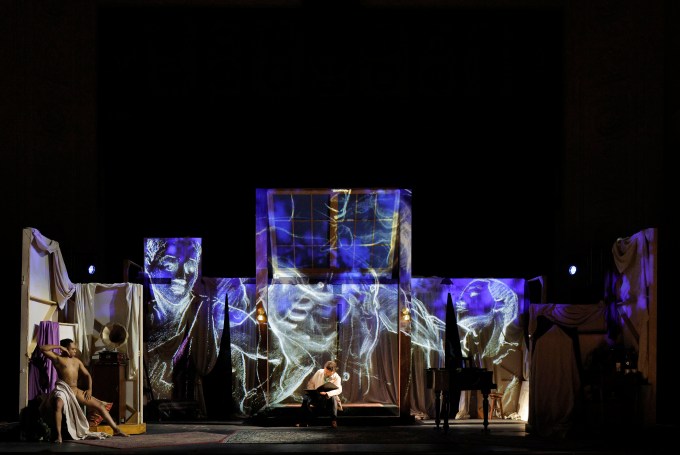
To a libretto by Lila Palmer, Damien Geter has composed a portrait of the two men and the small coteries that surrounded them. Though not openly gay, homoerotic clues arise from Sargent’s letters, so the narrative imagines that the relationship between the men who worked intimately and for quite some time became romantic.
Another suggestion of a love affair derives from the fact that Sargent did paint a single portrait of McKeller that was nude and evocative, and Sargent kept it in his private collection. Alternate hypotheses could explain his not showing or selling the painting. Perhaps there was no market for such a work, or perhaps the artist’s reputation could be sullied by it. Of course, consistent with the suggested relationship is that the artist retained it as a private keepsake and remembrance.

The adventuresome West Edge Opera has produced American Apollo as its third and final opera of its innovative and entertaining 2026 festival. The warm, melodic score is accompanied by a literate libretto and supported by a lead cast of powerful singers with commensurate acting skills. The result is a pleasing production that touches on continuing social issues of our time.
Geter’s score draws on many popular music idioms, resulting in one more welcomed step in the return of opera music to melodious tonalism in the post-modern era. Among non-operatic sources, the composer adds a little jazz and blues to the scenes involving only black characters. And he borrows elsewhere to the point of pastiche, even sampling in the case of John’s singing Reynaldo Hahn’s beautiful neo-Baroque chanson “A Chloris” and Thomas’s friends singing the stirring “La Marseillaise” as they enter World War I.
The warm, lush music fits comfortably in Palmer’s lyrical libretto, which wisely doesn’t try to overdo differences among characters’ race, class, and sexual orientation – the dominant themes of the story. Indeed, the librettist allows considerable ambiguity in the relationship – from speaking occasionally in coded words and uncertainty as to who initiates the intimacy to John’s departure from Boston without explanation.
Yet, if there is an overarching weakness in the opera as a drama, it is that beyond personal anguish, the stakes are small and the climaxes not sufficiently intense. The affair is not even made public. Thus, lacking the dramatic carnage of Elektra or the civilizational gravity (and bloodbath) of Götterdämmerung, it might help if the intermediate inflections, like the deaths of two persons close to the central characters are more accented. Even the clashes between characters are understated.
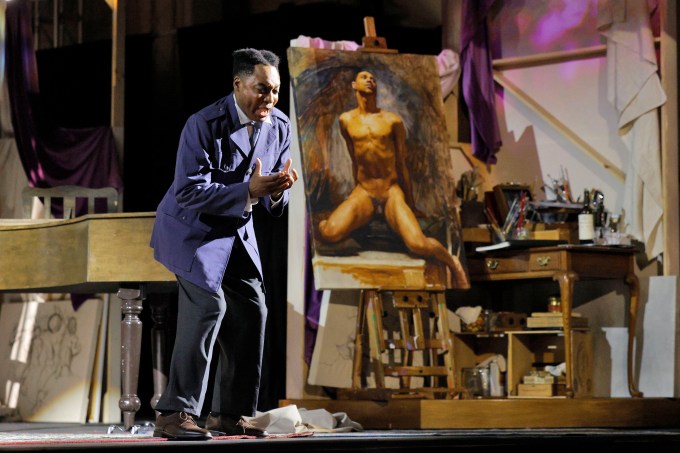
Notwithstanding, the fantasy engages, and the performances are outstanding. Markel Reed as Thomas McKeller has a wonderfully earthy baritone voice, intense yet reserved, deep and well-projected. In both singing and acting, he depicts the dignity and agency of the character while conveying the quiet angst of being underprivileged and lacking opportunity for big things.
John Bellemer as John Singer Sargent shows confidence and buoyancy with his brightly vibratoed tenor. Bellemer strikes a middle ground in the relationship. Though he’s the employer and a white man of privilege, he is portrayed as largely understanding and refrains from condescension.
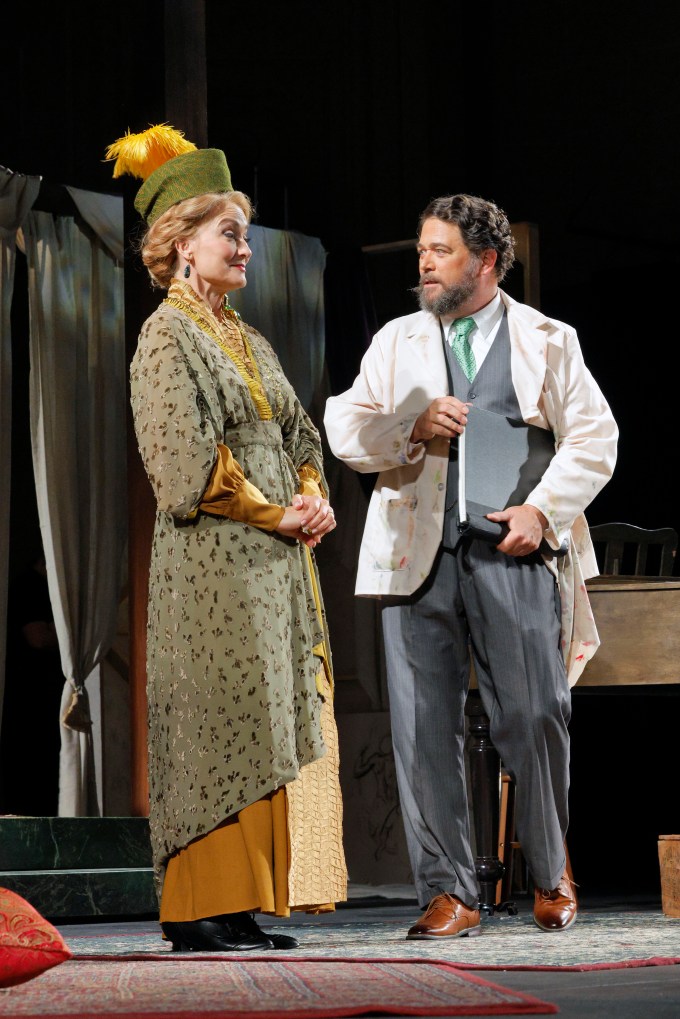
The other key character is Isabella Stewart Gardener, who was not only a major patron of Sargent’s, but she founded the eponymous museum in Boston to display her bountiful world-class collection. In addition to purchasing a large number of Sargent’s paintings, she also calms the two men when clashes cause their separation. Indeed, in persuading Thomas of John’s affection, she confides, “That is why we love him. We are beautiful in his eyes.” The charming and clarion clear soprano Marnie Breckenridge is a notable addition to the plot as Gardener, and she endows the benefactress with wit and stellar voice.
The production plays on a set by the Bay Area’s ubiquitous scenic designer Nina Ball. Having a single set with fold-out sides, the framework is flexible enough to represent several different venues using a little imagination. Direction is by the versatile and uber-talented Nataki Garrett, and Oakland Symphony Music Director Kendrick Armstrong conducts with skill and conviction.
American Apollo, composed by Damien Geter with libretto by Lila Palmer, is produced by West Edge Opera and is performed at Scottish Rite Center, 1547 Lakeside Dr., Oakland, CA through August 16, 2026.

