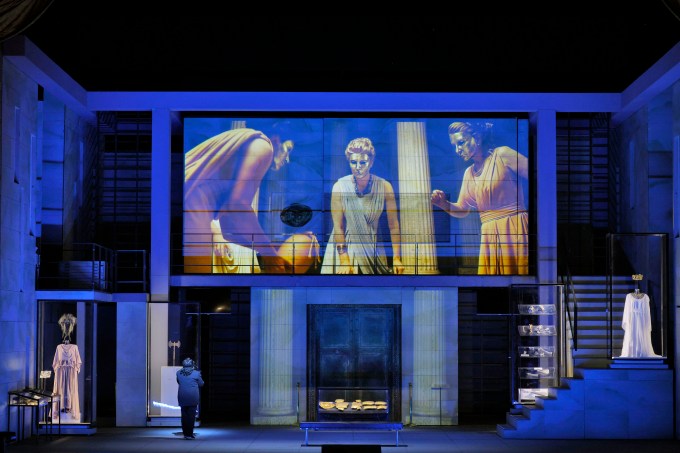
Along with Giacomo Puccini, his contemporary, Richard Strauss was perhaps the most successful and influential of opera composers in the 20th century. The two also shared an affinity for the female voice, and in Strauss’s masterpiece Elektra, a man does not appear for the first hour. The lesser male players that later arise, including her brother Orest, perform in the service of the title character. However, while most of Puccini’s heroines are lyrical and feminine, in Elektra, Strauss’s are harsh and extreme in their singing and actions.
Where the two maestros depart is in the idioms of their operas. Puccini remained unapologetically Romantic throughout his works, while Strauss, with Salome and then Elektra, set the course for modern atonalism, but then in an unusual artistic evolution retreated to more conventional melodic composition in his later operas. Following in the footsteps of Richard Wagner, Strauss also favored continuous-music composition in Elektra, and in the same vein, the vocals produce pyrotechnics, but little in the way of hummable memorability.
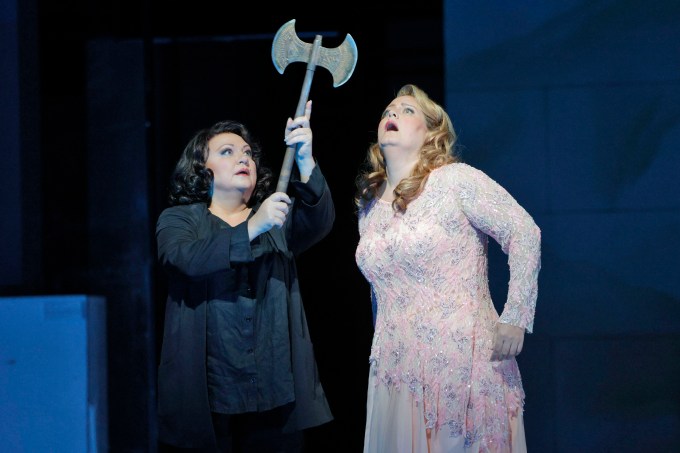
San Francisco Opera has revived its 2017 production of Elektra that provides a suitable visual backdrop for the acoustic fireworks that the composer specifies. The conceit is that the action occurs in a museum after closure. The stunningly handsome, subtle, bluish-purple hued angular staging works, albeit with time period contradictions of costumery. But so would a more traditional stage look work with the same bells and whistles, which include contrast lighting, double decking, and rooms that slide on and off stage obviating the need for separate sets.
Strauss poses two particularly big challenges. Although the opera is only 100 minutes long, Elektra is a massive role requiring immense stamina, opening with a long soliloquy and testing the dramatic cred of the interpreter of the role throughout with high volume and high tessitura. Soprano Elena Pankratova meets the requirements, embracing the harsh and steely vocal volatility as well as the more nuanced requirements.
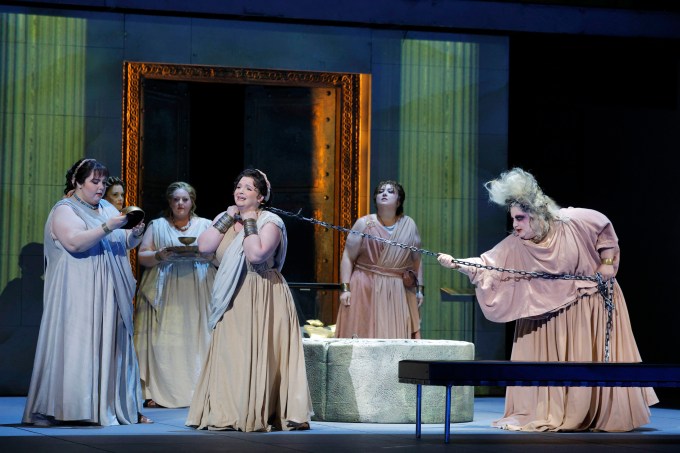
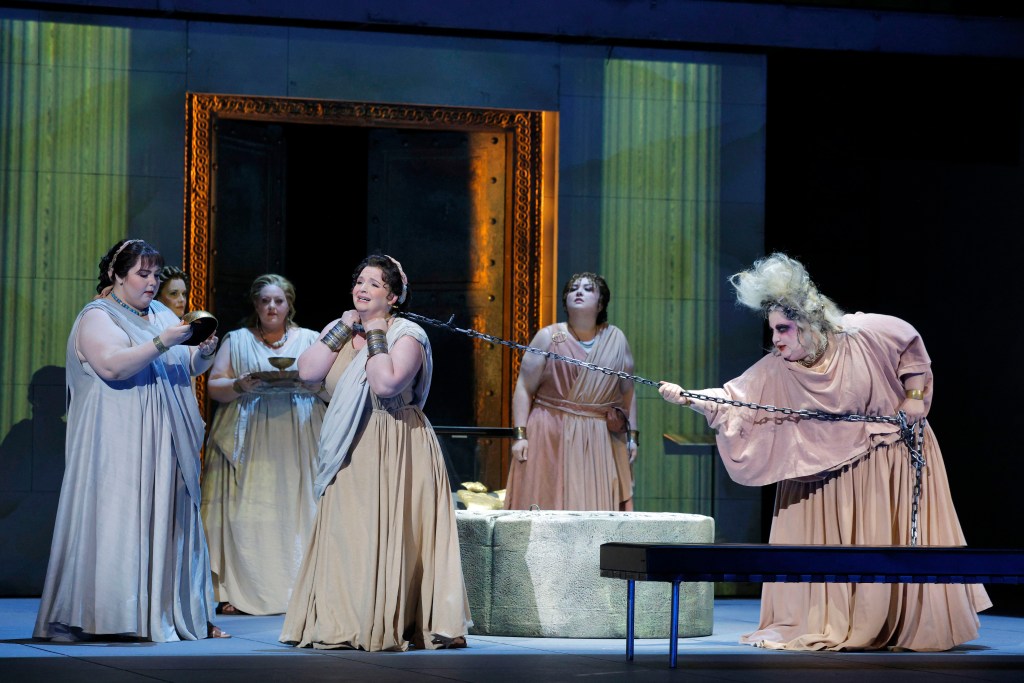
The other test is for Conductor Eun Sun Kim, who must corral an orchestra of 95 performers, perhaps the largest specified in the opera canon. Having twice the number of players of many instruments is exponentially more difficult to manage, but thanks to fine direction, the result is astounding. From the opening unbalanced Agammemnon motif, to the final unresolved ending, the orchestra excels. Not only is the resonance of the orchestra exceedingly potent, but it creates a rich embracing surround-sound unlike a smaller one.
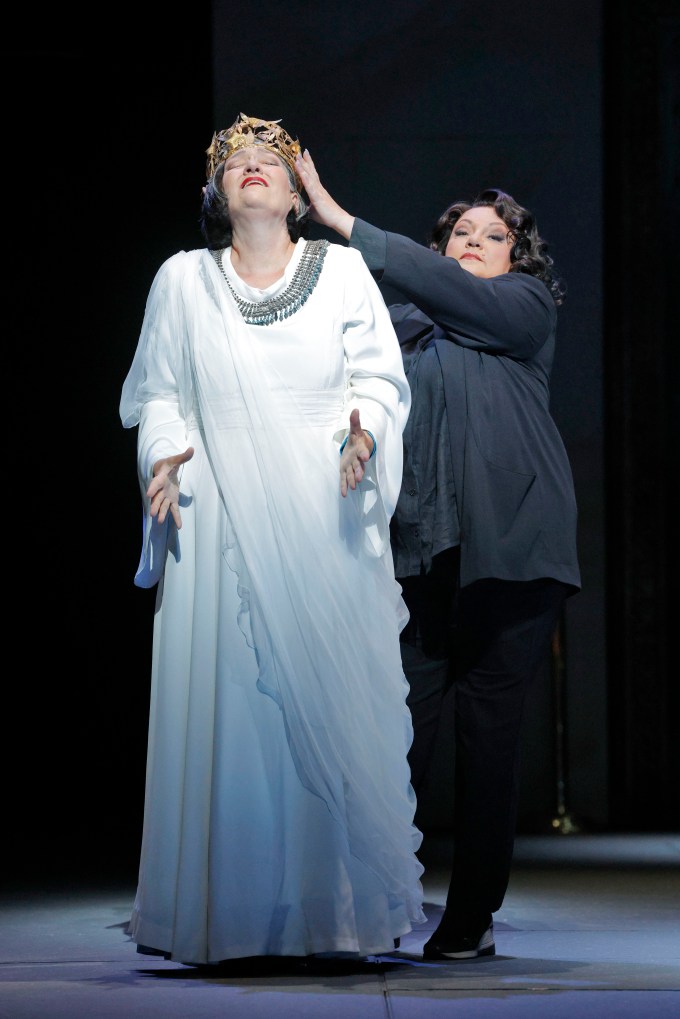
Librettist Hugo von Hofmannsthal drew from the Sophocles version of this Greek tragedy but with one major deviation. He fails to mention that Agammemnon sacrificed his daughter Iphigenia to the Gods, therefore lending sympathy to his wife Klytemnestra, mother of Iphigenia and Elektra, who is kept under house arrest. Thus, when the frenzied Elektra seeks to murder Klytemnestra and her paramour Aegisth in retribution for their having murdered Agammemnon, Elektra’s deed is rationalized by the librettist, but not Klytemnestra’s. Note that non-verbal action in this production, including projection display, does not always conform to the text of the opera.
Until the fiery later scenes, the narrative is largely comprised of heated conversations, each between two women and underpinned by psychological revelation. At first, the audacious Elektra tries to lure her sister Chrysothemis, played by Elza van den Heever, to join her murder plot. However, the sister with normal human appetites demurs to Elektra’s disdain. Van den Heever not only mixes well and competes with Pandratova’s dramatic vocalization, but at the top of her range, van den Heever is able to cut through the orchestral din.
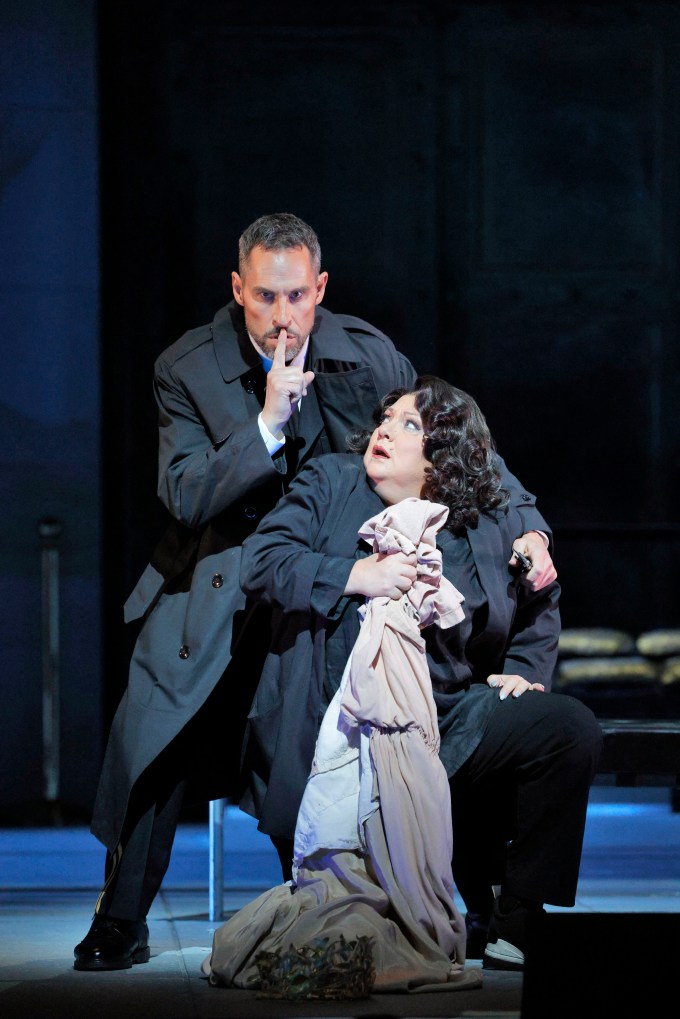
Klytemnestra is mezzo-soprano Michaela Schuster, who offers another strong voice but in vocal contrast to Pankratova with even darker timbre. The mother, damaged by guilt and doubt, enters the proceedings to share her foreboding nightmares with Elektra, but looking for solace from the daughter whose father she’s murdered does not go well.
Not surprisingly, the end of the Greek tragedy is bloody, including a severed head.
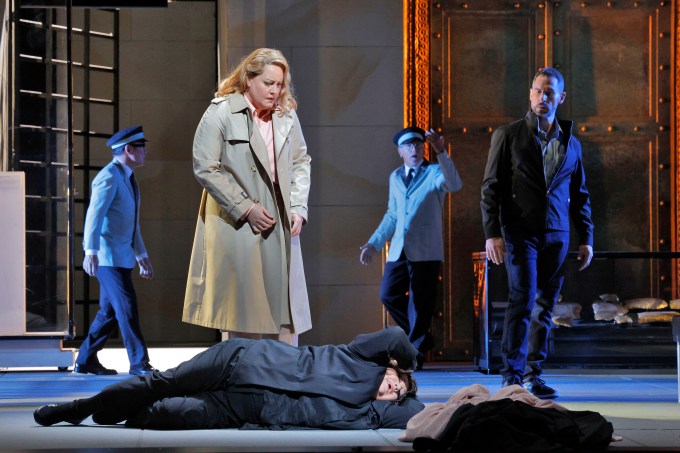

Elektra holds a special place in opera history and should be on every aficionado’s list of operas to see. This version offers everything that should be expected from it, with musical precision and high drama. Like many works of its ilk, the music is more appreciated intellectually with its complex overlapped chord structures and motifs, rather than for aesthetic beauty, although much of the orchestral music is compelling and quite pleasing.
Elektra, composed by Richard Strauss with libretto by Hugo von Hofmannsthal, is produced by San Francisco Opera and plays at War Memorial Opera House, 301 Van Ness Avenue, San Francisco, CA through June 27, 2026.
 cordellreportsdotcom