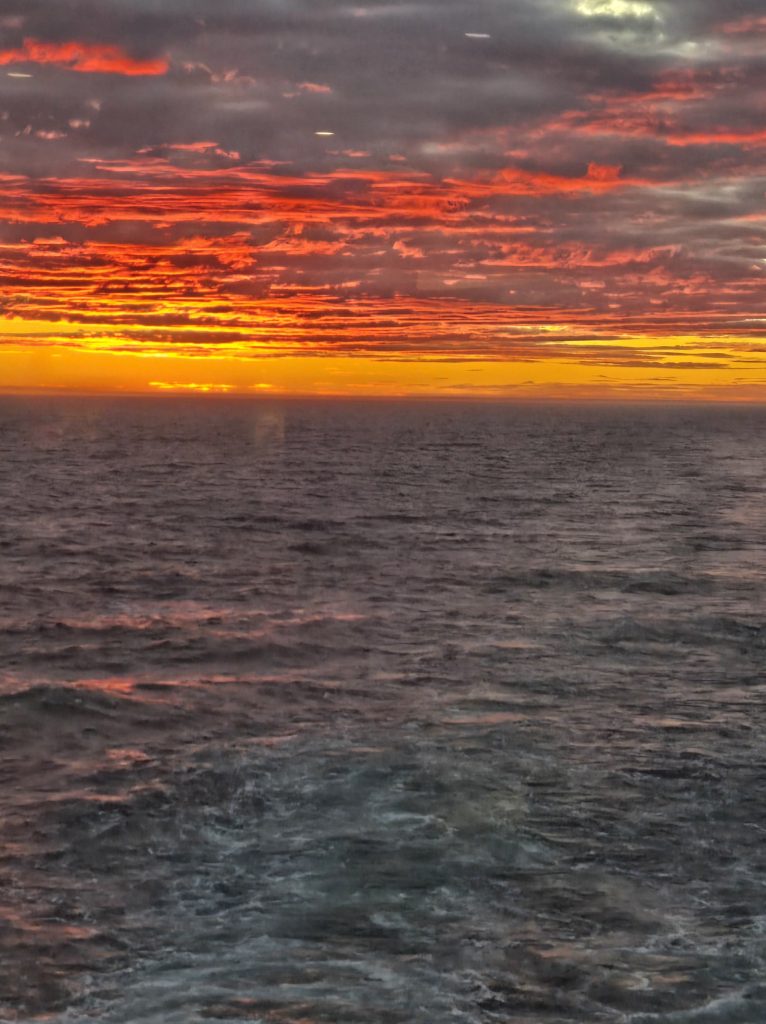
INTRODUCTION
In an early example of deceptive marketing, explorer Erik the Red dubbed a huge slab of granite in the North Atlantic as Greenland in an attempt to get Icelanders to colonize the newly found island. In fact, Greenland is rimmed with low but craggy mountains, and the only green is from lichens, moss, and low-lying soft-tissue plants that grow in the patches of decomposed rock. A tree may grow in Brooklyn (literary reference!), but not in Greenland.
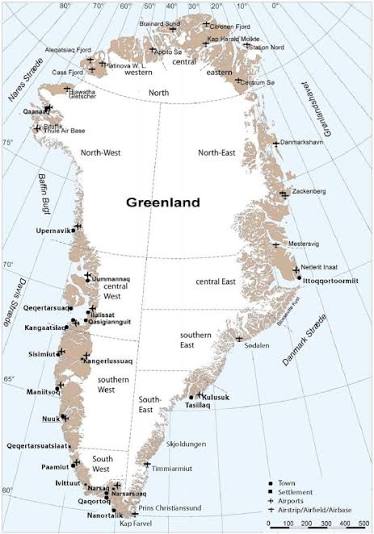
Slightly larger than Alaska, Greenland is the world’s largest island (Australia is a continent). Like Alaska, it is dominated by frozen tundra and lies largely above the Arctic Circle. Weather is accordingly Arctic, but summers in the southern towns can be mostly pleasant. Adapted mammals occur, such as seals, polar bear, and walruses by the oceanside with caribou, musk ox, and Arctic fox inland.
The island’s economy is historically based on fishing, though in recent times, rare earth minerals have been exploited, and Greenland is believed to contain an abundance of them, which makes it of strategic importance. Although it still receives nearly $1 billion in aid per year from Denmark, its GNP per capita puts it in the post-industrial world.
Greenland’s inhabitants refer to their ethnicity as Greenlandic but are the same Inuit people who are also indigenous to northern Canada and Alaska. The population is only 60,000, all of which live on the coast in towns. Most all Greenlandics are intermarried to some extent with ethnic Danes. And if you have a vision of a population living in igloos and eating mainly whale blubber and seal meat, you would be wrong. Although, for instance, hunting for polar bears must be done in traditional fashion with dog sleds, the people mostly live a modern but modest lifestyle, linked to other cultures by television and Internet. Crime is virtually unknown except as relates to illegal drugs. Everything from pizza to tae kwon do and rock music are common, but there are virtually no social activities or entertainment for tourists to engage in.
BRIEF MODERN HISTORY
Greenland has been a Danish territory for centuries, but has become increasingly autonomous except for foreign policy. During World War II, the United States occupied Greenland and Iceland for the purpose of providing logistics for Allied forces while keeping the Nazis from otherwise trying to control the North Atlantic with its submarines. The benefit to Greenland was that U.S. forces built two air bases that have since connected Greenland to the outside world.
Presently, Donald Trump has threatened to annex Greenland for its strategic location and mineral resources either through purchase, or if necessary, by seizure. Note that as a result of treaty, the U.S. still has Pituffik Space Base and the right to establish defense facilities on the island. On our visit, we did see signs (some vulgar) and hear much talk, all in the negative about any political association with the U.S. While Denmark, the EU, and NATO would unlikely go to war over such an illegal action, the jackboot brazenness of forced annexation would certainly be the last nail in the coffin of the great North Atlantic alliance.

GETTING THERE, STAYING, AND GETTING AROUND
Tourism in Greenland is dominated by the cruise industry. Passenger liners provide the most cost effective means to visit, generally plying between Iceland and eastern North America or to and from Iceland. Most itineraries will have two to four stops on the island and possibly include cruising Prince Christian Sound.
The island has just opened two commercial airports, in Nuuk and Qaqortoq, which replace the American Air Force bases. Most air connections are to Copenhagen, but recently routes have opened to North America and Iceland as well.
Three problems make air travel to Greenland less appealing. Flying from international locations is expensive. The lodging in-country while not expensive is very basic, often hostel-like, including many options that have shared bathrooms which would be unacceptable to most foreign visitors. Finally, on cruises, the ship delivers passengers from one community to another efficiently. There are no roads between towns in Greenland, so that other than traveling by cruise line, the only options are long, uncomfortable ferry rides or whatever domestic air, which is expensive and infrequent.
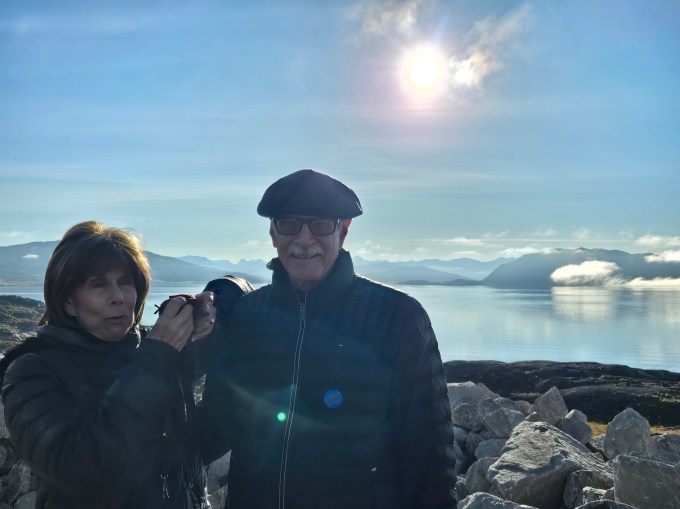
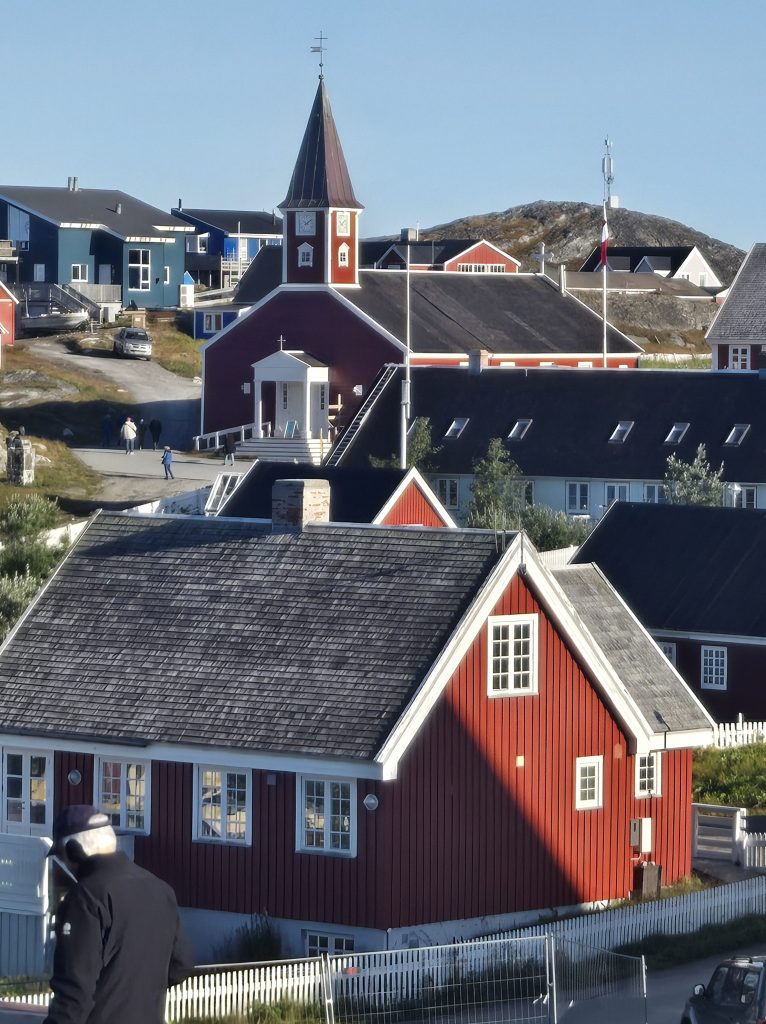
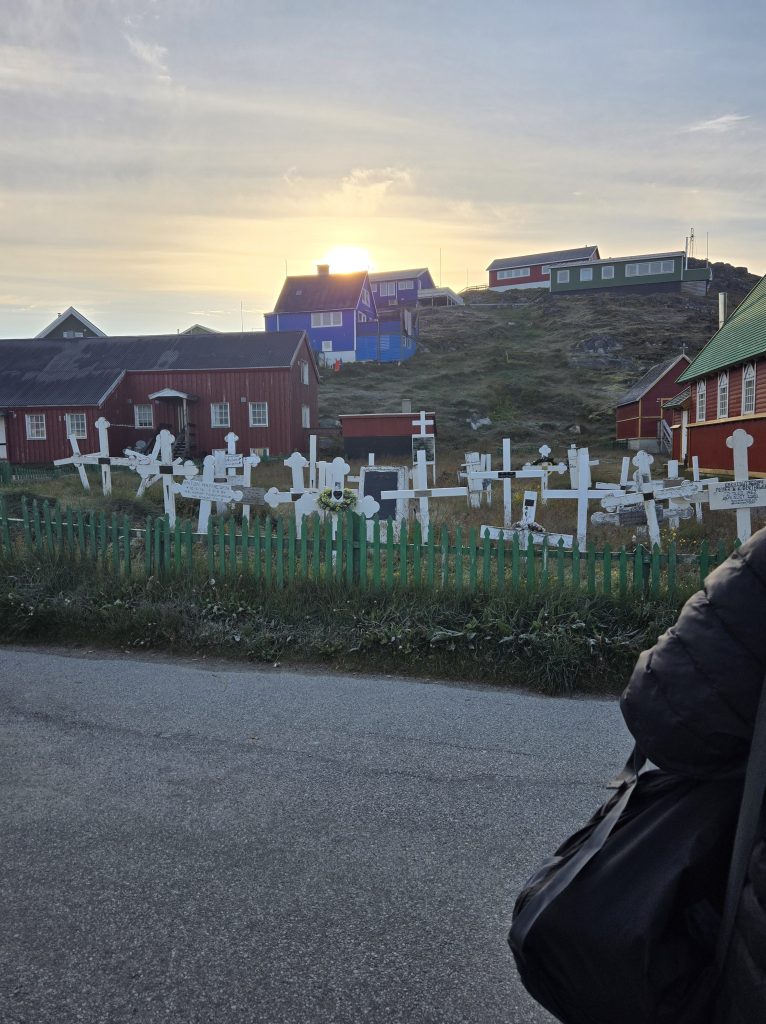
The look of the land, except for the shapes of the mountains, is austere. The looks of the towns are simple, yet bright. Except for frequent white trim, buildings are painted in bold, basic colors. Originally, they were representative with, for instance, yellow being for health services, red for churches, and black for police. Houses were originally blue but now are whatever color the owner wishes.
Architecturally, not a shred is wasted. Layouts and features are strictly set in 90 degree angles. But because of the bold colors and because the towns are set on hills which results in the houses appearing visually random, it presents an attractive look. Although there is no native timber in Greenland, structures are overwhelmingly clapboard with wood brought in from Denmark.
OUR EXPERIENCE
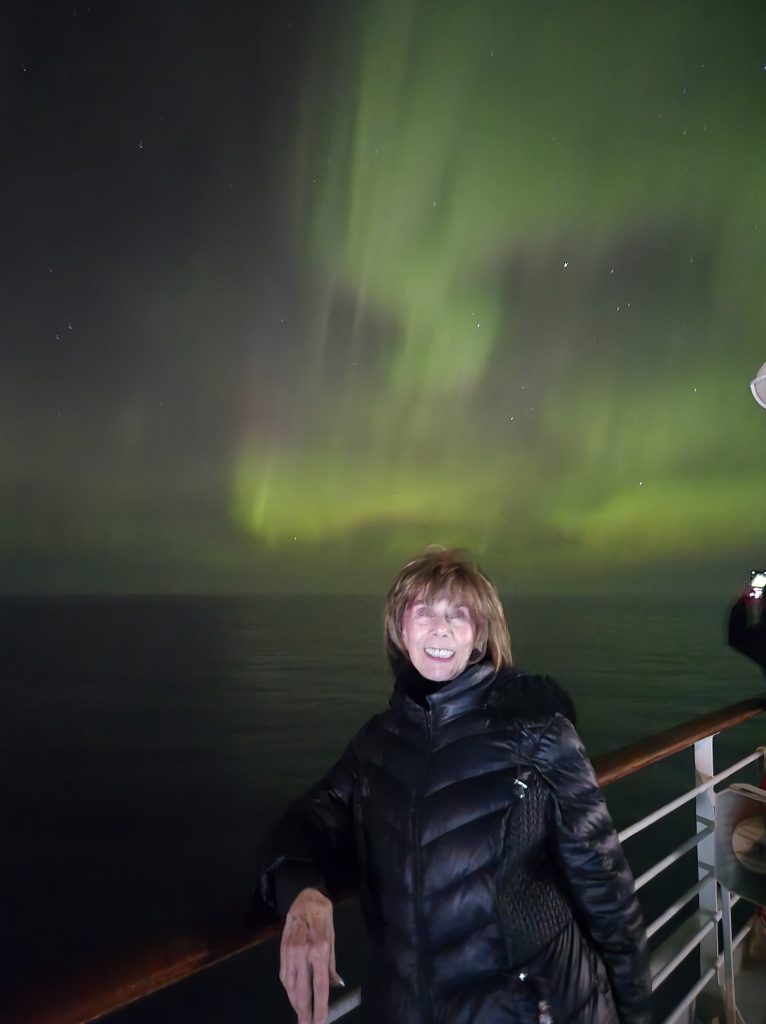
Weather history suggests only a month or so of sunny days per year in Southern Greenland, but we benefited from four glorious, blue-sky days with low wind and comfortable cold temperatures in earliest September. Although this was the very beginning of the season for aurora borealis (northern lights), the clear skies facilitated them. We had them several nights in a row from the ship, with one night particularly glorious having swooshing, dancing neon green figures.
A variety of birds are highly visible on the coast of Greenland. Puffins are the most distinctive and sought after, but terns and gulls proliferate, while eagles, loons, eiders, geese, and more can be seen. Mammals are scarce, though we did see seals and had multiple whale sightings.
Our cruise sailed by night, spending three days at destinations, offering excursions outside of town, both on the water to seek marine mammals and on the land to check out the topography. We declined as the prices were high and the payoffs low, especially given what we could see from the ship.
Having lived in six countries and traveled extensively, visiting Greenland did have a sense of checking the box for us. That said, my wife Karin and I were both pleased with the visit, feeling it offered something new and different than what we have experienced before, and as part of a cruise, it is that much more enjoyable.
Nuuk
This is the capital of Greenland with about half of its population and the only town with more than 4,000 people, and as such is the best place to engage in the local economy. It does have a shopping center under one roof with several casual restaurants, gelato shop, boutiques, and such. The range of local products is limited, and unfortunately, the most significant is seal skin apparel and accoutrements, which are illegal to bring to the U.S. Bone and driftwood carvings are interesting, but expensive for what they are, as are woven items.
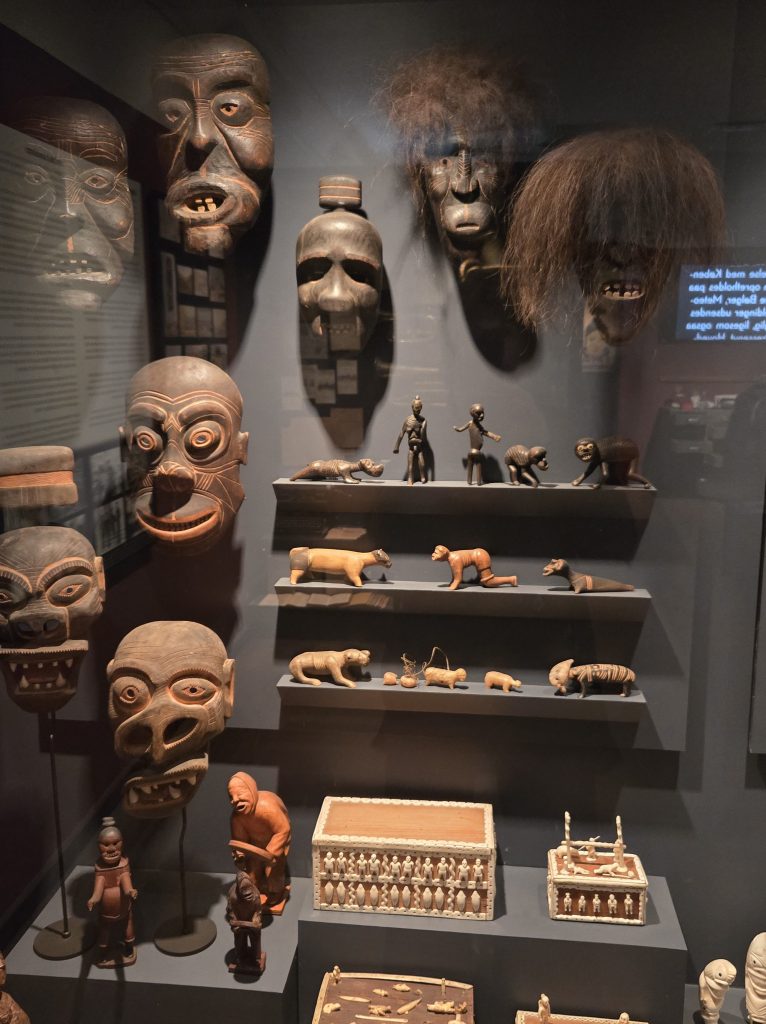
What Nuuk does have is a museum of history and culture in Greenland, mostly of the life of Inuits, especially in the harsh natural environment. It is quite nicely presented, and the English descriptions are informative and flawlessly expressed. Displays include artifacts of all kinds from anoraks to kayaks along with documentary videos of life in the 1930s. This is a “must see” for any traveler.
Paamiuk and Qaqortoq
These are two other towns we visited in the southern part of the island. While their physical settings are appealing and there is opportunity to learn about small towns, there is little unique about either location. Sights are mostly churches and graveyards plus seeing the buildings of institutions like schools, recreational facilities, and each town’s (one) cafe.
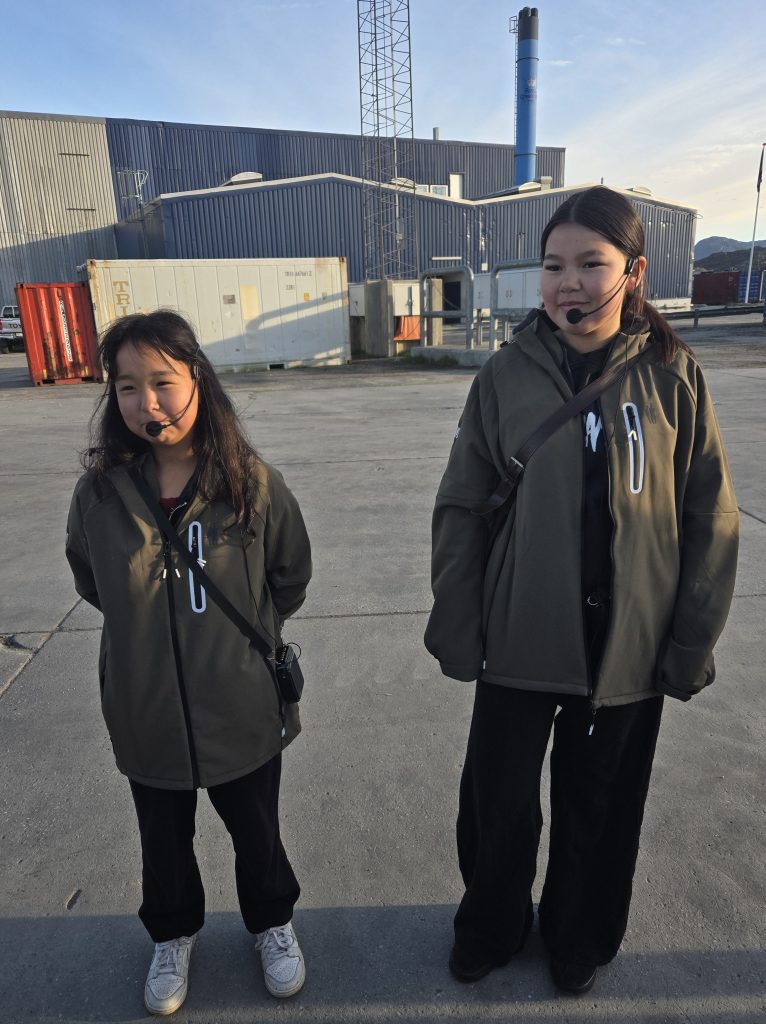
Most interesting for us was a walking excursion in Paamiuk led by two young teen girls, one of which wore false eyelashes purchased overseas from the Internet. They were giving their first tour, later admitting to being nervous at the outset but in the end chirping that they were surprised how nice the tourists were! That walk and a minivan tour in Qaqortoq were our basis of learning about life in Greenland today.
Prince Christian Sound
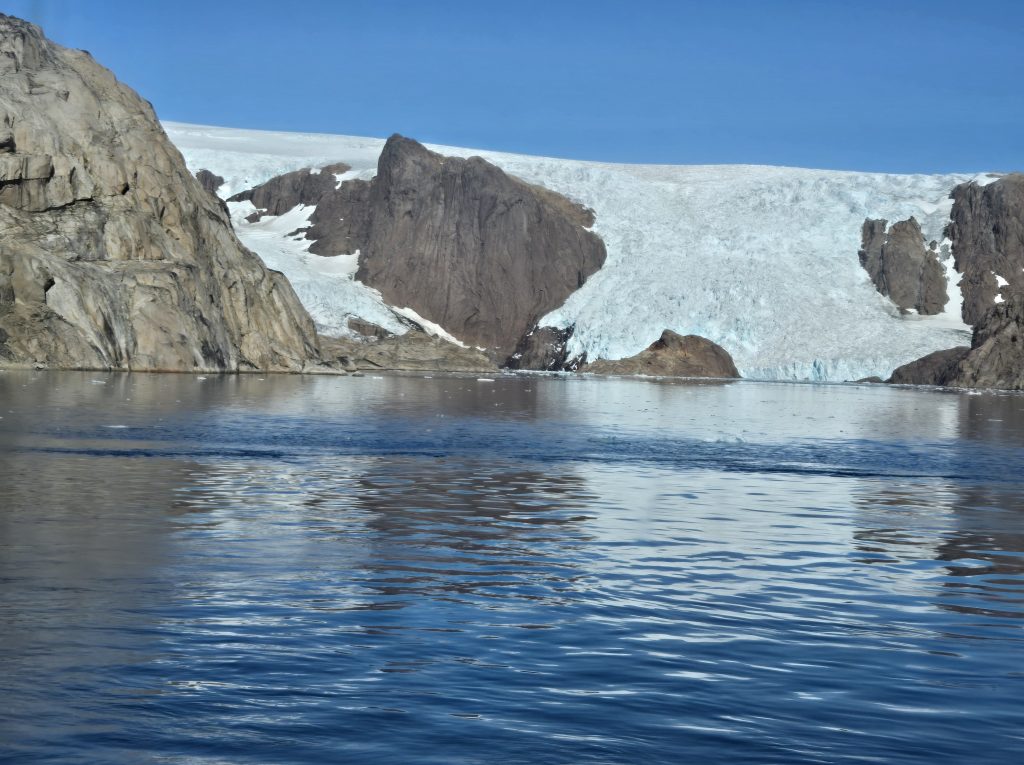
The coast of Greenland is full of archipelagos of small rocky islands which protect its towns that are often at the mouth of fiords or other inlets to the open seas. The highlight is the six-hour passage through Prince Christian Sound which is 60 miles long and predominantly separates the southern tip of the main island of Greenland from Sammisoq and other islands.
The granite escarpments are attractive and chasm-like steep at the western entrance where the channel is so narrow that cruise ships will slow to a watery crawl. Further on, a significant waterside glacier with its blue hue may be calving as the ship passes by (ours did a 360-degree twirl). There will be numerous small icebergs, and larger icebergs will be seen in the open waters.
AZAMARA
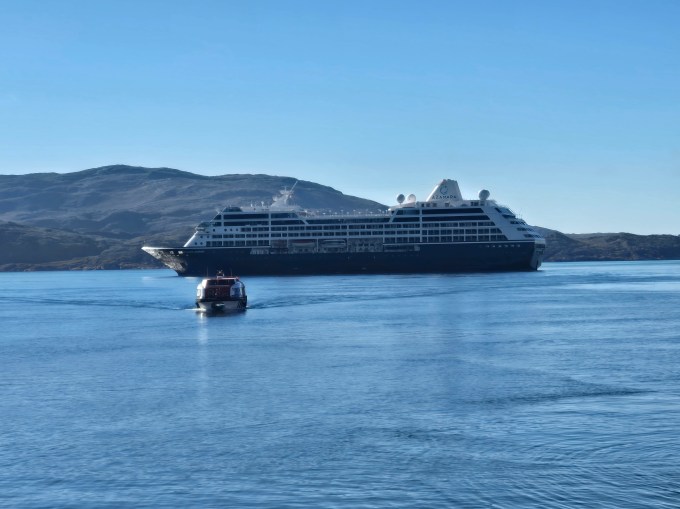
This was our first Azamara cruise, 16 days on Azamara Journey from Montreal to Reykjavik. However, we have had a number of ocean cruises with several of their competitors, also on ships in the 600-700 passenger capacity range, so have some basis for comparison.
Note that Azamara has an immensely loyal clientele. Most passengers we talked to had been on several and up to 15 cruises on the line. Perhaps the most compelling reason is that Azamara is largely perceived as being the best value in luxury cruising with prices significantly lower than competitors, despite having onboard gratuities and basic alcoholic drinks all day and meals included.
But not only does Azamara provide the most attractive prices in the category, the line offers extra-value special events that distinguish it. It offers an included AzAmazing evening in which all of the passengers are bussed to an on-land venue for a special event. Ours was a nice concert in Quebec City performed by composer/pianist Steve Barakatt, who has written the official anthems of Quebec Province and UNICEF. For White Night, most passengers dress in white, creating a festive feel for the dining cornucopia on the pool deck and the party afterward. Because of where we were, it was on the cool side, and we had rain, but it was still a notable event and a good time.
Against these special benefits are traits that some will consider liabilities. The most general are that staterooms are significantly smaller than competitors, with particularly small showers, though some passengers may not care. Secondly, Internet is not included, so you must buy an approximately $20 per day package that allows only one device on the Internet at a time. For double the price, both in the stateroom can be online at the same time.
The dining experience is generally good but more inconsistent and not quite as distinguished as some other luxury and ultra-luxury lines. Meals in specialty restaurants which some passengers speak highly of are separate purchases. Lectures and artsy activities are on par overall. Lagniappes that competitors offer like totebags, after-dinner mints, and the scope of prizes for passenger competitions seem to have been reduced or eliminated by bean counters.
I value playing bridge, and while most of the better lines host directors and offer sanctioned duplicate bridge games on sea days, Azamara has unhosted play in pickup games, which doesn’t fill the bill, especially if other players are not up to snuff. There are no outdoor sports such as pickleball, but presumably appealing to its clientele is the absence of a casino.
To summarize, Azamara is a prestige offering with excellent value for money, especially if its relative deficiencies don’t matter to the passenger.