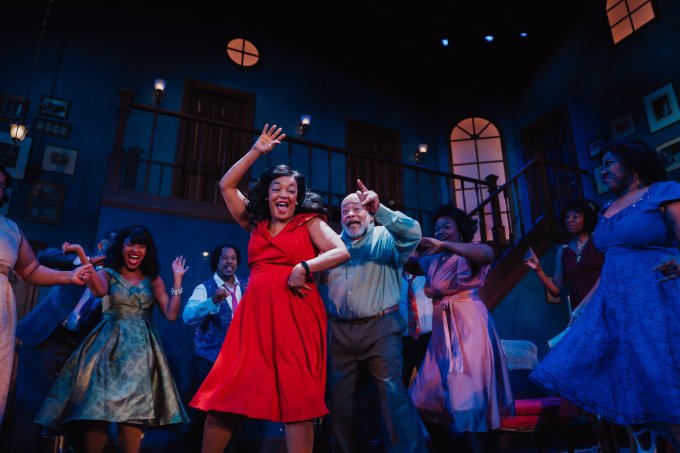
Change happens. So it was in 1956 with the real-world urban development that would reshape San Francisco’s diverse and largely black Fillmore District, displacing over 10,000 people. The world premiere musical Every Saturday Night….. centers on a broken black family facing the uncertainties of the project. The proceedings intermittently flash forward to present day when only the now elderly son of the family remains alive. The musical also reveals the enterprise of the oppressed in dealing with disadvantage and the bonds that people shared in their spare time when they were free to be themselves.
A friendly opening night audience roared with support. This labor of love possesses numerous strengths, but like many premieres, the work does need some work.
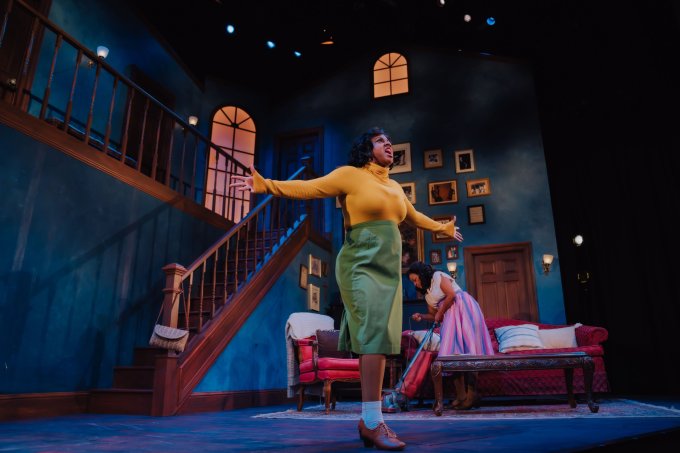
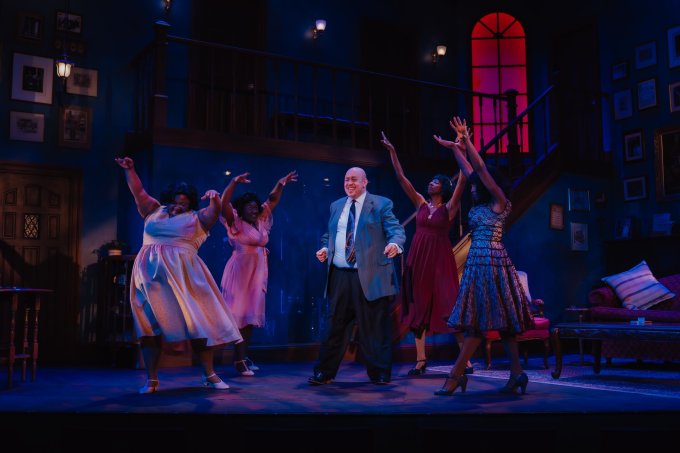
Ardella (Cathleen Riddley) managed to buy a house in The Fillmore because of supplementary earnings from operating After Hours, an unlicensed club, at her home every Saturday night, charging for booze and chicken dinners and providing music for guests to dance to. The animated parties with song and dance create an upbeat vibe and escape for all involved, and the party sequences play a big role in the feel-good aspect of the play.
The music throughout is catchy and does help the story along. Though not a fault as such, what does surprise a bit is the conventional sound of the tunes, like a typical stage musical. Particularly in the 1950s, The Fillmore was a center for jazz and blues, but those influences on the music in the play are minimal, with the exception of one song with scat riffs and the occasional bluesy chord in a couple of others.
Despite many light touches, the story bulges with social issues. One particularly incisive and reflective one revolves around Christine (the acting highlight of the show – a delightful, flamboyant Velina Brown), who is with the neighborhood heritage society in the contemporary period of the play. As well intended as she and her group are, they are intervening in the real estate market to try to ensure that the “right kind of people” settle in the neighborhood, which in large measure repeats the motivation of the earlier urban renewal project, but with social class rather than racial implications.
Another issue concerns Ardella’s adolescent son Donte (Jacob Henrie-Naffaa), who has hidden from her the fact that he is acting in a play as Peter Pan. The circumstances that surround the issue deal with parent-child communication and extend to homosexuality, which is implied but not expressed.
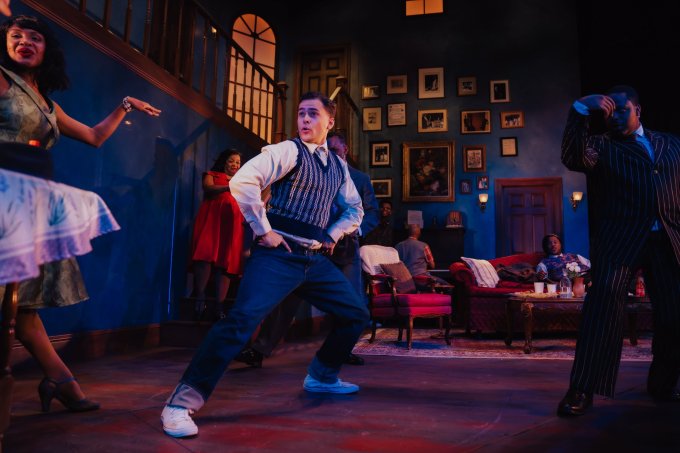
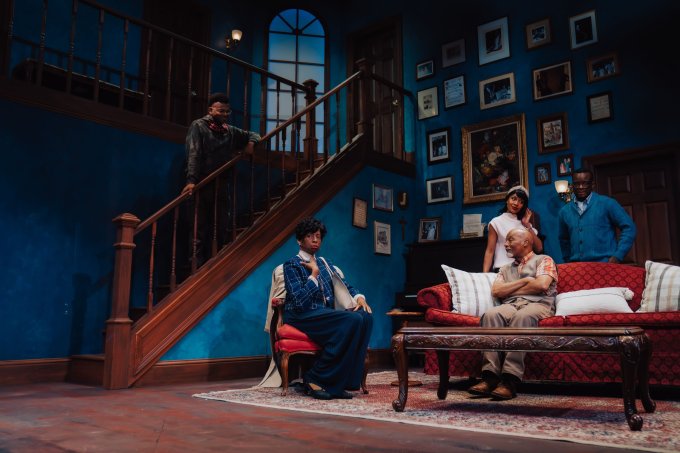
Use of the same space to tell two different stories in alternating fashion with only one overlapping character is clever. A particularly effective design orchestrated by Director AeJay Antonis Marquis is sequences when both the characters from the ‘50s and from today are on the stage together and their dialogues interspersed. The execution didn’t live up to its potential at opening, but hopefully it will improve.
Most of the performers seem to be primarily actors, and the singing is uneven, with only Imri M. Tate as Doris displaying a strong voice. A couple of numbers seem that they would benefit singers by being sung in a different key, and one of young Donte’s that requires the performer to shift registers does no one any favors.
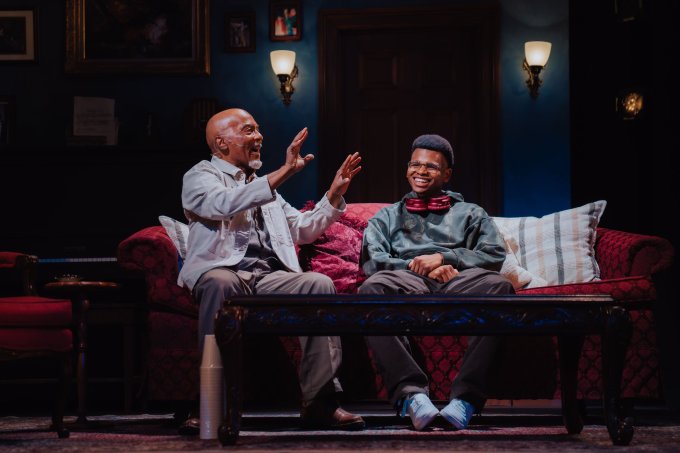
The appealing production, directed and choreographed by AeJay Antonis Marquis, features handsome staging led by Sarah Phykitt’s single set that serves as the venue for all of the action. Notably, Marquis provides extensive and energetic dance and Amber Julian the considerable hair, wig, and makeup demands.
Although the story of a whole black community being dispossessed by a disastrous urban renewal program resonates, it fails to explain the magnitude of what actually happened; why Ardella’s home was spared; the fictionalized effect on other characters; or the recent disgrace of Justin Herman who was a major architect and executor of the program. This is despite the significance of the falling out between Ardella and her tenant Doris in the play over whether to protest the project. A brief narrative in the latter time frame from Older Donte (Darryl V. Jones) to the prospective home buyers would be appropriate.
The storyline will interest Bay Area aficionados and those concerned with how minority groups have been maltreated in so many ways. For the musical to have legs, the question is whether the universality of the minority plight can overcome the narrow geographical focus of the issue.
Every Saturday Night: A Harlem of the West Musical with music and lyrics by Danny Duncan and book by Michael Gene Sullivan and Danny Duncan is produced by San Francisco Bay Area Theatre Company and appears at Strand Theater, 1127 Market Street, San Francisco, CA through November 1, 2026.

